| Tagline: | festival for art and digital culture |
|---|---|
| Venues: | Akademie der Künste, silent green Kulturquartier, Kunstraum Kreuzberg/Bethanien, transmediale studio, Haus der Kulturen der Welt (HKW) |
| Date: | 28.01.2021–29.01.2022 |
| Organisation: | transmediale e.V. |
| Website: | https://202122.transmediale.de/ |
The dilemma for refusal had never felt quite so urgent. Easily misunderstood as a gesture of inaction and passivity where nothing happens, a refusal instead can be an insistence on an alternative or a demand for reform. From boycotts to strikes to collective or individual withdrawals, the long and paradoxical history of refusal suggests political and social imaginaries that say more than a mere no. As an act that often carries with it both risk and promise, a refusal opened up possibilities for worlds that can and should be.
festival theme
Over the past year, transmediale has mapped out the political agency of refusal, exploring its potential to form new socio-political realities. Beginning with an understanding of refusal through the three key thematic strands of friction, scale, and entanglement, the festival concludes this inquiry by exploring the limitations of refusal through two further thematic strands: belief and compromise. By building an understanding of different modes of refusal and how they intersect, the festival aims to explore how different tactics of refusal can form an assemblage of collective political responsibilities.
Belief
Evidence, facts, and reasoning have become obscured in the context of algorithms, platforms, and fake news. As digital technologies distribute and mediate differing beliefs, an unstable landscape has been produced; where unconfirmed facts are hardened into truths, while morality presides over the use of carbon intensive blockchains. As a result reason and knowledge – already deeply subjective – are further fractured. Though new technologies are amplifying these conflicts, the exacerbations are not new. Belief has long been a fundamental factor for making sense of and navigating the world, and historically been used as a means of upholding values, and creating futures. Made by the interrelations that move and meet between desire, emotion, context, experience and reason, and the abstraction of belief through algorithmic processes – sometimes known as convictions – belief can also instigate the starting point for refusal, marking the point of a limit having been reached.
But how might refusal – an act that demands an alternative – be understood, responded to, and perhaps even reformulated, in the deeply personal and subjective space of belief? How is refusal an imposition of belief? Can refusal disrupt commonly held beliefs and provide tools for navigating the conditions of their making?
Compromise
Refusal, and it's elasticity as a concept and as a practice, does not follow a linear path. The conditions for refusal are often shared but not always agreed upon. As a matter of context and perspective, compromise opens possibilities for the rejection of hierarchies and the reconfiguration of relations rather than an ending of them. And as a framework for refusal, compromise can become a necessary relation to understanding political-economic and hegemonic processes – and whether to take part in them.
Demanding a restructuring of relations requires the negotiation and introduction of shared values that brings with them new obligations. In unsettling hierarchies and rearranging relations, tensions and frictions often arise, especially when common ground cannot be found. But how do we negotiate or share relations with bad neighbours and with kin? And how might acts of refusal allow for new configurations and imaginaries of social and political relations?
Friction
Produced and practiced across the political spectrum, refusal can operate both in favour of or against political demands and actions. Climate change sceptics, Covid-19 deniers, anti-vaxxers, rioters fueled by fake news; all are examples of active manifestations of refusal, aimed at pushing towards reactionary political engagement and reframing debate. Simultaneously, refusal has been a necessary method of interrogating, resisting, and reimagining power relations towards progressive, inclusionary politics. We see this in the recent and ongoing refusal to submit to authoritarianism in Hong Kong, the abolitionist demands of #ENDSARS in Nigeria, and the protests against sexual and reproductive restrictions in Poland, Russia, and Northern Ireland.
By manifesting in diverse and sometimes oppositional activities, blurring in their practices and values, refusal has the capacity to generate friction and to polarise positions. This elastic nature of refusal, the very aspect that allows for such generative possibility, can also generate indifference, opposition, uncertainty and contradiction. Exploring the conditions through which refusal comes about, this sub-theme recognises that these frictions cannot be ignored or avoided and examines how the tensions that are generated must be acknowledged, reckoned with, and in some cases, be amplified.
Scale
Large acts of political refusal often draw the most attention. From media coverage of the mass exodus of users from WhatsApp to Signal to the unfolding Navalny public protests against stagnant political order in Russia, public awareness of collective refusals is necessary for the visibility of political demands and actions. But how might we draw attention to small daily gestures of defiance, and how do they scale and build to collective action?
Often overlooked or under-considered, quotidian practices of refusal manifest within the constraints of everyday life. From installing ad-blockers in browsers to the use of open-source encryption tools, micro acts of refusal are often seen as a set of individual practices rather than part of collective actions that connect to progressive political action.
But, crafted from mundane circumstances, small or quiet forms of refusal cater to different capacities and abilities, and they open up an understanding of refusal as a flexible and scalable set of interconnected practices. In paying attention to micro gestures and to the relations between collective political demands and individual actions, the scalability of refusal can offer new insights into how important political activities can occur and be sustained.
Entanglement
Moving beyond an understanding of refusal as a no or an exit can point to the transformative potential of gestures and acts that refuse. Through a continuous process of rejection and reassembly of relations between finance, technology, subjectivity, and the environment, refusal can bring new settings and concerns into focus, linking economic stagnation with abundance. Just as shares in Zoom fell with the news of Covid-19 vaccines, we see how entangled the financial, the personal, and the technological can be. This sub-theme explores how the logic of extraction, accumulation, and privatisation, and the mutually dependent nature of all organic life are entangled through the assimilation and extraction processes that are inherently part of platform capitalism and its stagnation.
Entangled in environmental and geopolitical concerns, refusal makes claims and speculations about other political relations, allowing us to think and act in more-than-human ways. Drawing out new - or previously hidden - entanglements between the deeply complex realities of debt, scarcity, and ecosystem collapse, refusal can develop new practices and values, building momentum for the creation of more equitable futures.
The dilemma for refusal has never felt quite so urgent. Easily misunderstood as a gesture of inaction and passivity where nothing happens, a refusal instead can be an insistence on an alternative or a demand for reform. From boycotts to strikes to collective or individual withdrawals, the long and paradoxical history of refusal suggests political and social imaginaries that say more than a mere no. As an act that often carries with it both risk and promise, a refusal opens up possibilities for worlds that can and should be.
The task of refusing is not without its difficulties – it is made up of compromise and friction, and demands for acting and imagining in ways that lie outside the status quo. Manifesting in many forms, a refusal can call attention to uncommon and messy practices, crucial to the critique and reinvention of our material world. For some, refusal is a luxury that stems from an advantage; for others, it manifests from regressive, reactionary politics. Too often refusal is a stance adopted after years of exile, exclusion, or oppression. It asks for multiplicity, difference, and co-existence, rather than fixed systems of logic that organise and tie socio-political lives to undeclared algorithmic biases and colonial histories.
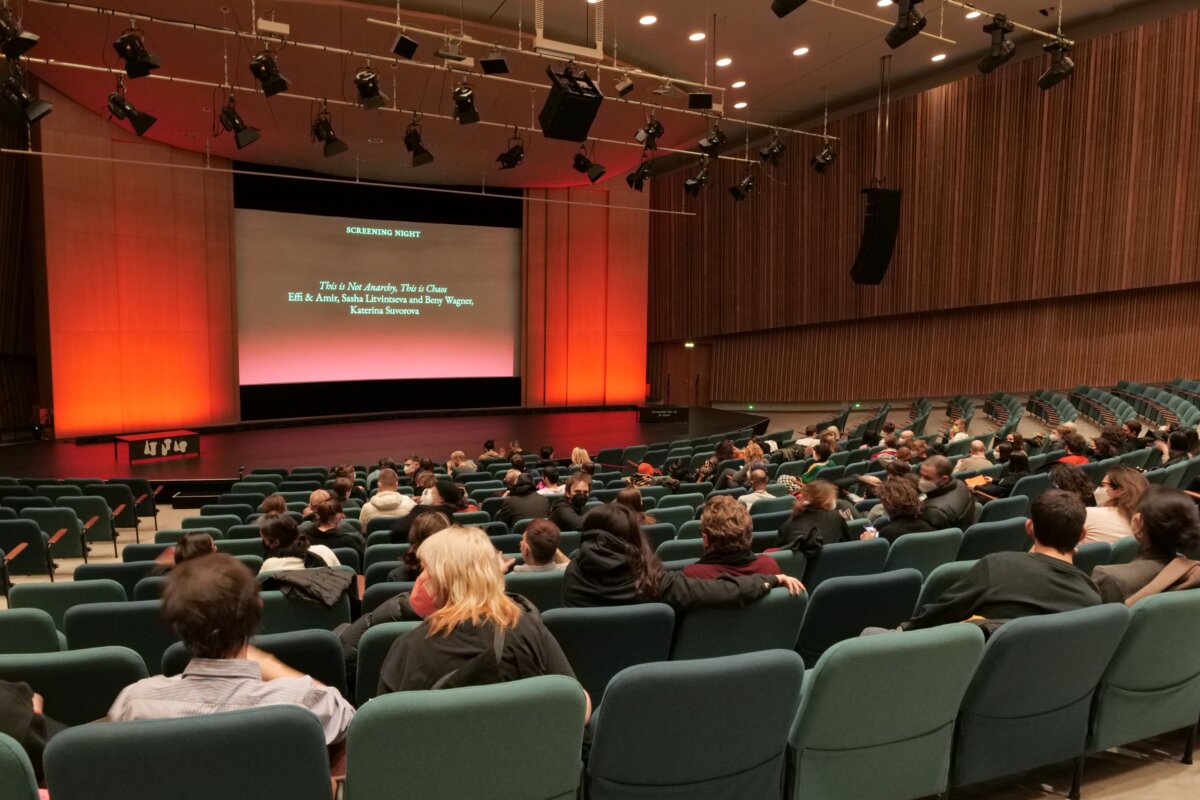
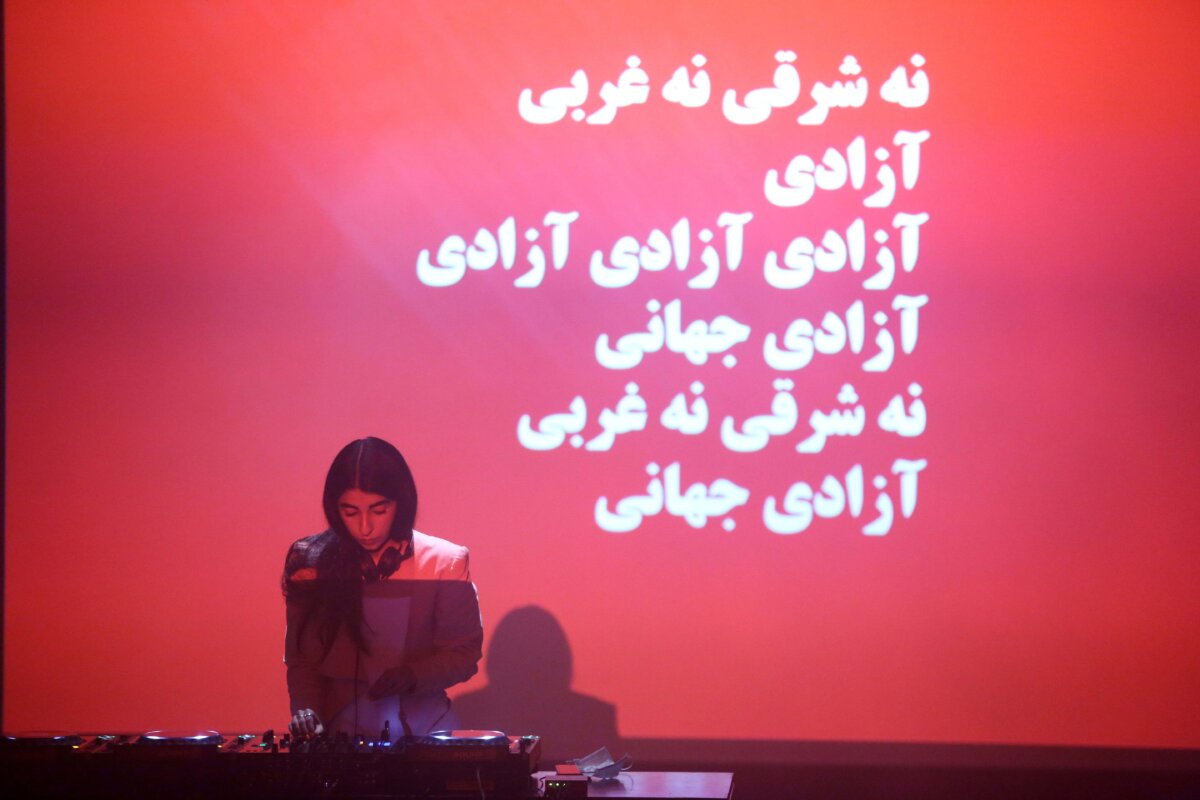
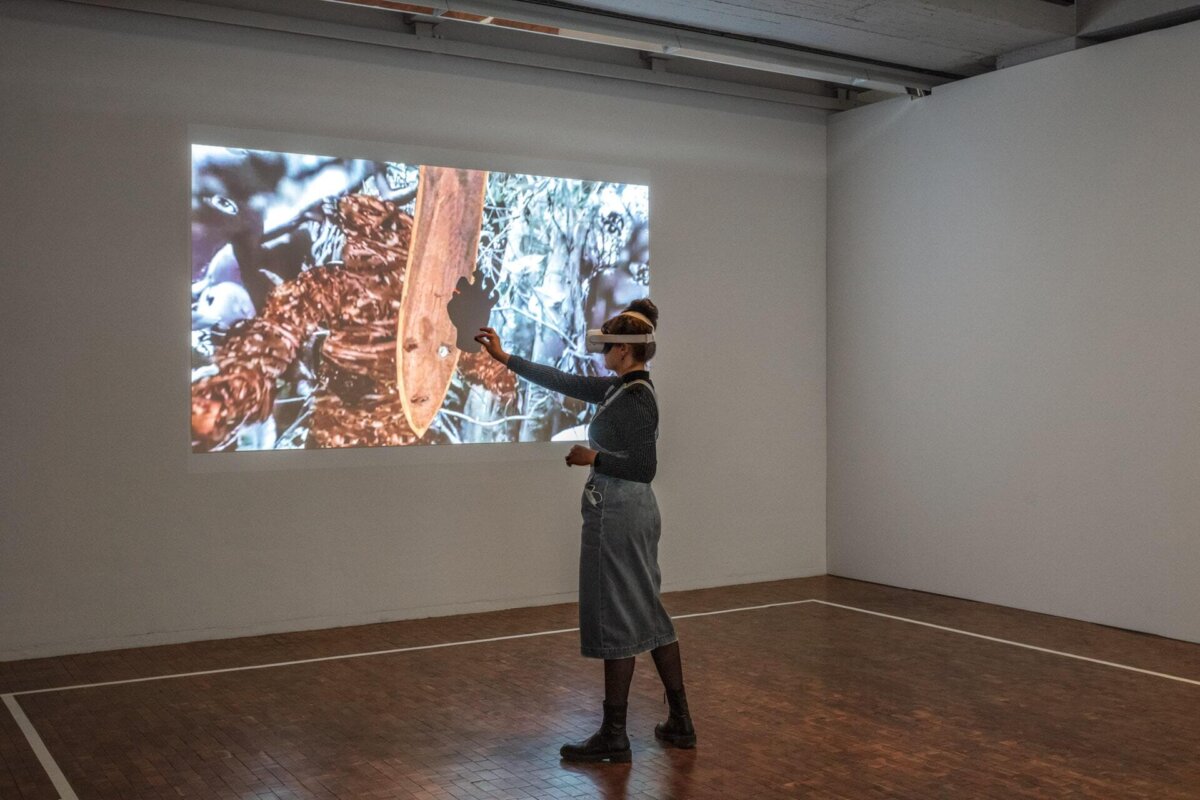
transmediale 2021–22 for refusal was redesigned as a year-long event taking place online and in-person throughout Berlin. Easily misunderstood as a gesture of inaction or passivity, refusal can equally be an insistence on an alternative or a demand for reform. The 34th edition of transmediale examined the political agency of refusal and its generative possibilities. Over the year, transmediale 2021–22 mapped out the political agency of refusal, exploring its potential to form new socio-political realities. The year-long for refusal festival edition presented exhibitions, screenings, and a discourse programme, which, along with residencies, workshops, and commissions, explored the material, technological, and cultural aspects of refusal.
Unfolding over the course of the yearlong festival, transmediale’s digital platform Almanac for Refusal brought together a collection of browser-based artworks; films, photo-essays, texts, images, and podcasts. Inspired by almanac traditions, the collection updated at the end of each lunar cycle, and explored the material, technological, and cultural aspects of refusal.
team
Nóra Ó Murchú artistic director, Filippo Gianetta managing director, Magdalena Ritter head of administration and finance, Anky Heidenreich festival coordination, Paul Schmidt programme coordination, Jade Barget curatorial assistance, Ann-Christine Pilder administration and HR management, Lucas Matray administration assistance and management, Ricarda Bross exhibition and programme coordinator, Anna-Lena Panter editorial management, Manon Frugier front of house management, Lynn Kühl press management, Ekaterina Kosykh intern festival production, Nora Gail intern festival production, The Laboratory of Manuel Bürger - Manuel Bürger, Simon Schindele, Bárbara Acevedo Strange design, Theta.cool, Matteo Spanó Video and Media Production, Sebastian Kite Architecture, Holger Heißmeyer, Steph Tyszka, Bryan McLeod Website development, Elisa Barth, Hannah Gregory, Maeve O'Neill, Anja Schulte Editing and translation
Curators Ben Evans James film and video, Dani Admiss conference, Elise Hunchuck editorial, Lorena Juan exhibition, Edna Bonhomme curatorial advisor, Luiza Prado de O. Martins curatorial advisor, Terence Sharpe curatorial advisor
supporters
Main funders: Kulturstiftung des Bundes, Die Beauftragte der Bundesregierung für Kultur und Medien, Berlin Senat
Additional funding: by Medienboard Berlin Brandenburg, Bundeszentrale für politische Bildung, European Union, Berlin Senatsverwaltung für Kultur und Europa
Partners: CTM festival, arts formation, Kunstraum Kreuzberg, silent green, HKW, Goethe Institut, embassy of Canada, Martin Roth Initiative, Aarhus University, University of Limerick, UdK Berlin, Cultúr Éireann Culture Ireland, Flanders State of the Art, Akademie der Künste Berlin, Akademie Schloss Solitude, Depart One, NTS Radio, SHAPE Platform, Neu Start Kultur, Fonds Soziokultur
Media partners: arte, Cashmere Radio, radioeins, Bubblegumclub, CLOT Magazine, Ocula, neural, Le Monde Diplomatique, Kunstforum Inetrnational, berliner fenster, Berlin Art Link, Exberliner, Springerin, museums fernsehen
Supporters: Koreanisches Kulturzentrum, Arts Council Korea, Instituto Cervantes, Institut Français, OFAJ DFJW, Republique Française, U.S. Mission Germany, Embassy of Ireland, werkleitz, institute of network cultures, Stager, Echoo Konferenz Dolmetschen
Related Programmes





- !Mediengruppe Bitnik
- [Withdrew] Frank Sweeney
- Aaron Benanav
- Aay Liparoto
- Adam Bobbette
- Aditya Surya Taruna aka Kasimyn
- Agnès Villette
- Ahmed Isamaldin
- Alaa Mansour
- Alexandra (Sasha) Anikina
- Alexis Shotwell
- AM Kanngieser
- AMOQA (Athens Museum of Queer Arts)
- André Lepecki
- Anne Duk Hee Jordan
- Annex
- Antonia Hernández
- Arad
- Arjun Harrison-Mann and Benjamin Redgrove
- Arjuna Neuman
- Auco
- B Covington Sam-Sumana
- Bad Bitch Link Up
- Bahar Noorizadeh
- Bárbara Wagner + Benjamin de Burca
- Bassam El Baroni
- Bassam Issa Al-Sabah
- Basyma Saad
- Ben Evans James
- Beth Bramich
- Billion Lee
- Bonnie Honig
- Bryan McLeod
- Bucles
- Caroline Bassett
- Cassandra Collective
- Cassie Thornton
- Castillo
- Cemile Sahin
- Che Applewhaite
- Chus Martínez
- Cibelle Cavalli Bastos
- Cihad Caner
- Cindy Kaiying Lin
- Clareese Hill
- Cristina Cochior
- Crystelle Vu
- CSNI
- Danah Abdulla
- Danielle Brathwaite-Shirley
- Danielle-Maria Admiss
- DARC
- Dave Tompkins
- Dele Adeyemo
- Denise Ferreira da Silva
- Diane Edwards
- Distributed Cognition Cooperative (Anna Engelhardt, Sasha Shestakova)
- Donal Lally
- Dylan Kerr
- Edna Bonhomme
- Effi & Amir
- Elaine Gan
- Eli Cortiñas
- Elly Clarke
- Elodie Mugrefya
- Elsa Brès
- Émélie Desrochers-Turgeon
- Frances Scott
- Gargi Bhattacharyya
- Gary Zhexi Zhang
- GASH Collective
- Georgina Voss
- Giuseppe Torre
- Glacier Kwong
- GOVERNANCE
- Haig Aivazian
- Hanna Grześkiewicz
- Helen Pritchard
- Hortensia Völckers
- Ibiye Camp
- Imani Jacqueline Brown
- Jack Halberstam
- Jason Edward Lewis
- Jennifer Mehigan
- Jennifer Walshe
- Joanna Pope
- Joel Kwong
- Johanna Hedva
- Juan Pablo García Sossa
- Kaiya Waerea
- Karyn Recollet
- Katerina Suvorova
- Katharina Nocun
- Kei Kreutler
- Keiken
- Kirsten Haß
- KMRU
- Kristina Buch
- Kyveli Mavrokordopoulou
- Lamin Fofana
- Larry Achiampong
- Laura Cugusi
- Laura Lotti
- Laura Yuile
- Lee Tzu Tung (李紫 彤)
- Lého Galibert-Laîné
- Liliana Zeic
- Lo-Def Film Factory
- Logistical (B)orders
- Lorena Juan
- Luiza Prado de O. Martins
- Madison Bycroft
- Magda Tyżlik-Carver
- Malthe Stavning Erslev
- Marco De Mutiis
- Margarida Mendes
- Maria Christoforidou
- Mariam Mekiwi
- Mary Maggic
- Maud Craigie
- Max Haiven
- MELT
- MengXuan Sun
- Méryll Ampe
- micha cárdenas
- Michelle Doyle
- Mihaela Brebenel
- Mimi Ọnụọha
- Moldiyar Yergebekov
- Natasha Tontey
- Nazanin Noori
- Nicole L’Huillier
- Nishant Shah
- Nora Al-Badri
- Nóra Ó Murchú
- not working group
- Nothing Happening Here
- Off World
- Olúfẹ́mi O. Táíwò
- One Research Collective
- Ozayr Saloojee
- p. staff
- Paavo Järvensivu
- Paolo Gerbaudo
- Parrr Geng
- Patricia Domínguez
- Paul Bailey
- Paul Guillibert
- Pete Jiadong Qiang
- Phanuel Antwi
- Rachel Falconer
- Rachel O'Dwyer
- Rebecca Smith
- Rhea Storr
- Robert Gerard Pietrusko
- Robert Logan
- Romi Morrison & Mimi Onuoha
- Romi Ron Morrison
- Ruben van de Ven
- Ruini Shi
- Sabine Gruffat
- Sahej Rahal
- Salvatore Arancio
- Sam Tam Ham
- Samia Henni
- Samir Bhowmik
- Santa France
- Sarah Grant
- Sarvenaz Mostofey
- Sasha Litvintseva & Beny Wagner
- Seeta Peña Gangadharan
- Shannon Mattern
- Sheung Yiu
- Simone C Niquille
- Sofia Caesar
- Solveig Suess
- Sophie Mars
- Stine Deja
- Stine Hebert
- Suji Yan
- Sung Tieu
- Tali Liberman
- Tatjana Söding
- Terence Sharpe
- Thandi Loewenson
- The Mycological Twist
- The Re:Source Project
- The Underground Division
- Tianzhuo Chen
- Tiara Roxanne
- Timothée Parrique
- Tom Richards
- Tomomi Adachi
- Trakal
- Ursula Biemann
- Vaimaila Urale
- Vítor Blanco-Fernández
- Xenia Chiaramonte
- Xiaowei R. Wang
- Yang Ah Ham
- Zoe Todd