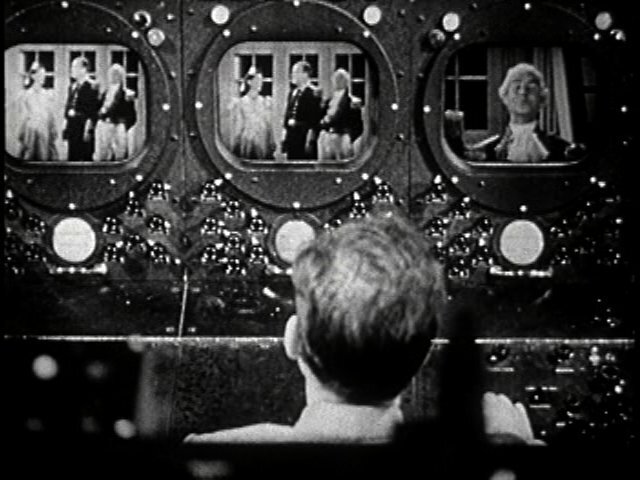
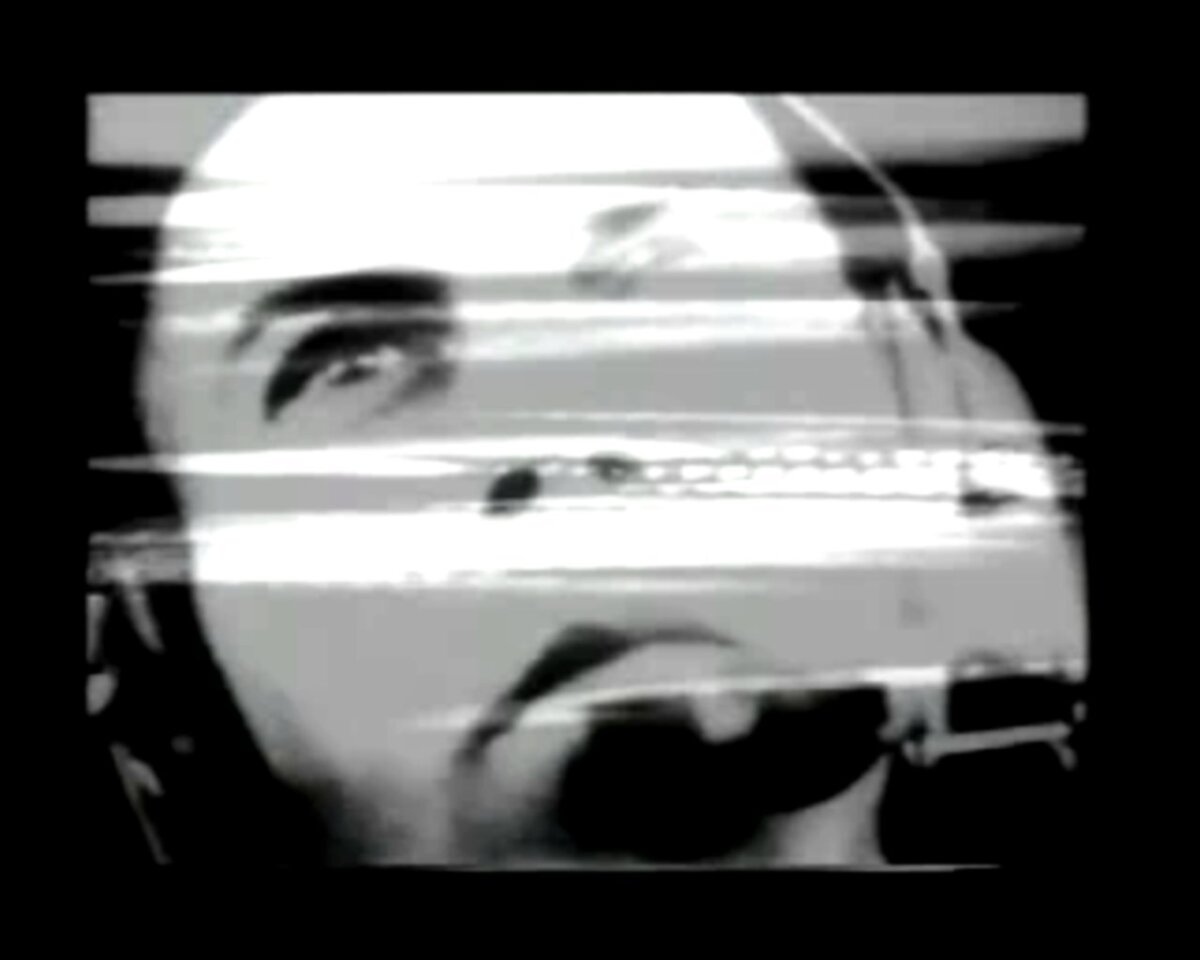
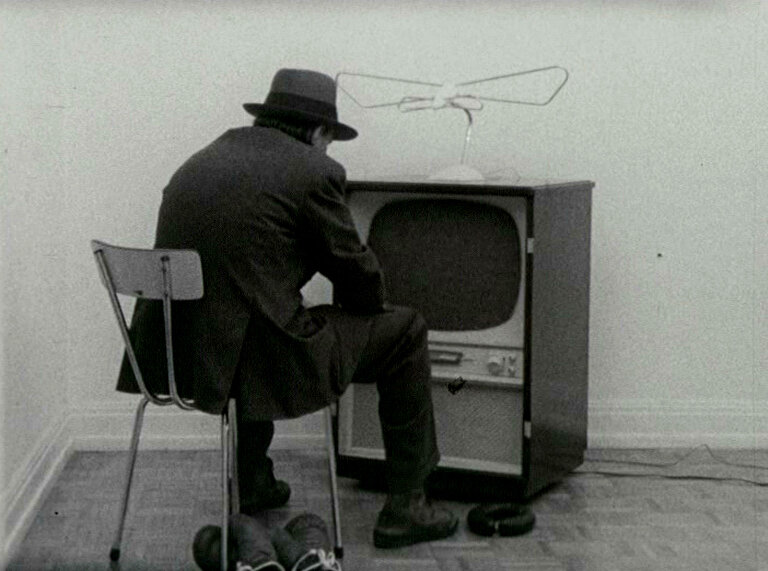
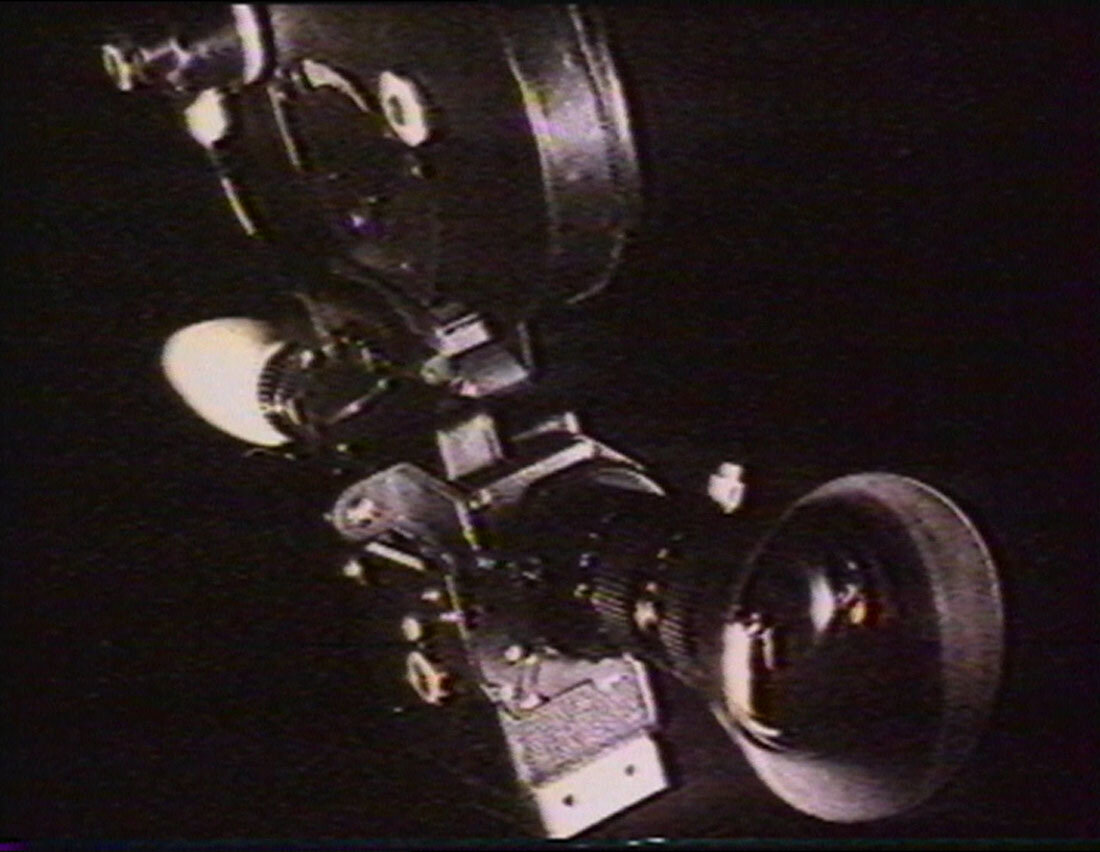
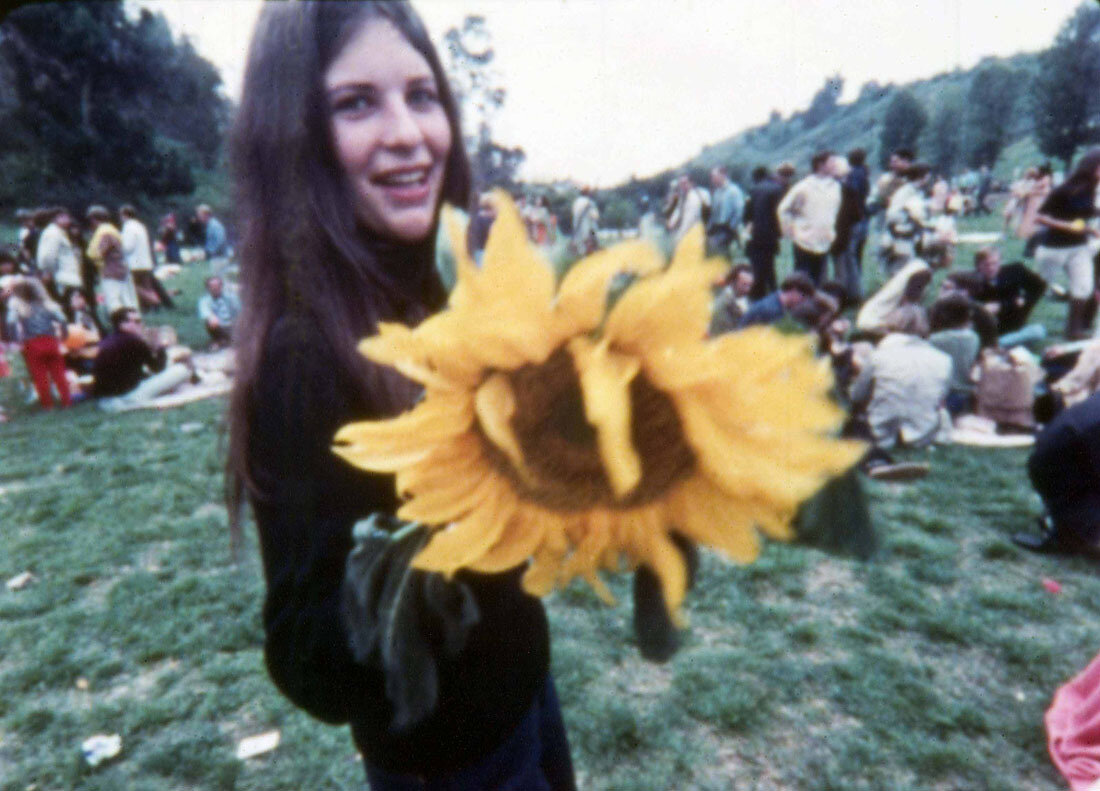
In the 1960s, television was plainly the dominant medium against which all others had to align themselves. At the same time, an intense debate began that continues until today. Tomorrow Television was taped shortly before the end of the Second World War, and viewed the new medium as solemnly as National Socialist television: "Television can be the window to the whole world, a medium through which the united nations can better understand each other and live together in the world of tomorrow." Sun in Your Head (Television Décollage) is one of the first artistic works that deals with television itself. Filz TV, developed in conjunction with the television series Identifications, also deals physically with the television set. A Commercial for Myself is one part of a complex artistic project about identity and an early example of the ‘Strategy of the Fake’. The election clip Grüne zur Bundestagswahl, too, uses the television to criticise it in an epic presentation. The Revolution Will Not Be Televised refers to the intangibility of the medium: real change is not found on TV, but on the streets: "You will not be able to stay home, brother. You will not be able to plug in, turn on and cop out." With God Respects Us When We Work But He Loves Us When We Dance, the documentary of a 1967 love-in, the programme makes a radical shift towards the public, physical presence of protest – which the film itself of course, again medialises. Match is a found-footage work of a pre-arranged hooligan brawl, which was originally recorded with three cameras by the hooligans themselves and dubbed as an installation. Questions of political, media and physical analysis are reduced, by the end of the programme, to the proud self-representation of violence.
Tomorrow Television, us 1940s, 13 min
Sun in Your Head (Televison Décollage), Wolf Vostell, de 1963, 8 min
Filz TV, Joseph Beuys, de 1970, 12 min
A Commercial for Myself, Lynn Hershman Leeson, us 1978, 2 min
Grüne zur Bundestagswahl, Helke Sander, de 1987, 3 min
The Revolution Will Not Be Televised, Stuart Baker, uk 1988, 4 min
God Respects Us When We Work But He Loves Us When We Dance, Les Blank, us 1968, 20 min
Match, Martin Brand, de 2005, 9 min
* Director will attend screening and Q & A.
In den 1960er Jahren wurde das Fernsehen zum dominanten Medium schlechthin, an dem sich alle anderen neu ausrichten mussten. Gleichzeitig begann eine intensive künstlerische Auseinandersetzung damit, die bis heute andauert. Tomorrow Television wurde kurz vor dem Ende des Zweiten Weltkriegs gedreht und sah das neue Medium ähnlich pathetisch wie das nationalsozialistische Fernsehen: "Television can be the window to the whole world, a medium through which the united nations can better understand each other and live together in the world of tomorrow". Sun in Your Head (Televison Décollage) ist eine der ersten künstlerischen Arbeiten, die sich mit dem Fernseher selbst beschäftigen. Filz TV setzt sich nicht nur physisch mit dem Fernsehgerät auseinander, die Arbeit entstand auch im Rahmen der Reihe Identifications für das Fernsehen. A Commercial for Myself ist Teil eines komplexen künstlerischen Projekts um Identität und ein frühes Beispiel für die Strategie des Fake. Auch der Wahlspot Grüne zur Bundestagswahl nutzt das Fernsehen, um es in einer epischen Darstellung zu kritisieren. The Revolution Will Not Be Televised verweist auf die Immaterialität des Mediums, wirkliche Veränderung findet nicht in ihm, sondern auf der Straße statt: "You will not be able to stay home, brother. You will not be able to plug in, turn on and cop out." Mit God Respects Us When We Work But He Loves Us When We Dance, der Dokumentation eines Love-Ins von 1967, nimmt das Programm daher eine radikale Wendung zu der öffentlichen, physischen Präsenz des Protestes – die mit dem Film natürlich selbst wieder medialisiert wurde. Match ist eine Found-Footage Arbeit einer verabredeten Hooligan-Schlägerei, die mit drei Kameras von den Hooligans selbst aufgenommen und als Installation synchronisiert wurde. Die Frage von politischer, medialer und physischer Auseinandersetzung wird zum Ende des Programms auf die stolze Selbstdarstellung der Gewalt reduziert.
Tomorrow Television, us 1940s, 13 min
Sun in Your Head (Televison Décollage), Wolf Vostell, de 1963, 8 min
Filz TV, Joseph Beuys, de 1970, 12 min
A Commercial for Myself, Lynn Hershman Leeson, us 1978, 2 min
Grüne zur Bundestagswahl, Helke Sander, de 1987, 3 min
The Revolution Will Not Be Televised, Stuart Baker, uk 1988, 4 min
God Respects Us When We Work But He Loves Us When We Dance, Les Blank, us 1968, 20 min
Match, Martin Brand, de 2005, 9 min *
* Regisseur/in wird beim Screening anwesend sein.