Dr. Hiba Ali is a digital artist, scholar, and educator whose practice moves fluidly across immersive digital environments, sculpture-based installations, moving image, garments, and sound. Working at the intersection of technology, embodiment, and care, Ali’s work asks how digital space might become a site not of extraction or acceleration, but of rest, healing, and collective transformation. Through worldbuilding, their practice is rooted in a deep commitment to reimagining how bodiesk, particularly those shaped by migration, diaspora, and colonial histories, can find refuge and agency within virtual and physical worlds.
Ali coined the term digital somatics to describe their method of engaging the body–mind–spirit connection through the principles of game design, worldbuilding, and narrative storytelling. Drawing on somatic and therapeutic frameworks, digital somatics treats immersive media as a sensorial and relational practice rather than a purely visual or technical one. Through virtual reality, 3D animation, and augmented reality, Ali creates portals of solace and care – spaces that slow down time, soften attention, and invite participants into states of listening, reflection, and co-regulation. These environments function as liminal zones, where digital space becomes a threshold for personal and collective healing.
In 2025, Ali founded the Digital Somatics Institute (DSI), a nomadic physical and digital community dedicated to experimental digital art practices. DSI centers XR, VR, and AR technologies while grounding them in somatic, therapeutic, and decolonial methodologies. Conceived as both a learning platform and a gathering space, the institute brings together artists, technologists, and practitioners interested in cultivating more ethical, embodied, and relational approaches to emerging media. Through workshops, residencies, and collaborative research, DSI advances digital somatics as both a creative practice and a critical framework.
Ali’s work has received significant recognition and support. They are the recipient of the 2024 Performing and Creative Arts Fellowship from the American Institute of Indian Studies, a 2024–2025 member of NEW INC’s Art & Code track, and a Fellow in Digital at Akademie Schloss Solitude in Stuttgart from 2024 to 2026. These fellowships reflect Ali’s ongoing commitment to transdisciplinary research that bridges art, technology, and care across global contexts.
Internationally, Ali’s work has been exhibited at leading museums, galleries, and festivals across North America, Europe, the Middle East, Africa, and South America. Their projects have appeared at institutions such as the New Museum, Ars Electronica, Onassis Stegi, Deichtorhallen Hamburg, the Chicago Architecture Biennial, the Portland Art Museum, and Akademie Schloss Solitude, as well as at experimental art spaces and media festivals including FILE – Electronic Language International Festival, Oberhausen International Short Film Festival, re:publica Berlin, and numerous artist-run centers worldwide. Across these contexts, Ali’s work consistently foregrounds care, intimacy, and speculative futures rooted in collective survival.
Born in Karachi, Pakistan, and raised in Chicago and Toronto, Ali’s heritage traces interconnected coastlines across the Swahili, Coromandel, and Arabian seas. This layered diasporic lineage informs both their aesthetic language and conceptual grounding. Ali finds linguistic and cultural home in Swahili, Urdu, Hindi, Bengali, Arabic, Tamil, and Telugu—languages that echo throughout their practice as textures, rhythms, and modes of relationality.
As a professor and educator, Ali’s pedagogy integrates decolonial, feminist, anti-racist, and somatic frameworks. Their teaching emphasizes experimentation, care-based critique, and embodied learning, extending across community art centers and academic institutions alike. Through teaching, mentorship, and institutional work, Ali continues to cultivate spaces where technology becomes a tool for tenderness, imagination, and transformative connection.
Related Media
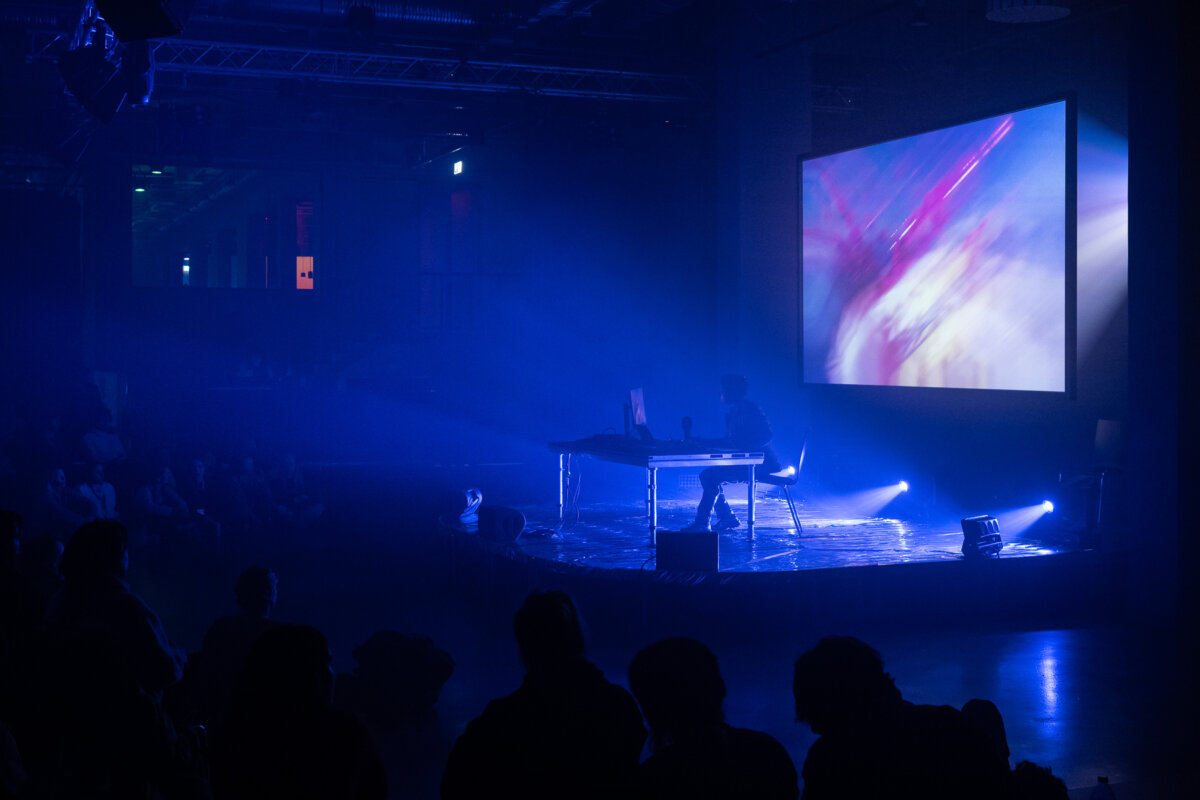 Hiba Ali, Sounding the Ocean: Spiral Networks of Remembrance and Elation, Lecture Performance at transmediale 2026
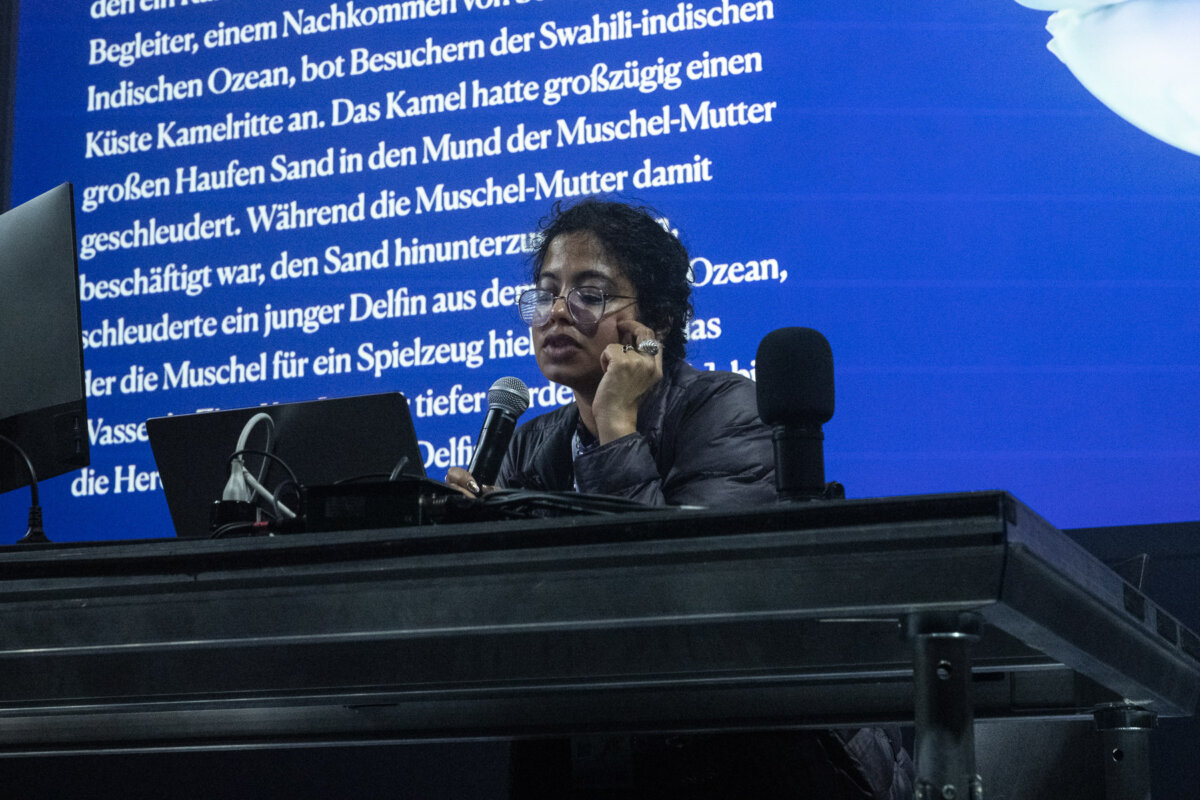 Hiba Ali, Sounding the Ocean: Spiral Networks of Remembrance and Elation, Lecture Performance at transmediale 2026
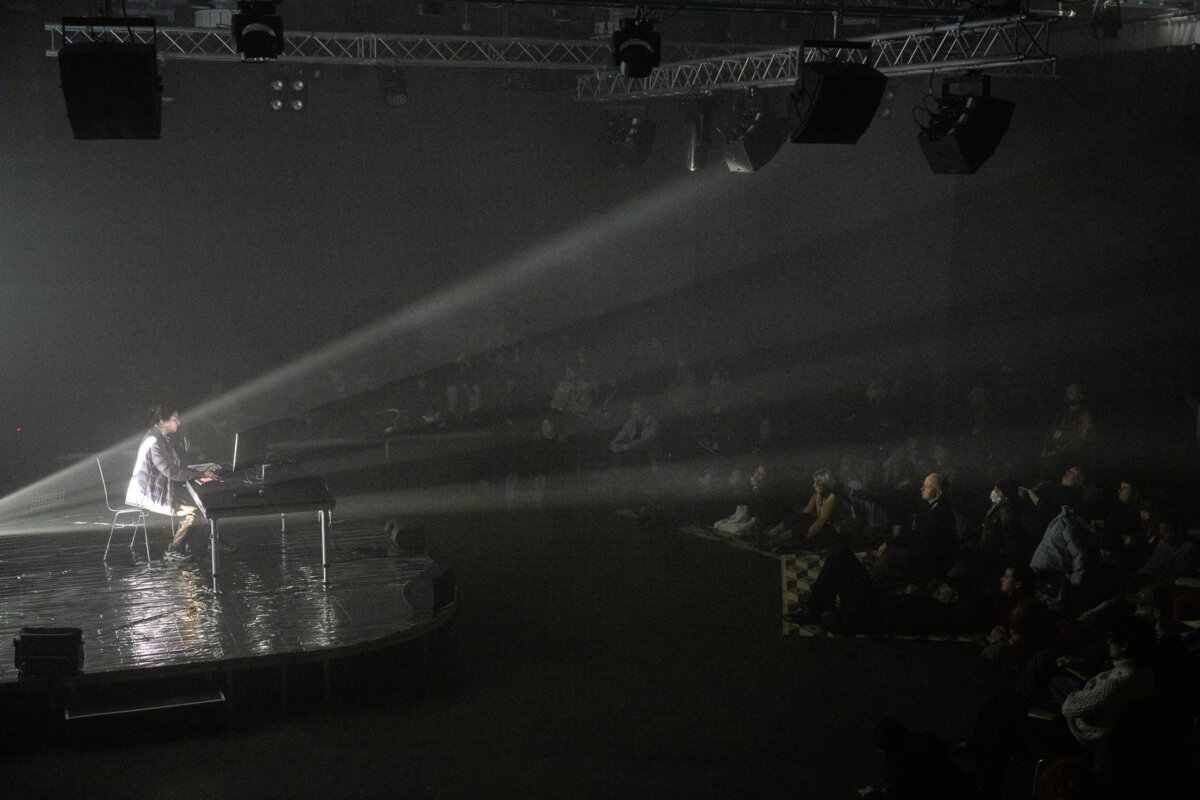 Hiba Ali, Sounding the Ocean: Spiral Networks of Remembrance and Elation, Lecture Performance at transmediale 2026