By the Mango Belt & Tamarind Road:
Compassing, Protocoling, Metaphoring
29 January – 1 February 2026
silent green Kulturquartier and CANK
Under the title By the Mango Belt & Tamarind Road – Compassing, Protocoling, Metaphoring , transmediale festival will take place from 29 January to 1 February 2026 in Berlin. Across the four festival days, in addition to the opening night on Wednesday (28 January), the festival’s main venue will be silent green Kulturquartier in the northern Wedding district, complemented by a second venue, CANK, in the southern Neukölln district. Both spaces feature temporary architectures and installations conceived as conversational platforms – designed to spark exchange. On Thursday (29 January) CANK will host an evening of live programming.
transmediale 2026 engages with different ways of understanding systems, cosmologies, and technologies. The festival invites both a geographical and theoretical shift in the prevalent discourse on technology, media, and our understanding of the internet as a world wide web. Moving beyond a conference framework and the presentation of only completed works, the festival days in Berlin will invite audiences into a communal space where protocols cultivated across the intertropical convergence zones become tangible.
The imaginative coordinates By the Mango Belt & Tamarind Road are situated within the tropical belt. Alluding to China’s One Belt One Road Initiative – which often frames itself as an alternative to development yet perpetuates dependency structures – the festival examines the underlying frameworks shaping both the material and imagined dimensions of our systems. What are ways of netting otherwise? How can we re·wire the root codes of our systems and condition ourselves differently? What forms of infra·structuring can emerge when we step outside extractive paradigms?
Curated by Neema Githere and Juan Pablo García Sossa , the 39th edition of transmediale is conceived as a multi-situated, recursive net—a living network of practitioners from and around the tropical belt coming together in Berlin. The ethos of the festival proposes a recalibrated tempo of gathering: recursive, porous, and durational, combining expansive programming with spaces for re-regulation and conviviality. Framed metaphorically through the architecture of a shell, the festival’s rhythm and thematic focus center on rethinking infrastructures, digital ways of life, and the language forms shaping how we inhabit, interact with, and move through these systems. Participants will be in conversation with their own and one another’s practices.
The programme is structured around Low Tide and High Tide moments. High Tide programming engages larger audiences through performances, lectures, conversations, and concerts, while Low Tide features more intimate, ongoing experiences such as film screenings, durational sonic events, workshops, and ritualistic interventions. Artists and participants will contribute to both High Tide and Low Tide formats, highlighting different aspects of their work and creating varied modes of encounter with their practices.
Read more about the curatorial compass here.
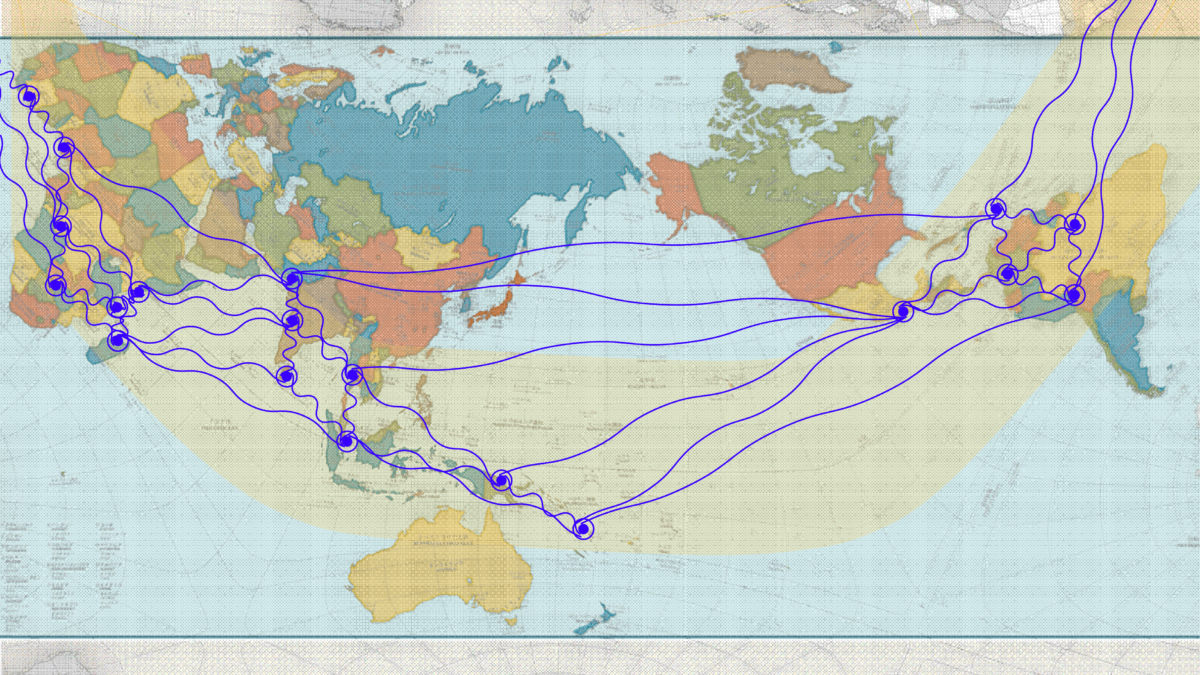
As part of the curatorial process leading up to the festival, Research Netting Groups were formed as lateral, working-group constellations convening in person across the tropical belt. Across four geographical zones – the Pacific Islands (Papua New Guinea), the Swahili Coast (Lamu Island, Kenya), Abya Yala/Latin America (the Amazon), and Southeast Asia (Thailand) – these gatherings braided pluriversal perspectives on computing, archiving, storytelling, and worlding – foregrounding localised forms of life and technologies that cultivate ways of living beyond extraction, acceleration, and global homogenisation.
A central part of transmediale 2026’s relational, process-based approach, the Netting Groups propose a dispersed reimagining of festival structure, geography, and timeline. This approach aims to cultivate a sustainable network of participation that supports ongoing artistic propositions within their endemic contexts – a spatial gesture aimed at intercepting some of the in-built mobility hierarchies that establish exile as a condition to artistic exchange and global resonance. The Netting Groups set the tone, rhythm, and orientation of the Berlin gathering as a “festival of gestures”, while also extending beyond the event into long-term and unfolding collaborations.
Read more about the Netting Group participants on the festival’s website.
The festival venues silent green and CANK will feature a series of installations and temporary relational architectures conceived as conversational platforms, creating environments that spark dialogue, engagement, and shared experience. Shifting from a speaker–audience spatial format, the temporary architectures create spaces where visitors can become passengers, contributors, and co-navigators, paying attention to the embodied conditions in which other technological imaginaries can surface.
The Kuppelhalle at silent green will be transformed by Kidus Hailesilassie ’s large-scale installation 6,500 Alphabets Make a Map, a living atlas that draws on 20 indigenous African knowledge systems. Inviting visitors into an immersive and spatialised language archive, this artwork redefines “algorithm” as “algo rhythm”; each data point a drumbeat in a communal, ancestral cadence.
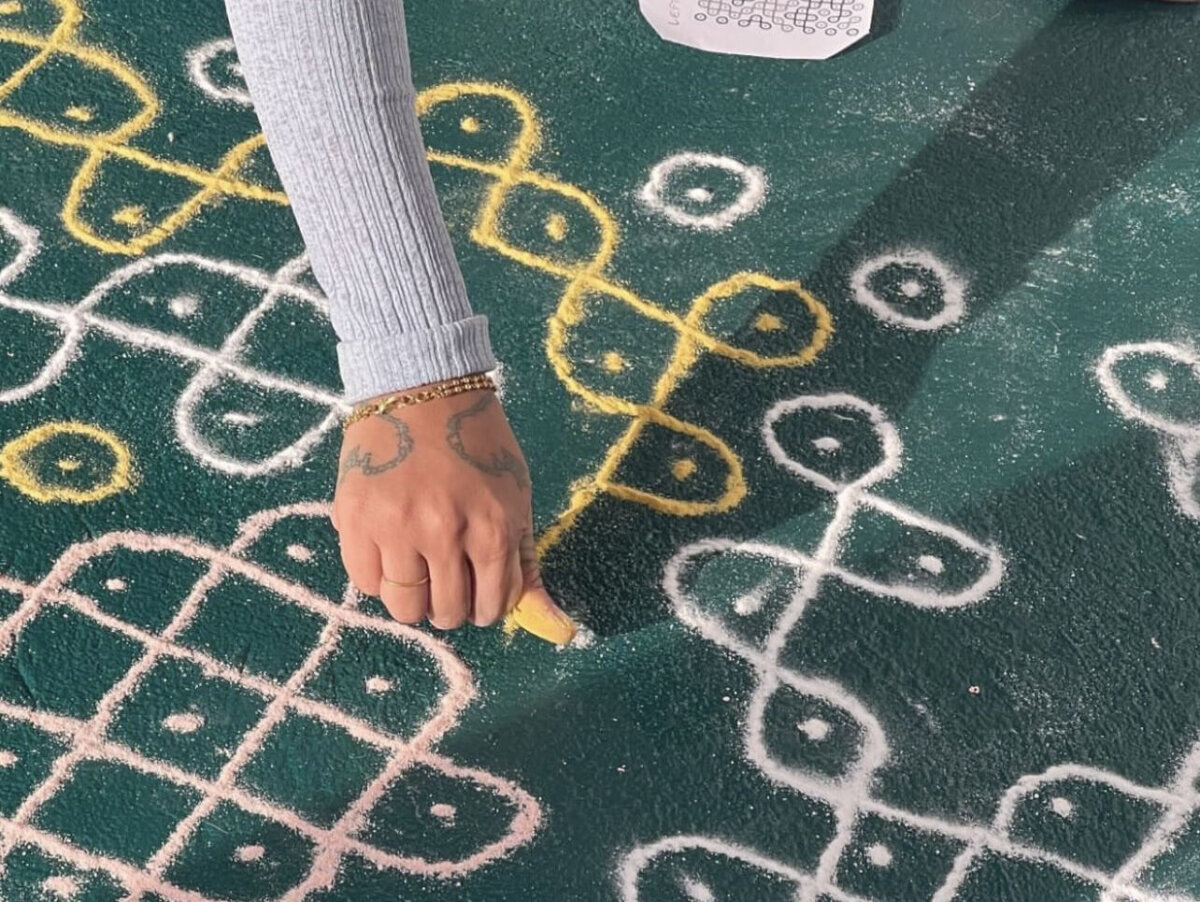
Aarati Akkapeddi ’s installation Kolams translates text into Kolam, traditional South Indian floor drawings made with rice flour, featuring mathematically complex patterns of continuous, intertwined lines. The work honours matrilineal memory and computation outside Western frameworks, with on-site Kolams containing encrypted messages that visitors can decode.
Blurring hi-fi and low-fi, circuitry and craft, Kathleen Bomani ’s sculptural vending machine installation Deera World draws inspiration from the Deera – a long, loose-fitting, flowing garment worn along the Swahili coast and across East Africa – as a quiet technology of femme subversion. Under patriarchal surveillance, the Deera becomes camouflage: performing respectability while protecting agency.
Through Herencia Dividida💧gota fría edition💧 artist duo Johnson & Jeison (Juan Manuel Parra Chaparro and Sebastián Mira) present a modified StepMania installation that joins the gameplay of early-2000s dancing machines and arcades with sounds and visuals from contemporary club culture, featuring levels of tropical rhythms designed for both winning and losing friends alike.
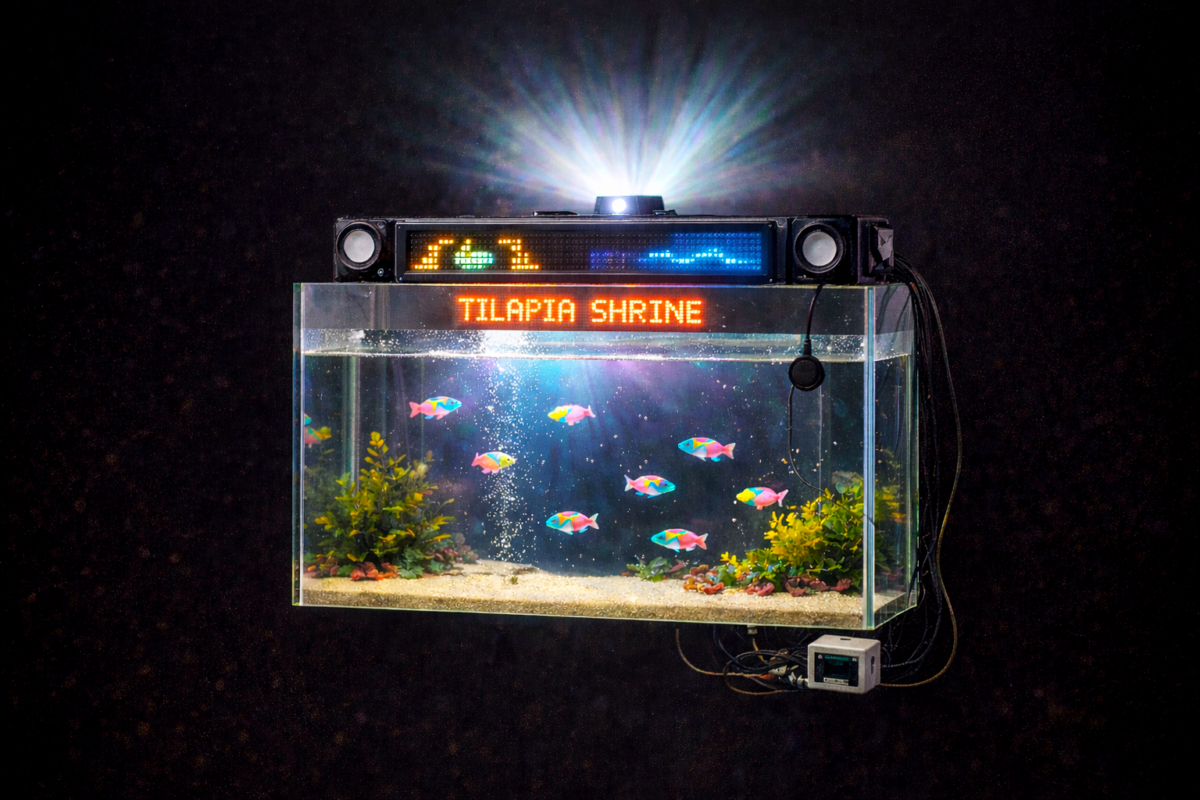
Fan Chon Hoo ’s Tilapia Shrine (Closed System for Care and Circulation) explores the intersections of care, belief, and survival in everyday life. Merging a domestic shrine with a tropical aquarium and centering on tilapia – a globally farmed fish linked to resilience and future space food systems—the work casts it as a post-religious deity of survival, highlighting how value and sustenance are shaped by ordinary infrastructures.
Simon Speiser will present the new installation Cuerdas del Manglar – Strings from the Mangrove, drawing on the history of maroon communities in Esmeraldas, Ecuador. The work connects speculative physics with histories of colonial survival and resistance. Using string theory as a loose framework, Speiser links black holes to shipwrecks that enabled Afro-Ecuadorian maroon settlements to emerge. Scratch holograms engraved into metal sheets reflect Esmeraldenian cultural memory and echo ancestral gold-mining practices.
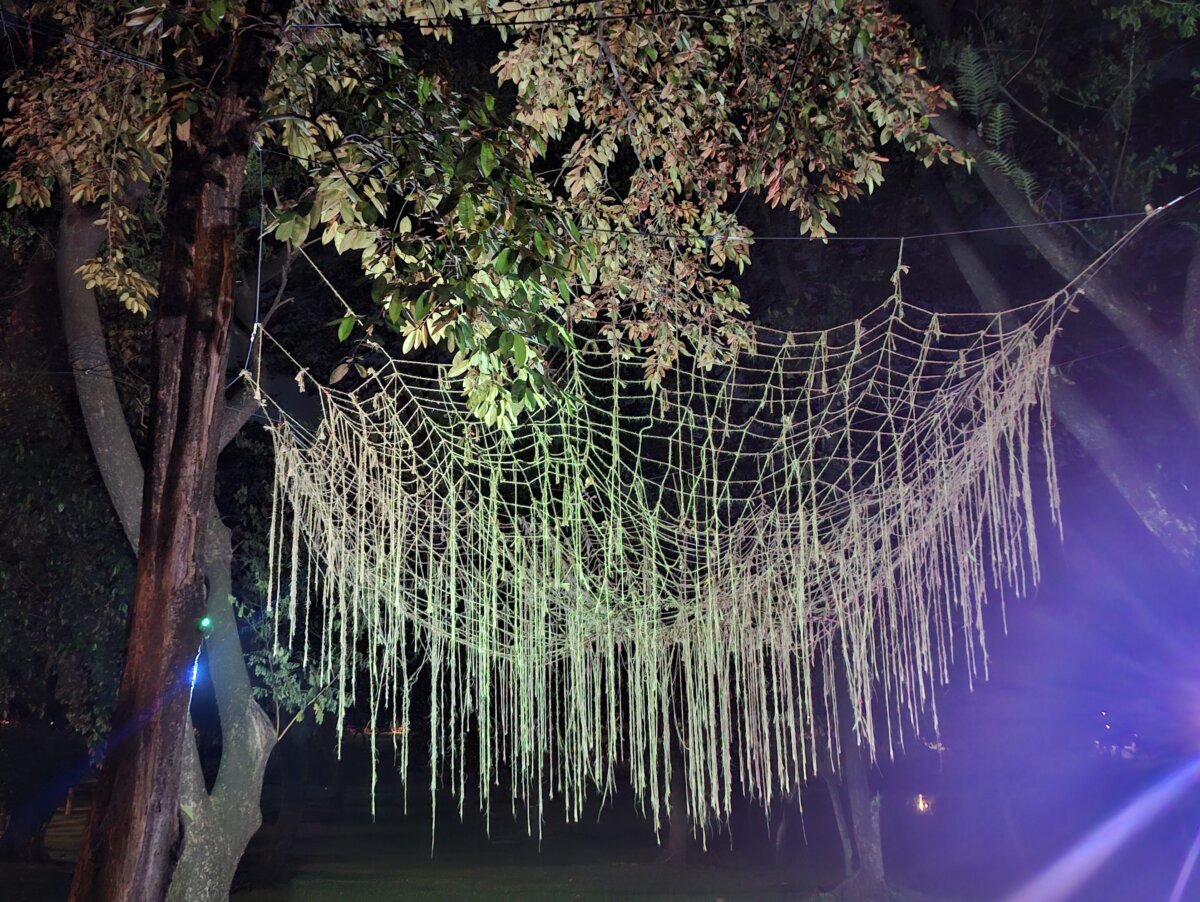
Rooted in her weaving practice, Isola Tong presents LAWALAWA, an installation and activated meshwork space that also functions as a protocol. The basket becomes a symbol of Bayotic Refugia – a term she coined by combining bayot (a Bisayan Filipino word for queer or femme) and biota, referring to local ecosystems. The work imagines refuge as a space where damaged or marginalised life can rest and regenerate. The woven net acts as a physical, offline “web”: both an installation and a space to be held within.
With further installations by Catherine Anabella Lie , Lara Tabet , Petja Ivanova , Federico Pérez Villoro , Kasra Jalilipour , and more to be announced.
The opening night on Wednesday (28 January) features Sonic Grid, a spatialised sound work by the Interspecifics collective, inspired by Jacobo Grinberg’s syntergic theory and inviting audiences to experience sound as a living environment. The evening continues with a concert by wordsofAzia , who weaves traditional Bhété rhythms from Côte d’Ivoire with jazz, singing in Bhété and English alongside her mother, Yao Rose, to bridge ancestral memory and contemporary expression. The night concludes with a high-energy DJ set by Brazilian artist Miss Tacacá .
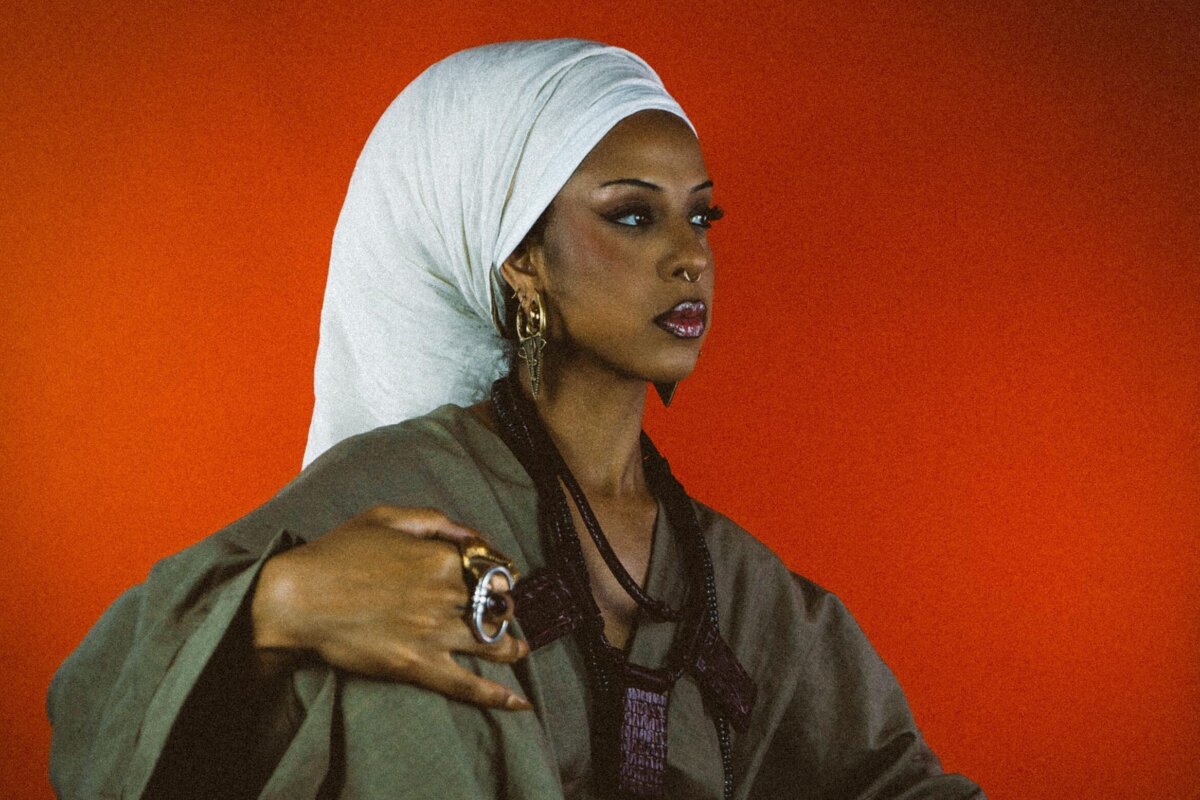
Tezgah (meaning loom in English; Webstuhl in German) is a live performance centered on a 40-year-old loom by Saba Arat together with Karlo Sono and Tarxun . Now worn, partially broken, and holding an unfinished kilim, the loom has been transformed into a playable instrument. As Arat continues weaving during each performance, the piece moves through shifting phases, merging craft and sound into a raw, hybrid sonic state the trio call loom-metal.
Shaheer Tarar will present two works exploring how computational infrastructures shape images and worldviews. His video game essay-lecture The Compression Zone examines compression algorithms as key engines of contemporary world-making, merging autobiography, archival research on twentieth-century nationalism, and the fragmented logics of memes and conspiracy culture. As a Low Tide contribution, Tarar also presents Spiral Keti, a visual research interface that maps a Wikipedia rabbit hole as an experiment in defamiliarising the web.
Hiba Ali ’s lecture-performance Sounding the Ocean: Spiral Networks of Remembrance and Elation introduces an exploratory, research-based video game environment that brings together music, architecture, and speculative worldbuilding across the Swahili Seas, connecting East Africa, the Gulf, and South Asia. Through gameplay excerpts, sound, and visual material, Ali situates worldbuilding as a method for sensing historical memory, oceanic exchange, and alternative technological imaginaries.
Wrapping up the festival on the closing night, Sunday (1 February) will be a concert by Afrotronix , fusing Chadian initiation rhythms, Sara and Arabic vocal traditions with Afro House, Amapiano, and electronic production into “Saharan Electro”, a pan-African sound bridging ancestral wisdom and futurism.
Other High Tide programming includes contributions from Elvira Espejo Ayca , Chia Amisola , Laura Huertas Millán and Animistic Beliefs .
Tracing a throughline across the festival, hanging and holding structures emerge as both literal and conceptual nets. Drawing on the Brazilian Portuguese word rede – meaning both network and hammock – transmediale installs hammocks across its venues as spaces of net-resting, or shared balance. A collection of hammocks, known as a Redário, becomes a social protocol here, inviting us to imagine networks as hammocks: more-than-binary systems that hold space for mutual balance rather than extraction, and that operate according to alternative, relational logics.
Manthia Diawara ’s essay film, AI: African Intelligence (2022), explores the contact zones between African rituals of possession within traditional fishing villages of the Atlantic coast of Senegal and the emergence of new technological frontiers known as Artificial Intelligence. Considering the confluence of tradition and modernity, Diawara questions how we could move from disembodied machines towards a more humane and spiritual control of algorithms. The screening will be accompanied by a conversation with the filmmaker.
The InterTropical Chilimbas: Technologies of Transmission is an installation and conversation space by Gladys Kalichini that draws inspiration from rotating savings and credit associations across the global south – known as SuSu, Chilimba, Chitty, Arisan, and ROSCAs. In Zambia, Chilimba names both a communal savings pot and a radio – economic and sonic channels sustaining networks of relation. The installation hosts discussions on rotating savings, alternate economies, and social coins, activated by Gladys Kalichini with guest practitioners.

Montika Kham-on ’s film Afterlives (2025) imagines a post-tropical future where light carries memory – bending and fracturing to hold fragile histories. On an iodine planet, a dream engineer conjures visions of her grandfather’s life shaped by Isaan’s harsh climate in the northeast of Thailand, forced migrations, and loss. In this luminous archive, Ongkan Chaeng Nam ลิลิตโองการแช่งน้ํา, once a royal curse, re-emerges as the voice of ordinary people, weaving together myth, trauma, and hope. The screening will be accompanied by a conversation with the filmmaker.
In the desktop-lecture-performance Bedrot With Me, İdil Galip (founder of the Meme Studies Research Network) leads a collective experiment in doing almost nothing. The session is an invitation to lay and scroll together, daydream and drift off, rest in stasis. In it, the private ritual of bedrotting and the semi-private act of parallel play exist in the same space.
In Paper Mulberry Commons & Slurplus Salas, Huang Po-Chih and Nat Skoczylas propose a shared, living installation that unfolds around paper mulberry – a plant deeply embedded in Taiwan’s ecological, cultural, and migratory histories and practices of fermentation, preservation, and surplus economies. Collective jars of pickles, kvass, kombucha, and preserves form a growing archive of flavors, scraps, and stories, inviting participants to share recipes, memories, and imagined futures.
Lee Tzu-Tung , who was part of the South East Asia Netting Group Gathering in Phuket, contributes the Body's Tale of Mercy & Vengeance (BOTAMEVE), an embodied protocol developed through long-term artistic and political engagement with queer communities. Inspired by Crip Theory, the Body's Tale of Mercy & Vengeance is a feminist fight club where members examine the mercies and harms their bodies have experienced – whether rooted in sexuality or disabled lived realities. Within the festival, BOTAMEVE unfolds as a situated workshop of mutual aid, harm reduction, and collective attunement.
Each day Rochelle Nembhard , one of the festival’s spatial architects, will lead Pray-per-view, a 15-minute ritual walk setting the collective tempo for the festival day. Nembhard’s work weaves diasporic, ancestral, and futuristic aesthetics through ritual, art, and embodied practice.
Other Low Tide programming includes contributions from KMRU , Wairimũ Nduba , Juan Covelli , Petna Ndaliko Katondolo , Tianzhuo Chen , Patience Katushabe , and Tsige Tafesse .
Sister festivals transmediale and CTM continue their collaborative programming this year with two events; one an evening of sonic exploration of breath-based codes and technologies, the other an all-night party of many-tongued club transmissions.
Transhemispheric Resonances will take place on Friday (30 January) at silent green. In this two-part concert, Nursalim Yadi Anugerah and Vica Pacheco take the stage separately yet together they compose a trans-hemispheric conversation across forest soundscapes and time-honored breath-based codes and technologies. Yadi invokes the kadedek, the bamboo mouth-organ of West Kalimantan, Borneo, whose layered breaths carry forest memory, communal ritual, and echo·logical fragility. Pacheco, inspired by pre-Columbian whistling vessels, works syncretically with ceramic instruments and hybrid sonic devices, exploring the interplay between ancient and contemporary technologies.
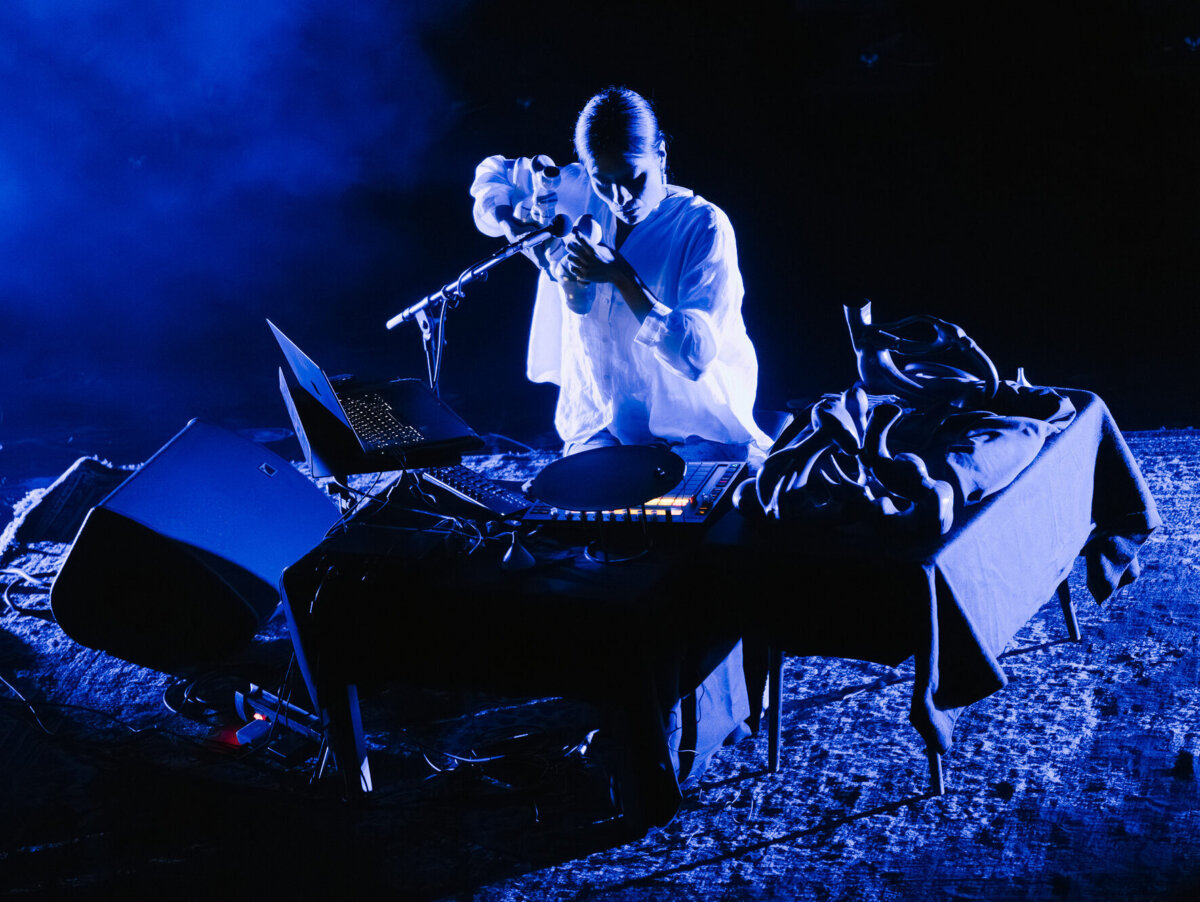
An ITCZ of Many Tongues is the title of Berghain’s Säule programme on Thursday, January 29 Sonic currents meet like winds in the Intertropical Convergence Zone: across Säule, hemispheric pulses collide and braid. Featuring Dengue Dengue Dengue , Clementaum , Aunty Rayzor , DJ Love , Microhm , and Miss Tacacá .
Vorspiel is a city‑wide initiative in Berlin, supported by transmediale and CTM festival. Since 2011, it has brought together over 120 project spaces, galleries, and cultural actors, spotlighting the vibrancy of Berlin’s independent art and sound communities. Held in the weeks leading up to and during the festivals, Vorspiel offers a platform for creative exchange across art, technology, politics, and experimental music.
Programme cooperations for transmediale 2026 are developed in collaboration with Akademie Schloss Solitude, the Canadian Embassy in Berlin, Winchester School of Art at the Southampton University (UK), University of Potsdam and the University for Applied Science Potsdam, ASchool Network (Austria), HERVISIONS (UK), TBA21 (Spain), and Nero Editions (Italy).
Additional partner programmes alongside transmediale festival are co-presented with HAU / Hebbel am Ufer in Berlin and the Schering Stiftung.

About transmediale
transmediale is an annual festival and a critical space for the development of new experimental approaches in art and digital culture. Beyond the yearly event, transmediale is a transversal, dynamic platform that facilitates year-round activities including a residency programme and journal. Each festival edition focuses on a specific theme in the spectrum of art and digital culture that is reflected through a great variety of programmes like exhibitions, discourse formats, performances, screenings, and workshops.
Funded by
