| Tagline: | festival for art and digital culture |
|---|---|
| Date: | 31.01.–03.02.2019 |
| Organisation: | Kulturprojekte Berlin GmbH |
| Website: | https://2019.transmediale.de |
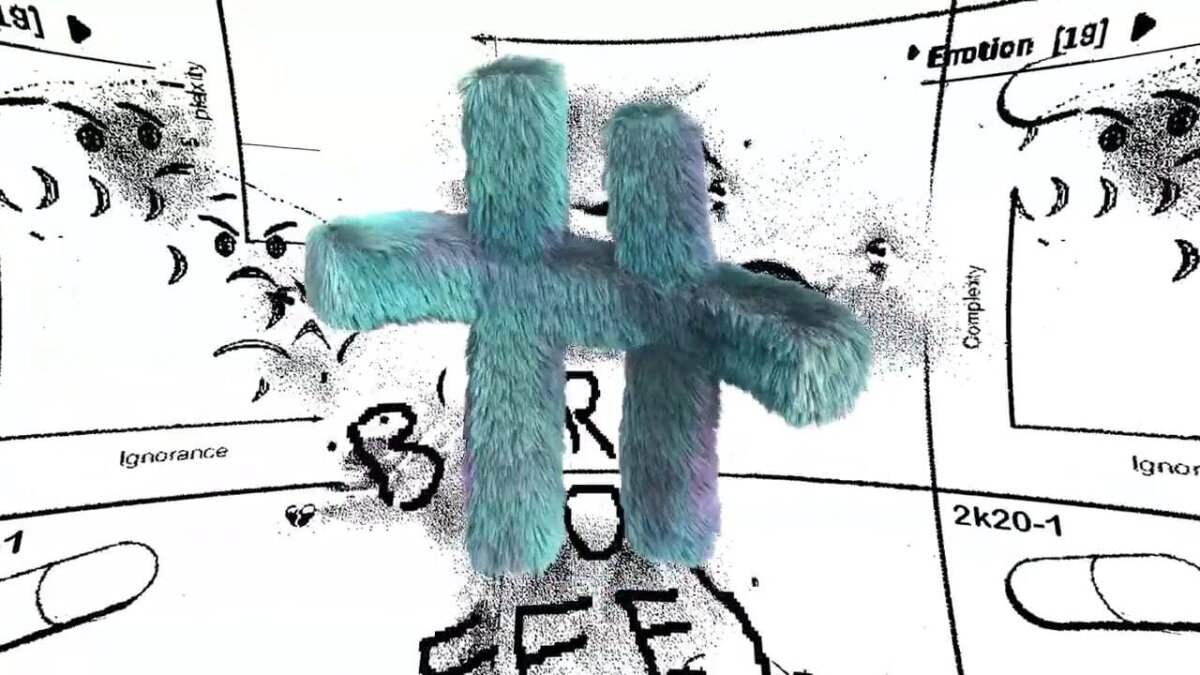
transmediale 2019 focused on how feelings are made into objects of technological design and asked what role emotions and empathy play within digital culture. One of the key questions of the festival was “What moves you?”, referring not only to an emotional response but also to the infrastructures and aesthetics that govern how affect becomes mobilised as a political force. Responding to this thematic focus, it aimed to create an environment for the emergence of experiences and knowledge that went beyond the limited time frame of the public festival days.
festival theme
With digital technologies being integrated into the liveness of experience, a new situation for social change and cultural practice has arisen, which currently seems to lead to either political extremes or extreme complacency. How to resist the manipulative and polarising aspects of affect in the digital public sphere as it is expressed through a deadlock of the politics of feeling on the one side and disengagement on the other? What motivates social engagement and how can new forms of care and solidarity be developed and embodied?
For the first time in many years, the festival does not have a title in order to emphasise the possibility of emergence: In response to a critical time, transmediale wants to focus on live practices and the creation of learning environments rather than close down meaning.
Taking up the challenge of how to understand and work with new technologies of feeling, transmediale recognises that digital culture has become instrumental for capturing and managing what Raymond Williams once called “structures of feeling”—lived experiences and cultural expressions, distinct from supposedly fixed social products and institutions. Such experiences and expressions now create the affective spaces of social media, form the design imperatives of artificial intelligence applications, and seem to be capable of evoking empathy through virtual reality. In these contexts, social and political issues tend to become emotionalised and get turned into binary choices of for and against. One of the contemporary challenges is how to be critical and affirmative at the same time while avoiding such oversimplifications. For this purpose, transmediale 2019 strives to feature living, and not yet fully formed digital cultures of artistic vision, speculative thinking, activist intervention, and counter-cultural dreaming.
Following its focus on cultural emergence, the 2019 festival aims for a high level of participant and audience engagement through discussion-based and educational formats: Preceding the public festival days, transmediale offers the new Student Forum to create an environment for concentrated, in-depth work and studying. The workshop program is extended and starts on 29 January, too, continuing throughout the festival. Furthermore, the transmediale Study Circles are integrated across the program, zooming in on specific aspects of the festival theme. The Study Circles Affective Infrastructures and Uneasy Alliances consist of working groups in which participants come together before, during, and after the festival and generate various outputs such as workshops, events, and publications.
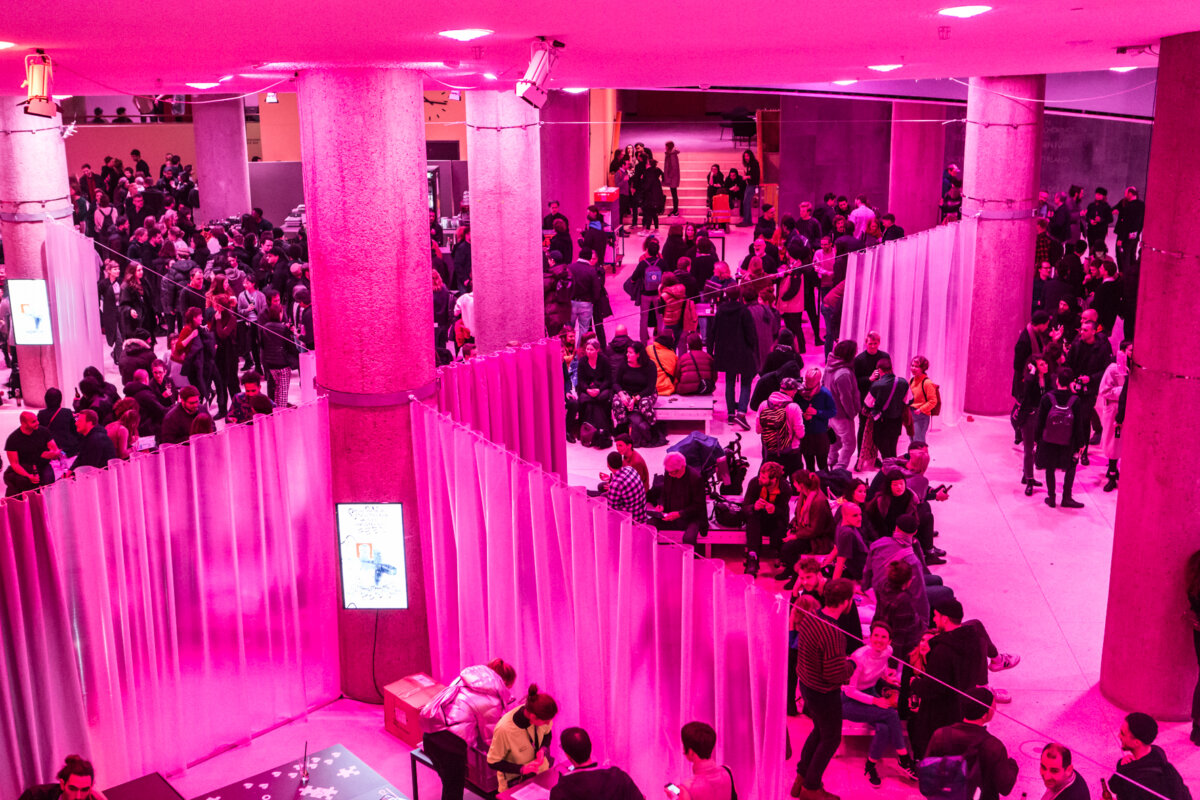
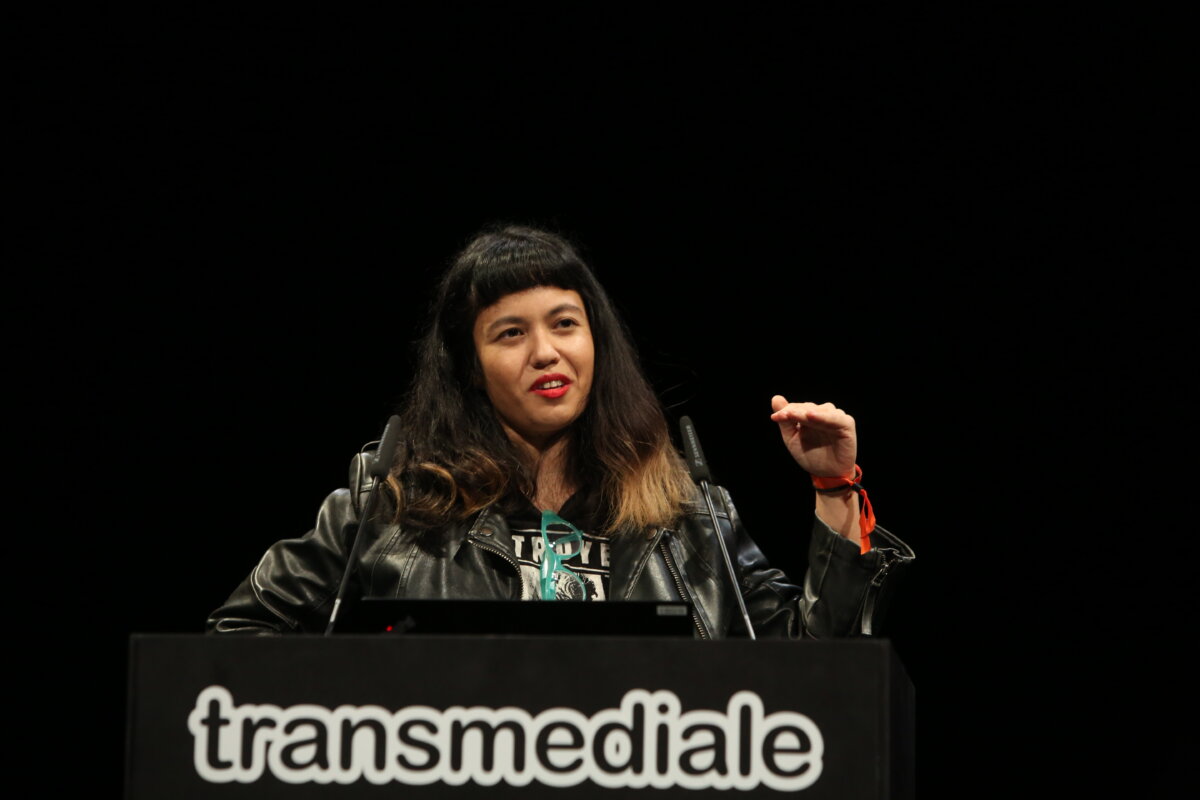
The newly introduced transmediale Study Circles already started in October 2018 and offered a space for reflection and in-depth exploration of some of the festival’s key questions. Besides established event types such as keynotes, performances, and short film screenings, participatory and educational formats played a significant role at transmediale 2019: The workshop program was extended and started – together with the new transmediale Student Forum – already two days before the festival officially opens.
 issue #2Uneasy AlliancesIn this issue of the transmediale/journal, participants of the Study Circle Uneasy Alliances reflect on topics which arose during their working process. Uneasy Alliances aims to investigate how new forms of acting in solidarity can be built by connecting artistic, tech, and activist approaches.With contributions by Ewa Majewska, Carolina García Cataño, Jennifer Bennett, Viktorija Šiaulytė, Robin Vanbesien, Jennifer Bennett, Marta Dauliūtė & Viktorija Šiaulytė, Carolina García Cataño, Wojciech Kosma, Ewa Majewska, Patricia Reed, and Robin Vanbesien.
 issue #3Affective InfrastructuresBy weaving essays, visual contributions and online conversations together with reference texts, artistic projects, and news articles, this issue provides a kaleidoscopic view of possible interpretations of how the notion of infrastructures can be understood in relation to affect.With contributions by Daphne Dragona, Femke Snelting, Maya Indira Ganesh, Lou Cornum, Jara Rocha, Marija Bozinovska Jones, Pedro Oliveira, Tung-Hui Hu, Fernanda Monteiro, and Nadège.
team
Kristoffer Gansing Artistic Director, Daphne Dragona Conference, Inga Seidler Program Development, Spatial Design, Florian Wüst Film & Video, Amelie Buchinger Program Coordination, Olga Wiedemann Program Assistant, Sibylle Kerlisch Production, Adam Asnan Stage Management, Christian Kleinwächter Projectionist, Anna Kondrig Intern Program, Julius Kopf Intern Program, Magdalena Ritter Administration & Finance, Ann-Christine Pilder Administration, Sina Droste Intern Administration and Participant Management, Diana Banzhaf Intern Administration and Participant Management, Filippo Gianetta Marketing & Communications, Tabea Hamperl Press & Communications, Natalie Schütze Editorial & Communications, Anky Heidenreich Accreditation Management & Communications, Nicola Angelillis Info Counter & Volunteer Management, Teona Gurgenadze Interns Communication, Christoph Papendorf Interns Communication, Technical Support by serve-u: Phillip Sünderhauf, Andreas Buchholz, Marc Klische, Gregor Krajnik, Graphic Design by The Laboratory of Manuel Bürger: Manuel Bürger, Simon Schindele, Barbara Acevedo Strange, Website Development by einskommanull: Sebastian Göbel, Laura Oldenbourg, Michael Scharnagl
transmediale advisory board Marie-Luise Angerer, Dieter Daniels, Micz Flor, Hito Steyerl, Moritz van Dülmen, Ben Vickers, Hortensia Völckers
supporters
Main funders: Kulturstiftung des Bundes
Additional funding: by Medienboard Berlin Brandenburg, Bundeszentrale für politische Bildung, Berlin Senatsverwaltung für Kultur und Europa
Partners: CTM Festival, Creative Europa Programme of the European Union, Thennn, Aarhus University, Winchester School of Art, Embassy of Canada, Flanders State of the Art, creative industries fund NL, Akademie der Künste, KIM Critical AI Studies HfG Karlsruhe, Pro Helvetia, Spektrum Community, Import Projects, TIER The Institute for Endotic Research
Technical sponsor: serve-u technical support
Media partners: ROM Magazine, neural, Berliner Fenster, radioeins, Le Monde Diplomatique
Supporters: Goethe Institut, Zurich University of the Arts, institute of network cultures, Institute of Experimental Design and Media Cultures, ZEM Brandenburgisches Zentrum für Medienwissenschaften, Berliner Gazette, Merz Akademie, MIGROS Kulturprozent, Echoo, IN-BERLIN, Goethe Universität Frankfurt am Main, Karlsruhe University of Arts and Design, Wallonie - Bruxelles International, Federation Wallonie-Bruxelles, iMAL Center for Digital Cultures and Technology, Lithuanian Council for Culture, Lithuanian Culture Institute, Preussen Quelle
Related Programmes
- !Mediengruppe Bitnik
- #purplenoise
- AAA
- Abiol Lual Deng
- Adelita Husni-Bey
- Alexander Karschnia
- Anna Tuschling
- Ariana Dongus
- Asia Bazdyrieva & Solveig Suess (Geocinema)
- Ben Anderson
- Boris Ondreička
- Brian den Hartog
- Carolina García Cataño
- Caroline Sinders
- Casper-Malte Augusta
- Center for the History of Emotions
- Christina Grammatikopoulou
- Christos Giovanopoulos
- COOL FOR YOU
- Cornelia Sollfrank
- Corporation of people's situations (COPS)
- Darsha Hewitt
- Devika Sharma
- DJ Puddle
- DJ ShluchT
- Dominik Landwehr
- Donna Verheijden
- Ebba Fransén Waldhör
- Fabian Bircher
- Felicita Reuschling
- Fernanda Monteiro
- Filipa César
- Florian Wüst
- Hybrid Space Lab (Elizabeth Sikiaridi & Frans Vogelaar)
- Hyphen-Labs
- Ilmar Hurkxkens
- iMAL.org
- Isabel de Sena
- Jackie Wang
- Jayson Haebich
- Jeff Deutch (Syrian Archive)
- Jennifer Bennett
- Jeremy Gilbert
- Jim Chuchu
- Jonathan Reus
- Julian Breinersdorfer
- Julienne Lorz
- Katja Gunkel
- Kyriaki Goni
- Laurence Rassel
- Laurie Robins
- Liza Johnson
- Lou Cornum
- Luiza Prado de O. Martins
- Machine Feeling Research Workshop
- Magdalena Taube
- Magdalena Tyzlik-Carver
- Marija Bozinovska Jones
- Marta Dauliūtė & Viktorija Šiaulytė
- Mihaela Brebenel
- Mykola Ridnyi
- Nadège
- Natalie Koerner
- Nayantara Ranganathan
- Niklas Reischach
- Omsk Social Club
- Panasiagirl
- Pedram Nasouri
- Pedro Oliveira
- PolakvanBekkum
- Rebecca Coleman
- Robin Curtis
- Robin Vanbesien
- Robyn Haddon
- Rowdy SS
- Rugile
- Seda Gürses
- Shaka McGlotten
- Stanya Kahn
- Stephanie Comilang
- Stéphanie Lagarde
- Taina Bucher
- Tony D Sampson
- U5