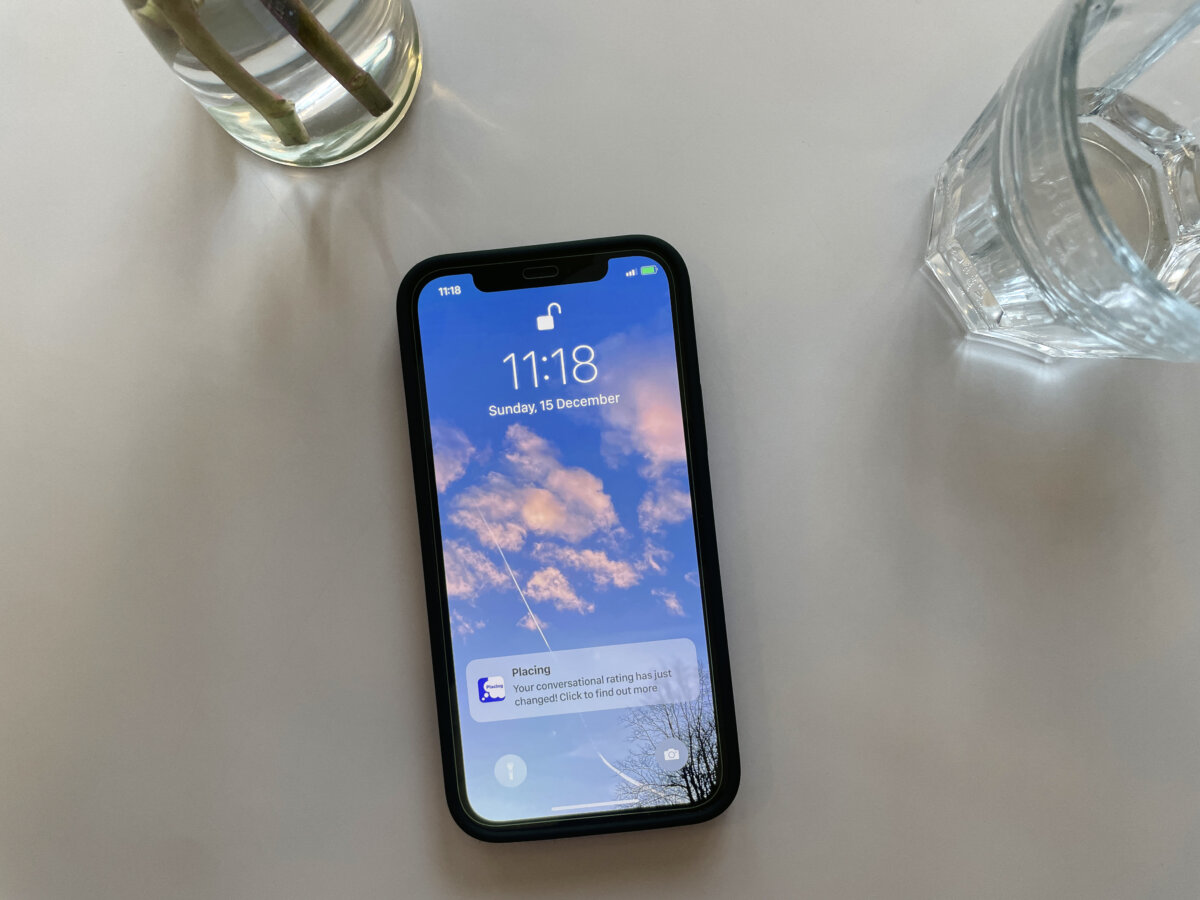
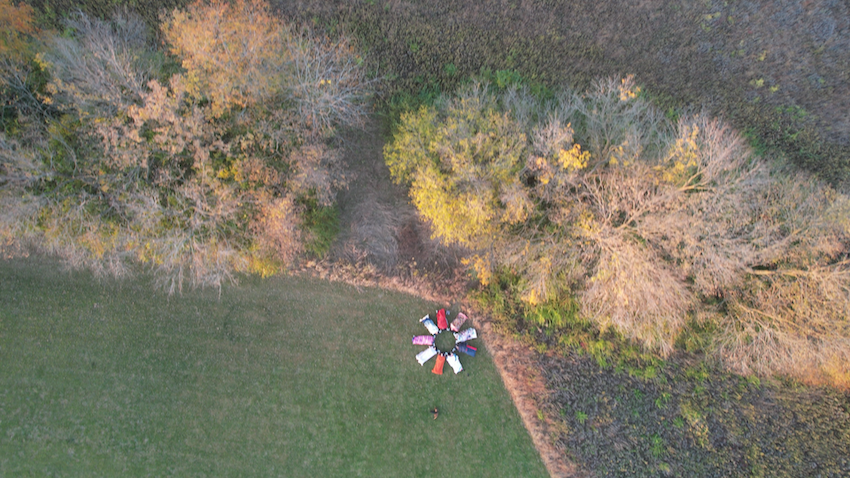
The films in this programme capture the user in the midst of imagination: employing mind and/or body to disconnect and reconnect the user from their everyday lived realities. (1) In Davies’ Haters will say I’m real, a fictional near future is depicted in which our everyday movements in public space are tracked for purposes of legal governance. In reaction, a group of users move for their phone cameras as if in a film edit, mocking the way the camera sees the world through fake slo-mo’s and crash zooms. This real-time mimicry of an offline film edit ensures the performer’s movements remain untracked, allowing individuals to reclaim agency of their bodies within public space. (2) #shiftok comprises users talking through their experiences of ‘reality shifting’, an experience where techniques of visualisation including affirmation and belief are used to transport a person to an alternate time and space. Drawing from the trend, Ripoll-Hurier’s One Try Away presents an early excerpt from a forthcoming feature (2026) based around the phenomenon. (3) Charlotte Zhang’s Tycoon (excerpt) thinks through the propagation of the grindset, and the grammar and choreographies that define realities shaped by capitalist dispossession. These realities tempt individuals to be seduced by the goal of optimisation, but the true optimal is a kind of horror, necessitating the invention of picturesque fantasies instead. (4) Maud Craigie’s Placing offers a speculation on ‘embedded marketing’, where individuals are paid to insert brand-names into daily conversation. As the film’s protagonist increases their proficiency at the task, they become increasingly dislocated in their daily interactions with others. (5) Finishing the programme, Dani and Sheilah ReStack present an edit of their forthcoming film Stovepipe to the Sun. The film is loosely based around a 19th Century separatist women’s community in Belton, Texas who used dreaming as a method to escape a patriarchal society.
With support from the Embassy of Canada in Berlin.