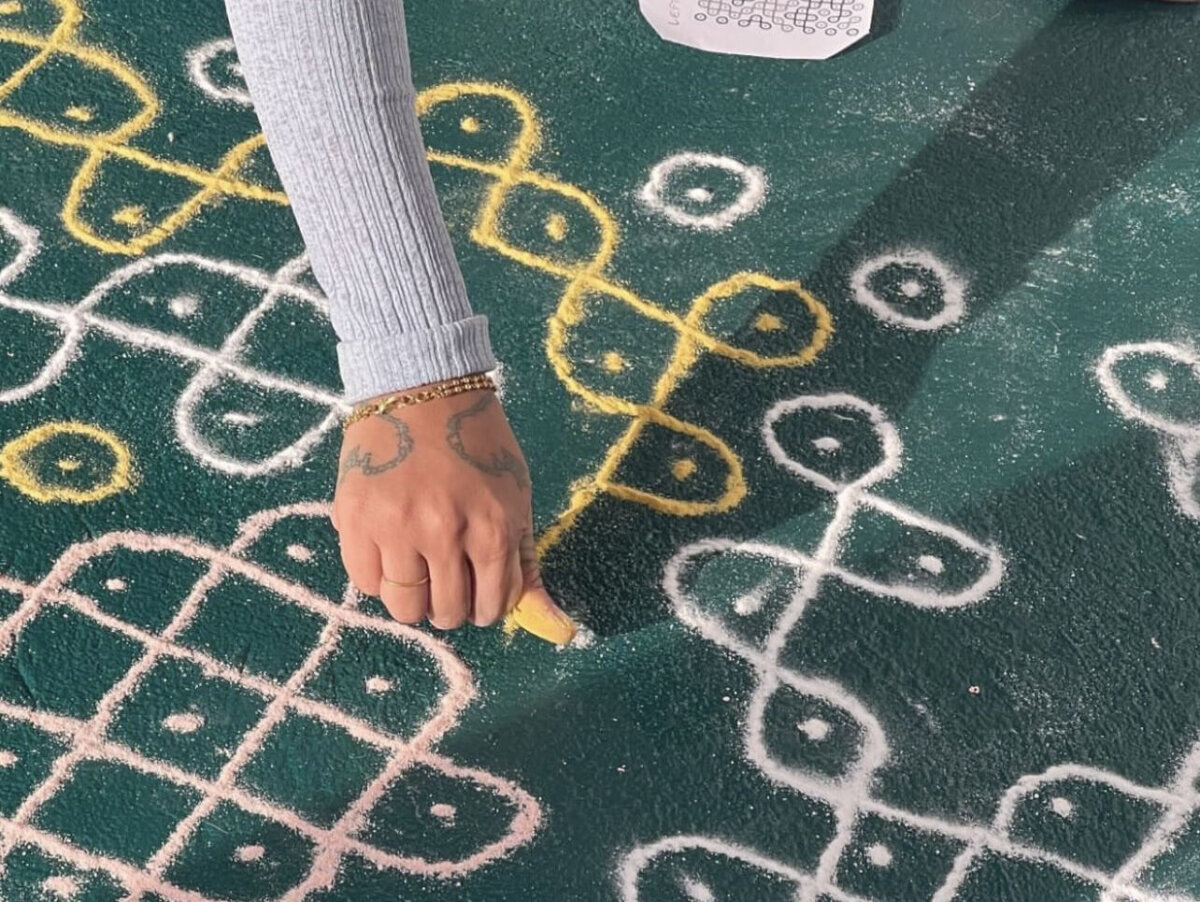
In 2022, during a period of mourning for the artist’s centenarian grandmother, Aarati Akkapeddi began developing a computer program that allowed them to translate text into Kolam designs. Kolam (Tamil) or Muggu (Telugu) is a traditional South Indian art form: auspicious floor drawings made with rice flour, traditionally practiced by women, consisting of mathematically complex patterns of continuous, intertwined lines.
To encode text into Kolam designs, each letter is first translated into eight-digit binary codes, which are then mapped, using an algorithm, onto a matrix of dots, drawing loops in colors that correspond with either 0 or 1. Through this process, the work traces connections between Kolams, gender, and computation, recognising and honouring computational lineages that exist outside Western patriarchal frameworks.
The initial iteration of the algorithm served as a matrilineal mourning ritual, creating Kolams representing three generations of women: Swarajyalaxmi (the artist’s grandmother), Kameswaramma (her mother), and Rajyalaxmi (her grandmother). For the transmediale 2026 presentation of the work, the system will be used to draw Kolams on the ground with rice flour and turmeric. Each contains encrypted messages that visitors can decode via the website kolam.codes , where they can also create and encrypt their own Kolams.
Related Media
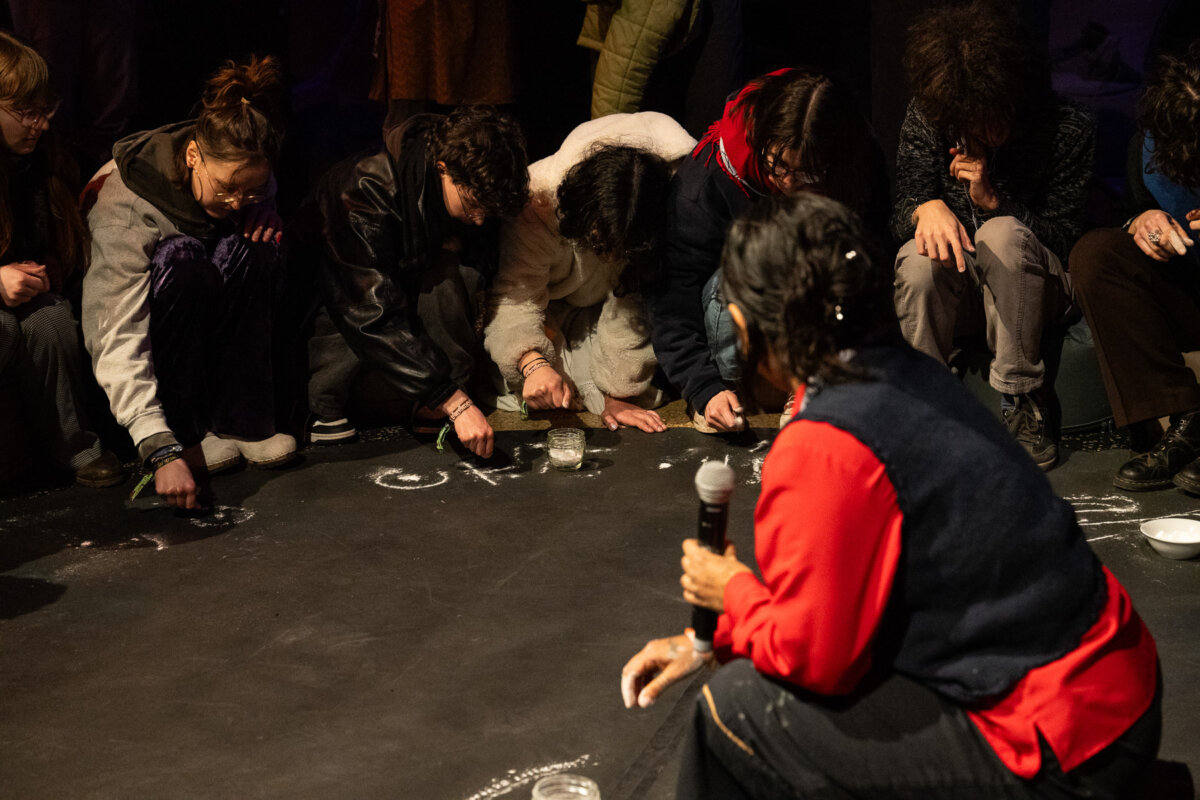 Aarati Akkapeddi, Discursive Element, Activation at transmediale 2026
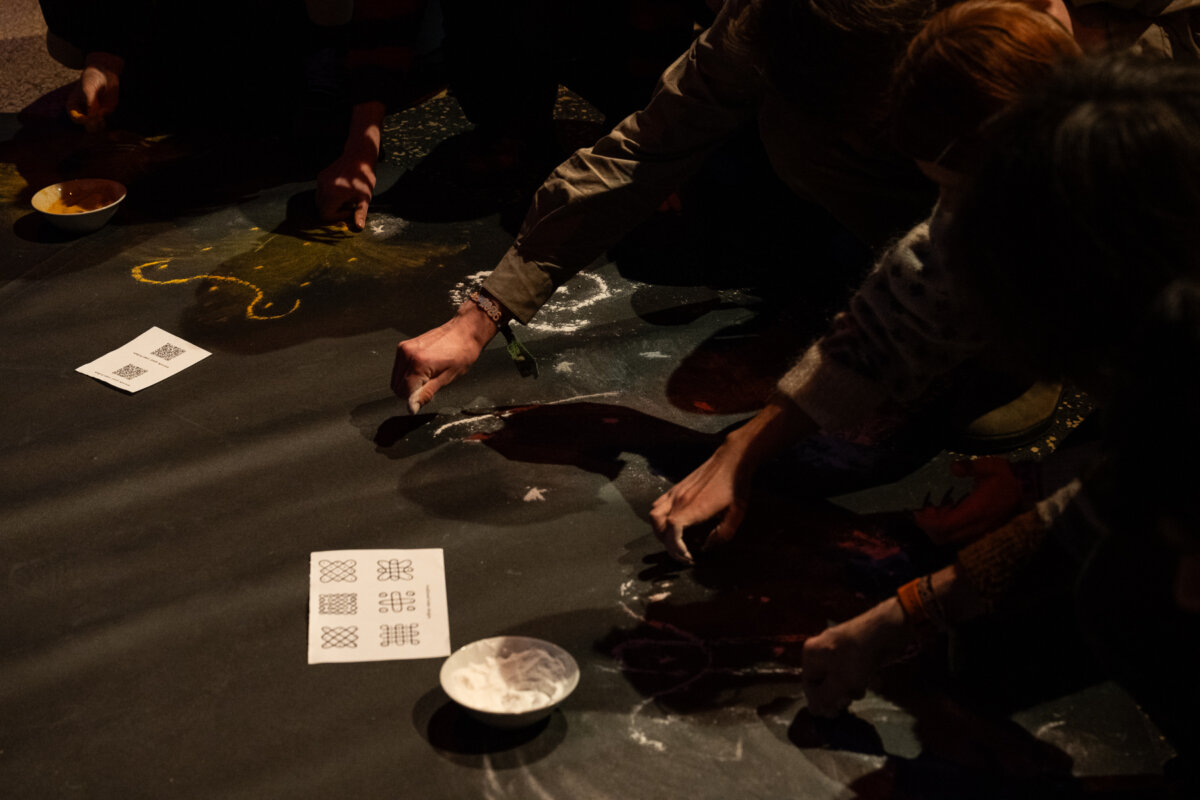 Aarati Akkapeddi, Discursive Element, Activation at transmediale 2026
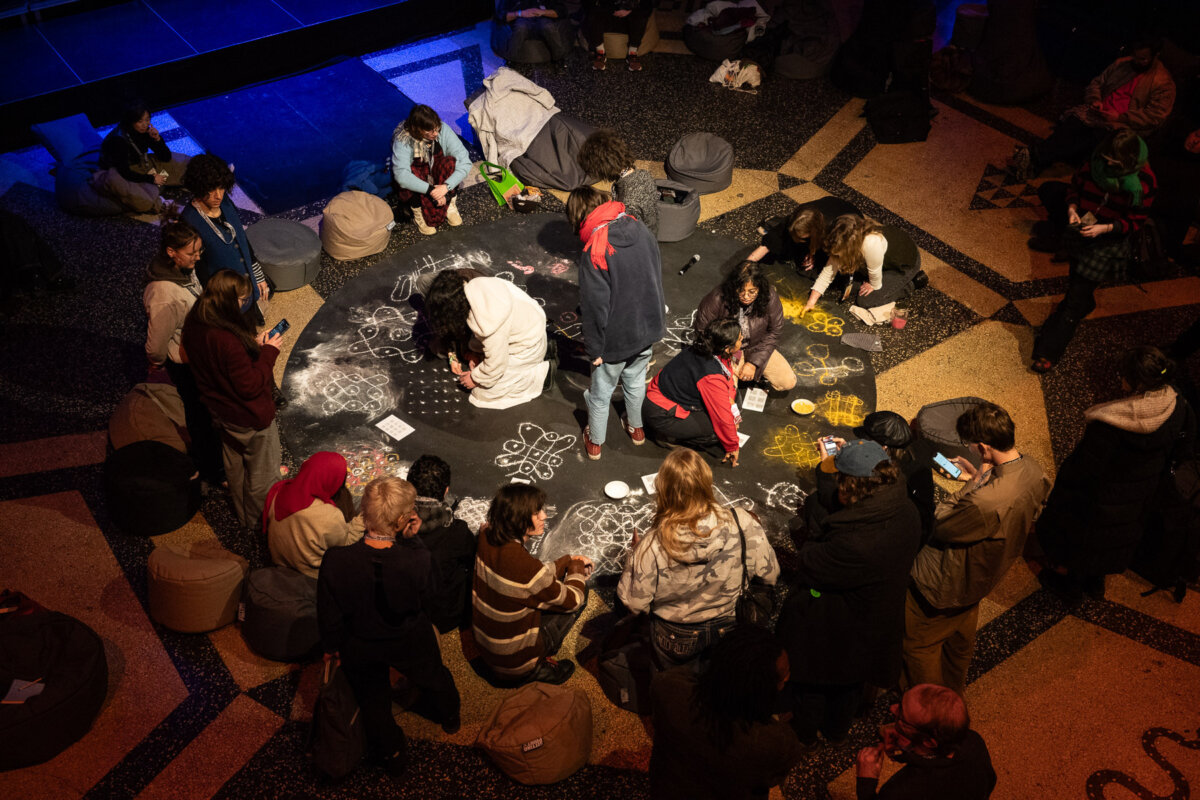 Aarati Akkapeddi, Discursive Element, Activation at transmediale 2026
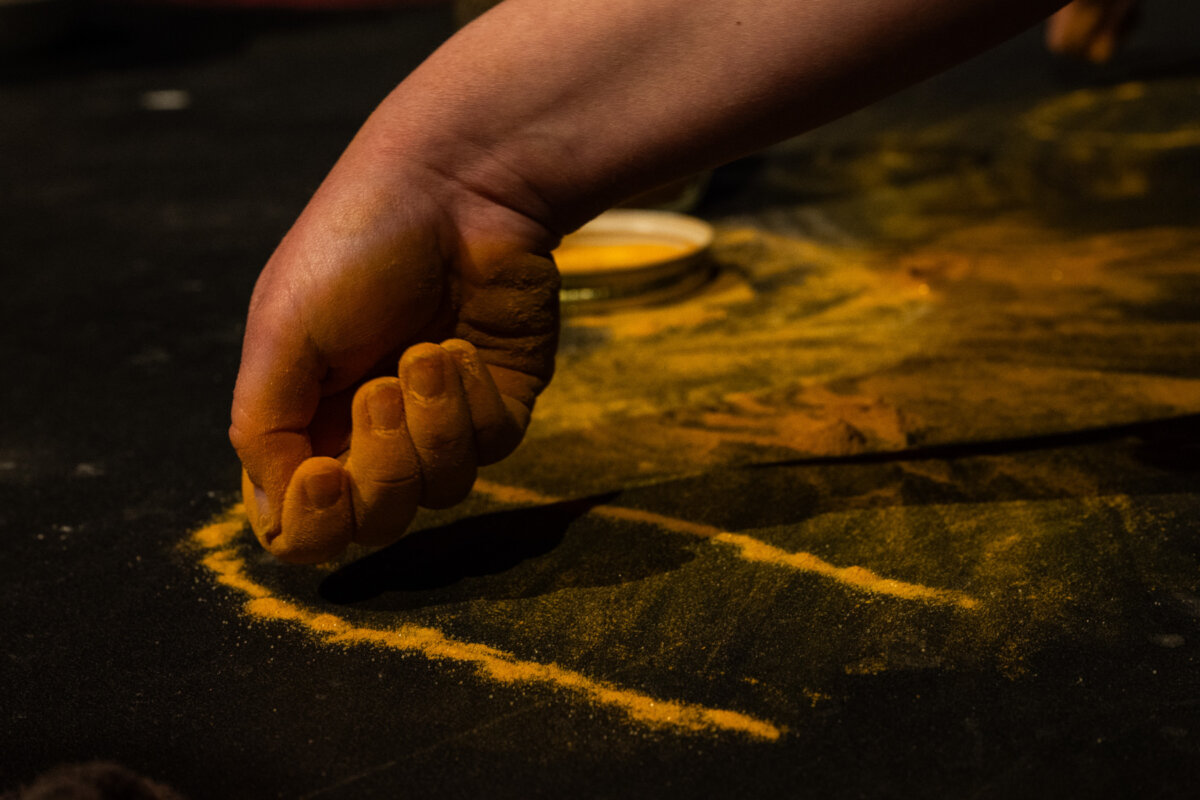 Aarati Akkapeddi, Discursive Element, Activation at transmediale 2026
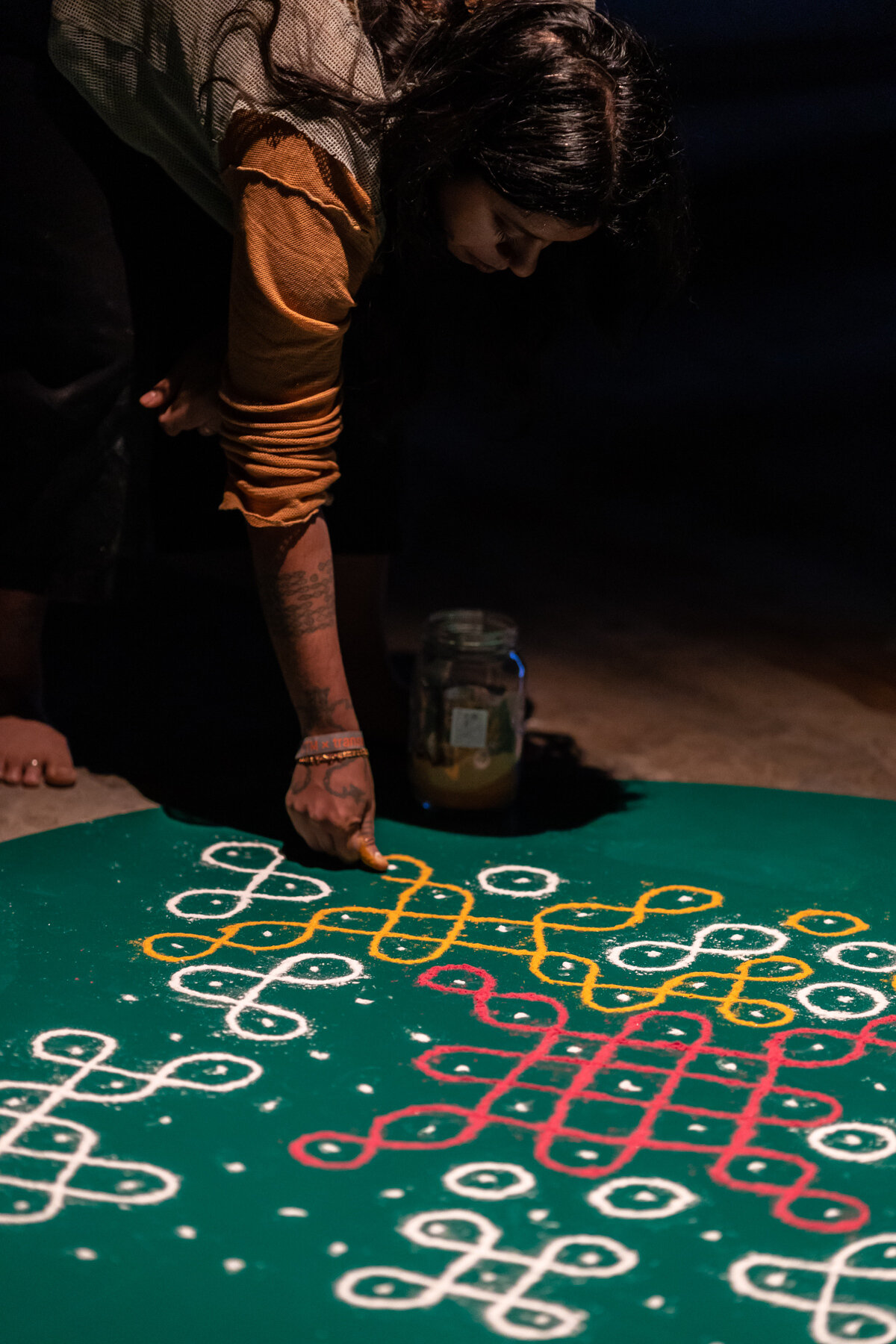 Aarati Akkapeddi, Kolams, installation activation at CANK, transmediale 2026
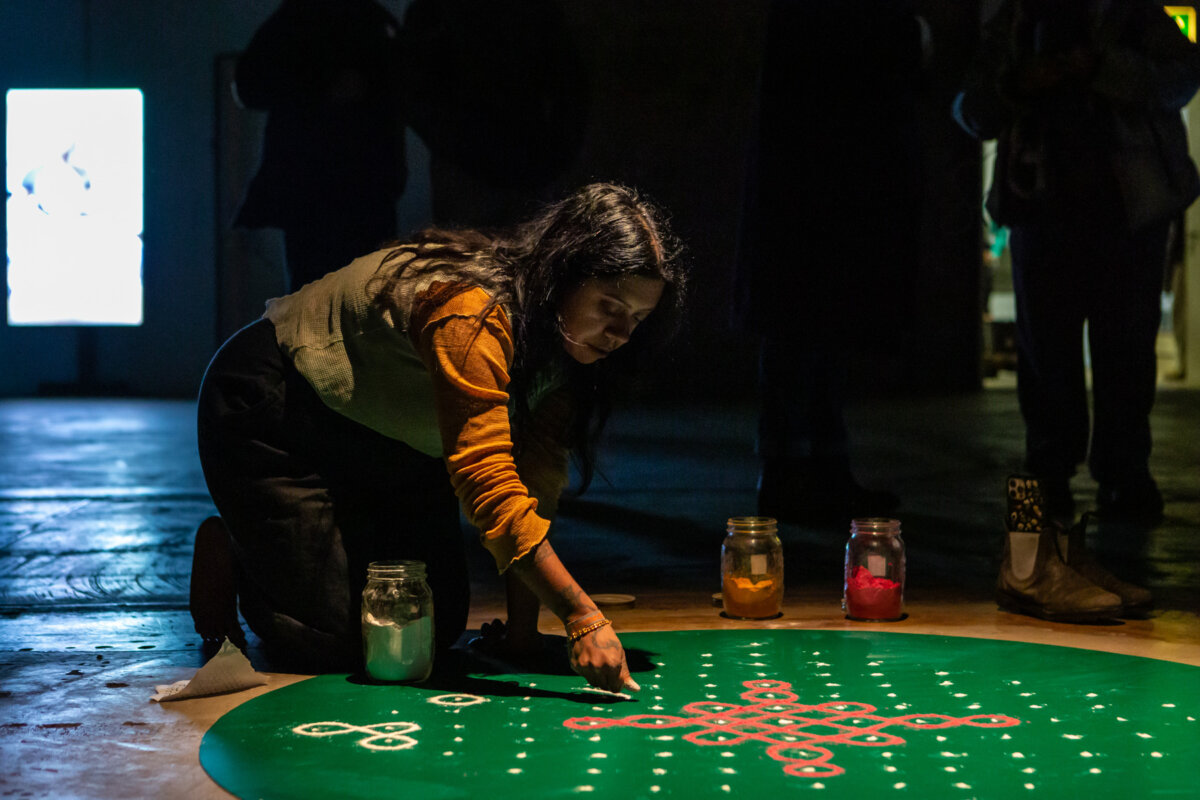 Aarati Akkapeddi, Kolams, installation activation at CANK, transmediale 2026
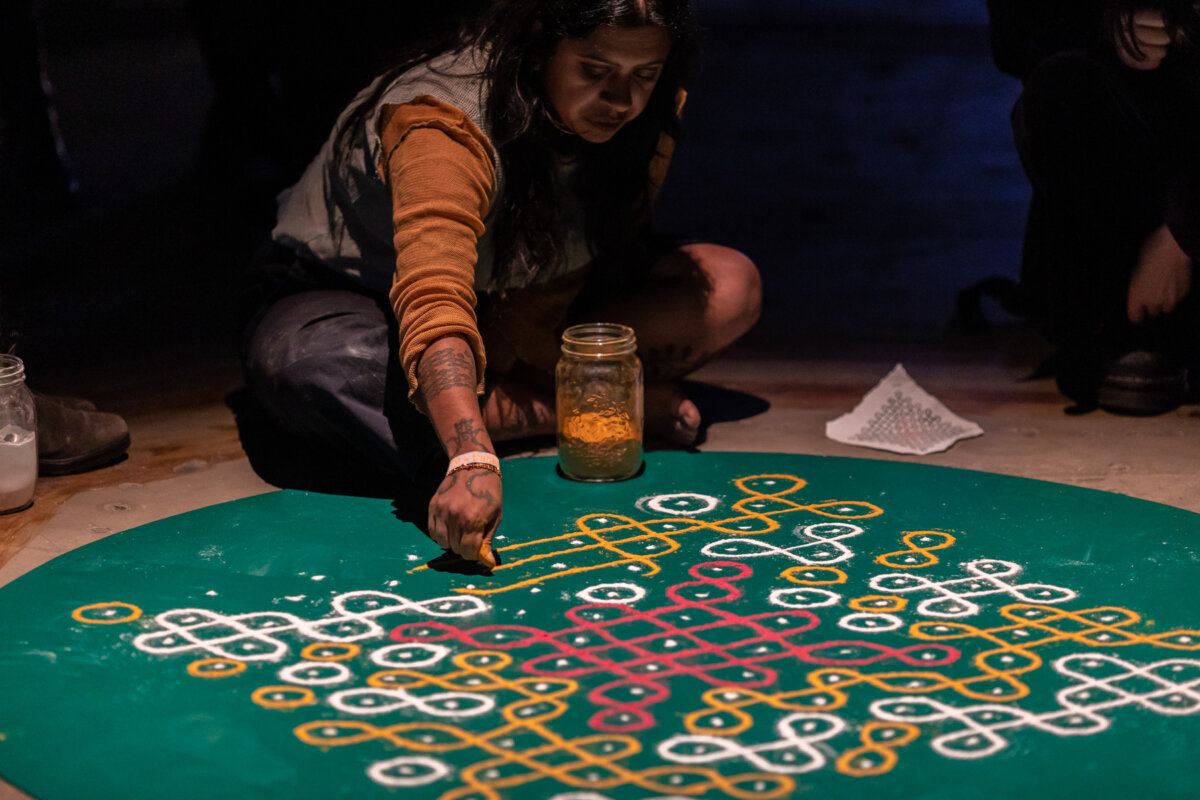 Aarati Akkapeddi, Kolams, installation activation at CANK, transmediale 2026
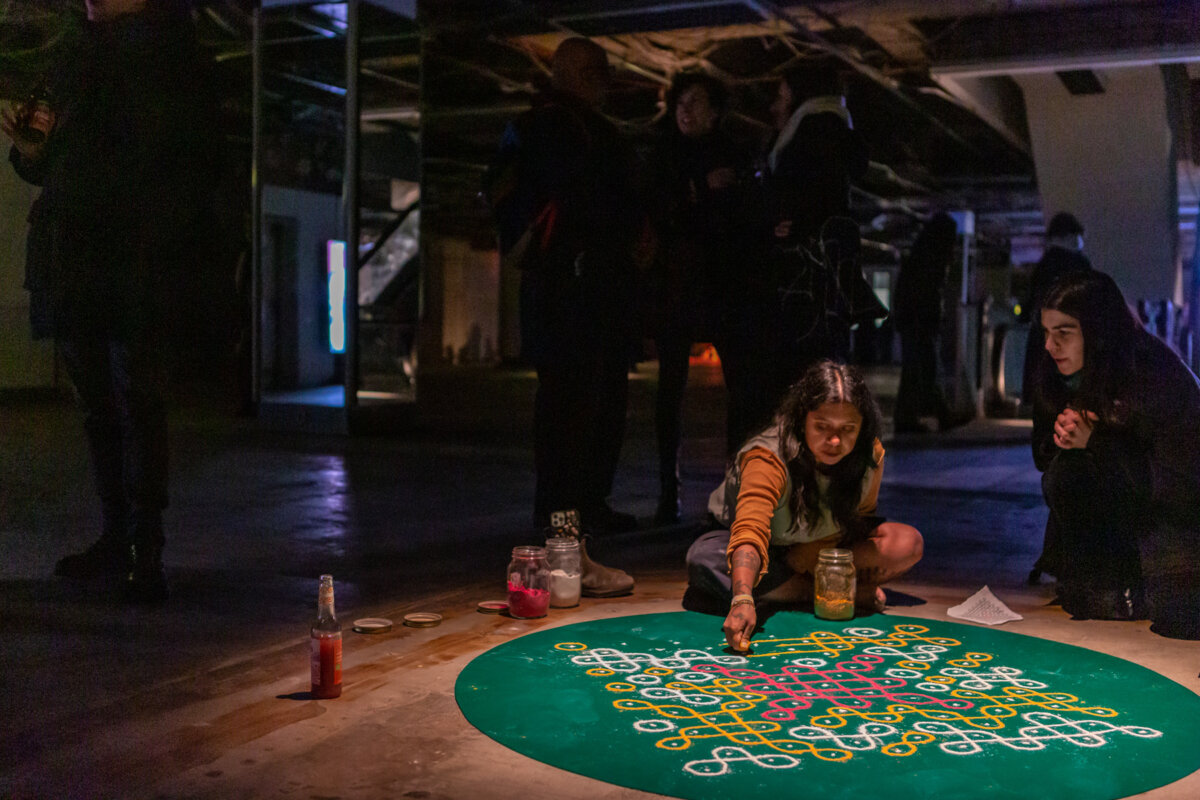 Aarati Akkapeddi, Kolams, installation activation at CANK, transmediale 2026