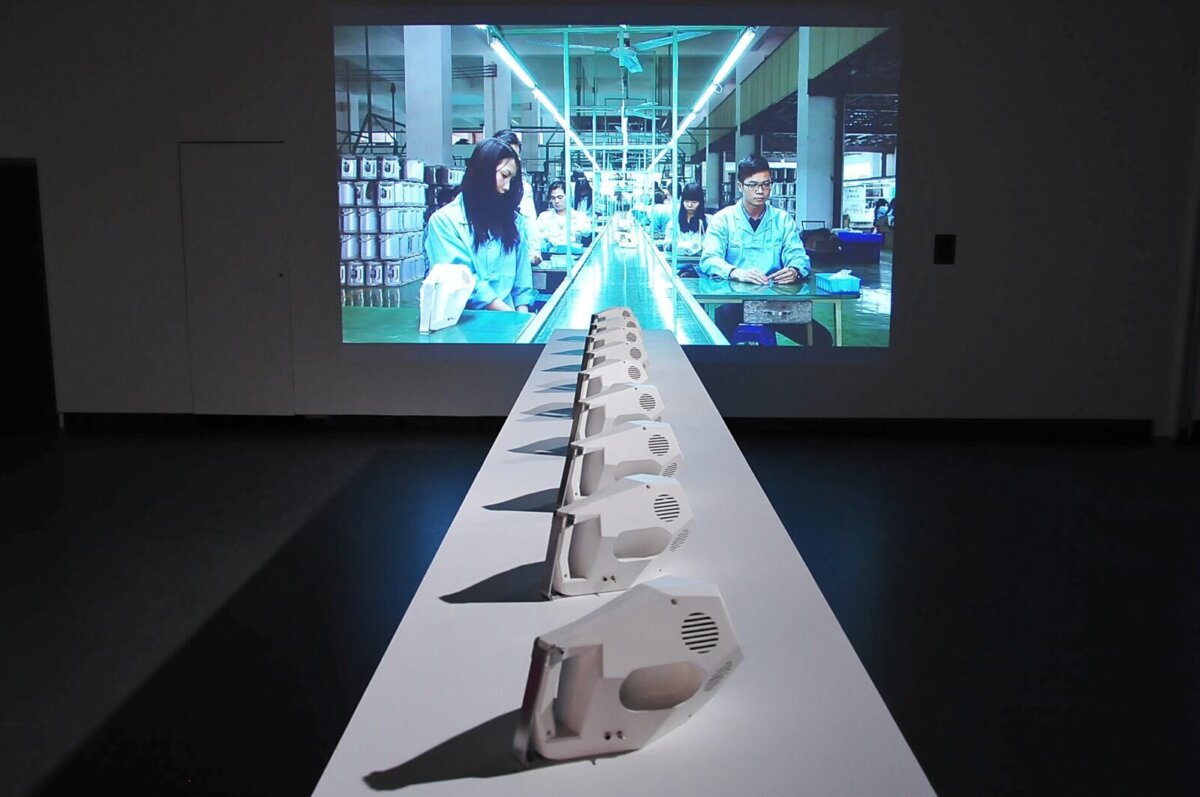
Time & Motion: Redefining Working Life is the guest exhibition within the framework of transmediale 2015 CAPTURE ALL. Produced by FACT (Foundation for Art and Creative Technology, Liverpool) in 2013-2014, it is now presented as a special edition linked to the festival theme.
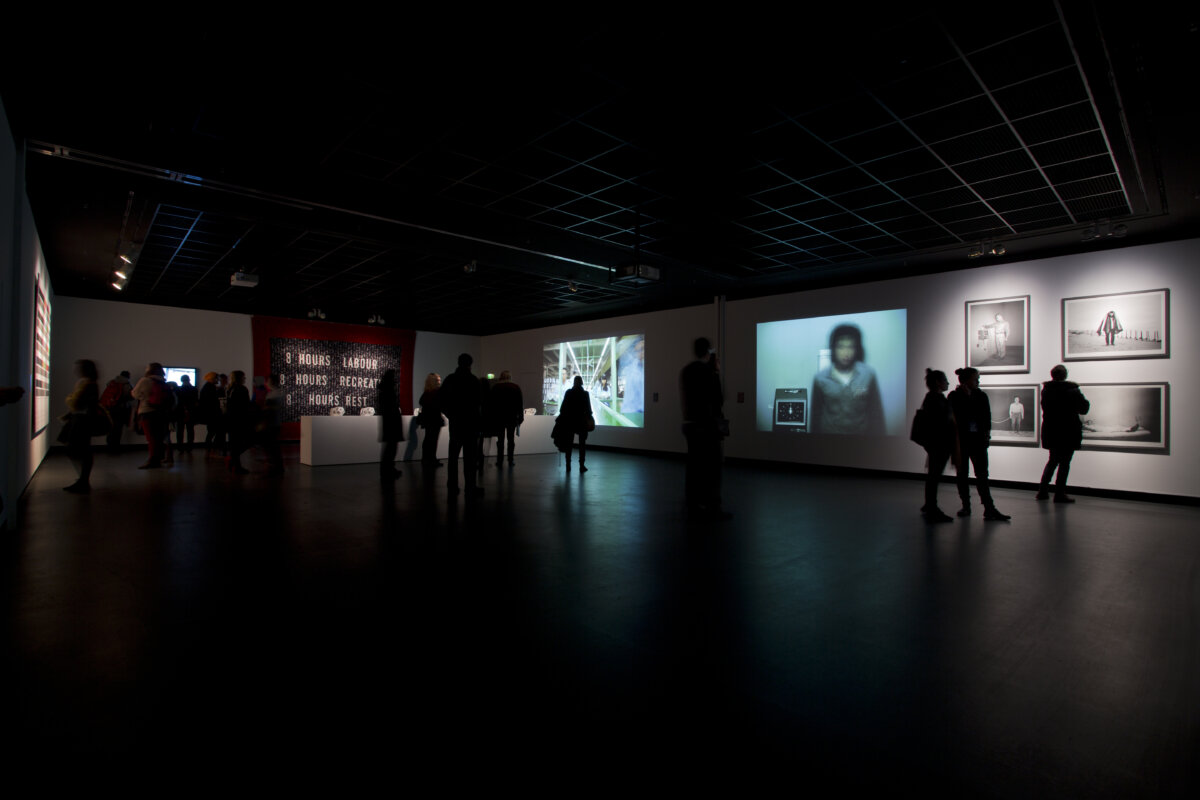
Time & Motion uses artworks, research projects, archival materials and interventions to track our journey through the world of work, from clocking on at the factory gates to checking in online from our home office. At a time of structural changes in the labour market and sharp transitions in business practice to address global recession, the exhibition asks timely questions including ‘What happened to the eight hour day?’, ‘What is your work life balance?’ and ‘How has technology affected the way that you work?’
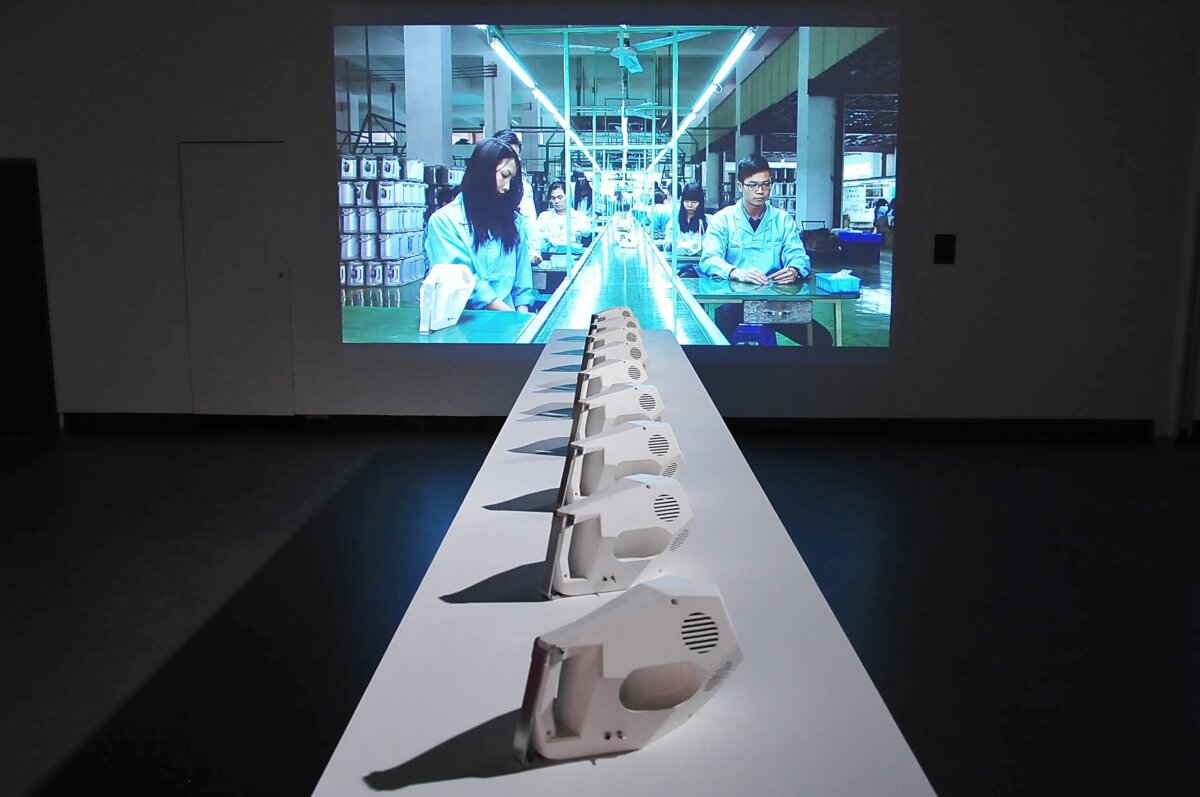
Born out of the transforming force of the Industrial Revolution, the concept of the eight-hour working day was fought for alongside wider struggles for improved working conditions. This panel takes its name from the exhibition of the same name, which re-examines the relevance of our traditional notions of the eight-hour working day in a digital age.
How is digital transformation changing the time management of our working lives?
This panel is addressing questions relating to the contemporary division of work time, leisure time and the ambiguous position of “creative work” somewhere in between. How is work and “free” time evaluated in the creative economy and across different global contexts? Each departing from artistic research projects, the speakers will address questions such as ‘What happened to the eight hour day?’, ‘What is your work life balance?’ and ‘How has technology affected the way that you work? The participating artists Ellie Harrison, Sam Meech and Oliver Walker all take a direct approach to questioning how value is created both in terms of artwork as process and product, questioning our assumptions of work, trade and exchange, through different methods of making, analysing, measuring and trading time, often that forming the material of the artwork. Our world of work, from clocking on at the factory gates to checking in online from our home office or local entrepreneurial networking space is both curse and blessing. As our industrial economy has given way to a service and knowledge economy, producing ideas and experiences rather than artefacts, how have our patterns of day-to-day working life changed and how have these impacted on being an artist or the ‘industry’ of making art? Do artists face a stronger sense of precarity or do they enjoy a more assured security than other members of society through a different set of values?
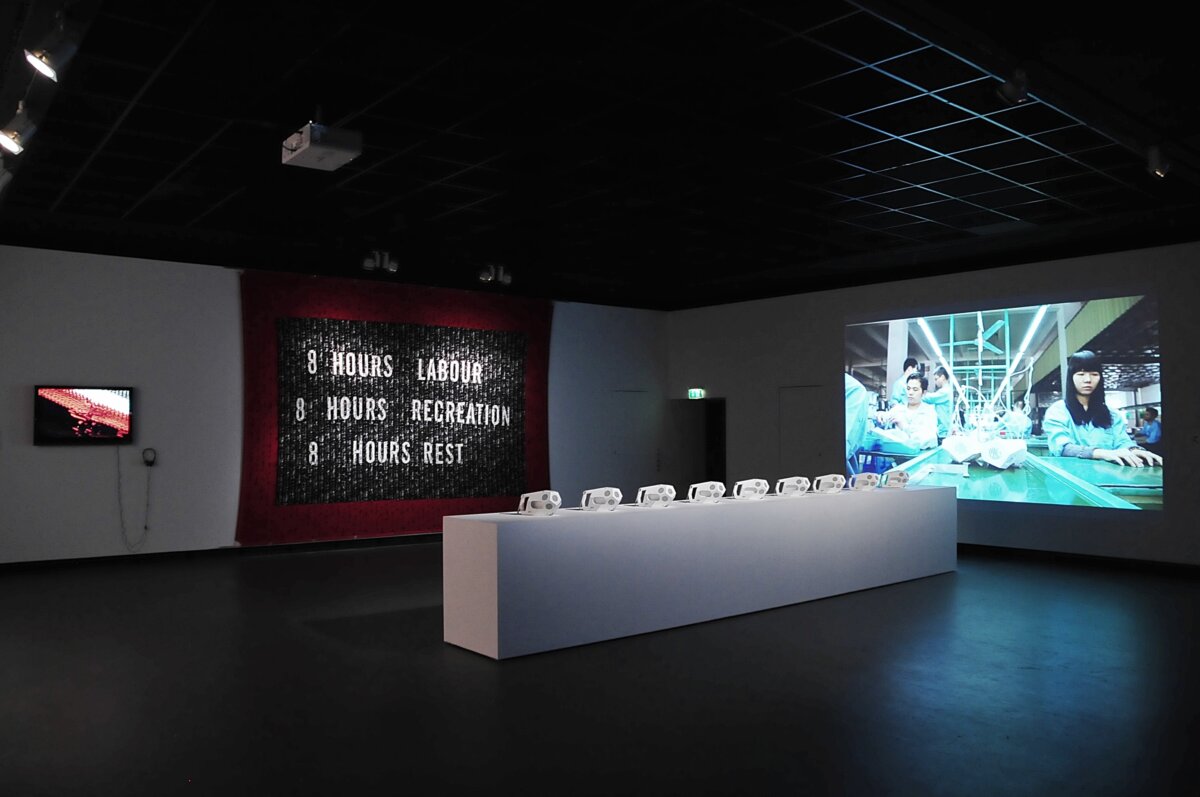
featured works and artists
Tuur Van Balen & Revital Cohen, 75 Watt, 10', film/installation A labourer over the course of an 8-hour day can sustain an average output of about 75 watts” (Marks’ Standard Handbook for Mechanical Engineers)
Ellie Harrison, Timelines, installation For almost five years Ellie Harrison documented and recorded information about nearly every aspect of her daily routine as part of her artistic practice. These laborious, demanding and introverted processes grew ever more extreme until she devised the ultimate challenge in 2006 for Timelines – to attempt to document everything she did, 24 hours a day, for four weeks
Tehching Hsieh, One Year Performance 1980-1981. (Time Clock Piece), 6'08," film installation For one year, the artist punched a worker’s time clock located in his studio, on the hour, every hour. Marking the occasion by taking a self-portrait on a single frame of 16mm film, the resulting reel documents a year in his life at approximately one second per day – a pace that is polar opposite of the enduring length of the original performance
Sam Meech, Punchcard Economy, installation Punchcard Economy is a project by artist Sam Meech using data collected from people’s working hours (predominantly in the digital, creative and cultural industries) to create a translation of the 888 movement banner.
Oliver Walker, One Euro, 6-channel film/video installation One Euro is a six channel video installation, with each channel depicting one person working. Each video lasts as long as it takes the person depicted to earn one Euro.
curators
Mike Stubbs and Emily Gee, FACT, Liverpool
credits
A cooperation between transmediale, Haus der Kulturen der Welt, FACT, Royal College of Art/ Creative Exchange Hub and Schering Stiftung.