Haus der Kulturen der Welt (HKW)
30 January – 2 February 2014
What does it mean to speak about digital culture today, and what are the implications of the term post-digital? The conference takes afterglow as a metaphor for the present condition of digital culture, examining the geopolitical, infrastructural and bodily consequences of the excessive digitisation that has taken place over the course of the last three decades.
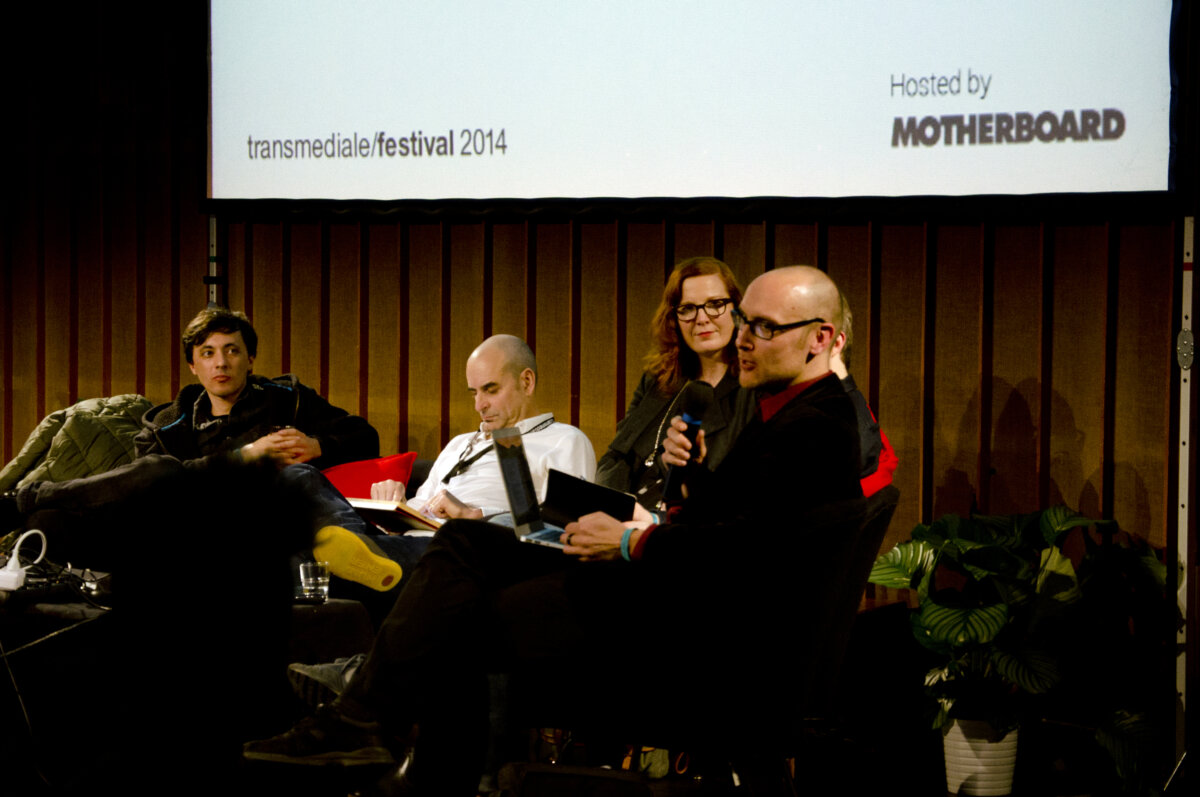
These topics have been divided into three streams that each reflect a different aspect of digital culture in the afterglow: An Afterglow of the Mediatic, chaired by Jussi Parikka and Ryan Bishop of the Winchester School of Art, focuses on the materiality of the digital from a geopolitical and geophysical perspective; Hashes to Ashes, chaired by Tatiana Bazzichelli, reflects on the strategic infrastructure of the digital and the backdoors behind the glossy surface of connectivity; Will you be my TRASHURE?, chaired by Francesco Warbear Macarone Palmieri and Katrien Jacobs, speaks about the body of the digital, and its implication on identity, sexuality and pleasure as a way to reflect on politics and culture.
Following afterglow as a deep twilight moment of the digital, the conference identifies the ‘dust’ that is suspended inside its slowly fading glossy surface as the waste product from which we can begin to understand the relations between technology and society in new ways. The digital has always been a classic case where what is central to existence, waste, is being pushed out to the margins. In the waking up from the ‘digital hangover’ we find ourselves in the midst of critical issues such as the corrupt ecology of technological resources (minerals, metals and e-waste), mass surveillance, excessive big data schemes and the post-digital lives that these phenomena impacts on a daily basis. By dealing with these intersecting issues, the conference programme attempts to catch some of the burning topics inside the afterglow of the digital as a moment of transition where what was once thought to be treasure is turning into trash. In this way, afterglow becomes a post-digital moment of reflection from which it is possible to develop new transversal critiques and practices that cut across different cultural fields.
An Afterglow of the Mediatic
Chairs: Ryan Bishop and Jussi Parikka, Winchester School of Art.
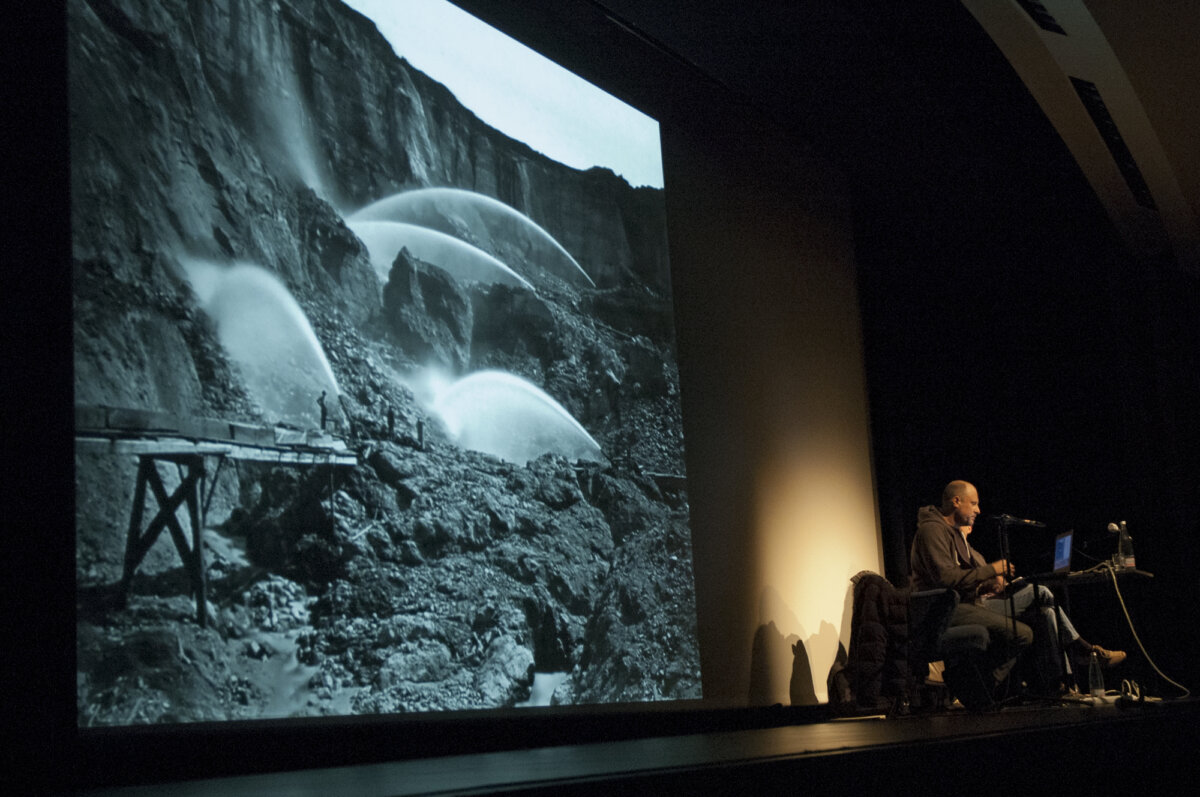
Mines and mining are once again the subjects of debate and inquiry. Since the 19th century, mining has provided burgeoning technological culture with the raw materials to keep it going, from copper and tantalum to other metals. These kinds of extractive acts, including those of energy production, continue to be conducted for different corporate and industrial needs, and now the very products that result are also being ‘mined’ from inside abandoned computers, contemporary archaeological digs that contain minor riches in traces of gold and silver. At the same time as these ragpickers of the 21st century are after metals in junked IT consumer goods, corporate platforms are interested in both material and immaterial mining, including the soft mining of data: the long trash trails which offer lessons in bodies of data.
The geological and the geophysical are also embedded in our contemporary concerns in art, politics and (in)security resulting in a more complex and nuanced set of geopolitical extractive imperatives. Debates concerning earthquake fault lines are as important as the military use and abuse of geographical features, a characteristic of war since early times but an especially high-tech one now in the age of the digital. The US DoD project, Transparent Earth, for example, intends to map the five kilometres immediately below the earth’s crust to locate underground structures as well as physical, chemical and geological strategic advantages for military operations.
This stream offers insights into waste and mines, data and hardware – the long tails of unintended consequences – in a way that entangles issues of labour, geopolitics, economics, media and the Earth into a weird planetary constellation.
We are grateful for the generous support of the Federal Agency for Civic Education (Bundeszentrale für Politische Bildung) for our conference programme as well as to our conference partner institution, Winchester School of Art (WSA).
Hashes to Ashes
Chair: Tatiana Bazzichelli
Whistleblowers, hackers, artists and activists get into dialogue to reflect on the art of disclosure, as a strategy of awareness and a modality to expose hidden bugs in the socio-political systems. Can we imagine a sustainable way to act in the digital info-sphere? Is it still possible to claim: “Information wants to be free”?
Hashes to Ashes focuses on the current condition of information politics and the strategies of self-awareness in the digital and physical sphere. Digital rights such as freedom of speech, online privacy, accessibility of information, have been progressively burned down to ashes, generating a landscape of increasing surveillance. The recent debate on the PRISM, XKeyscore and TEMPORA Internet surveillance programs based on the Edward Snowden's release of NSA material are the symbol of increasing geopolitical control, which is changing the practice of hacking and activism. New identities emerge: whistleblowers, cypherpunks, hacktivists and individuals that bring attention to abuses of government and large corporations, making the act of “leaking” central part of their strategy. We want to highlight the current pervasive process of silencing – and metaphorically reducing to ashes – activities which expose misconducts in political, technological and economical systems, as well as to reflect on what burns underneath such process, via the direct engagement of theoreticians and practitioners that advocate a different scenario. Whistleblowers, hackers, artists and activists, that make of the art of disclosing their main practice, reflect on the often hidden structures that compose and live within and across our present society and everyday life. Their actions contribute to generate a new frontier for the arts, producing new imaginaries, viral interventions, and new stream of consciousness in the net and beyond.
Will You Be My Trashure?
Chairs: Francesco Warbear Macarone Palmieri and Katrien Jacobs
Trash and treasures of the post-digital orgasm.
transmediale is involving you in this post orgasmic moment as a different and new reading of bodies and sexuality in a post-digital momentum. TRASHURE, as the hybrid name informs sliding between trash and treasures, explores trans-cultural geographies of sexuality. Within this frame politics does not have to be seen as dialectic between north and south, but as fragmented, multiplied, atomized and already trashuring reality in every contemporary geopolitical order. TRASHURE is a radically questioning consciousness and unresolved ambivalence as a form of afterglow contemplation; the art of love and pitfalls of synthetic failure. The lectures and performative statements will connect to maps and territories of sexual control, social media management, new media performances, body politics and queer activism with the aim to explore the afterglow of the post digital orgasm. Will you be my TRASHURE?
The streams have been developed by Tatiana Bazzichelli and Kristoffer Gansing in close cooperation with the chairs of each particular section.
We are grateful for the generous support of the Federal Agency for Civic Education (Bundeszentrale für Politische Bildung) for our conference programme as well as to our conference partner institution, Winchester School of Art (WSA), for the stream An Afterglow of the Mediatic.