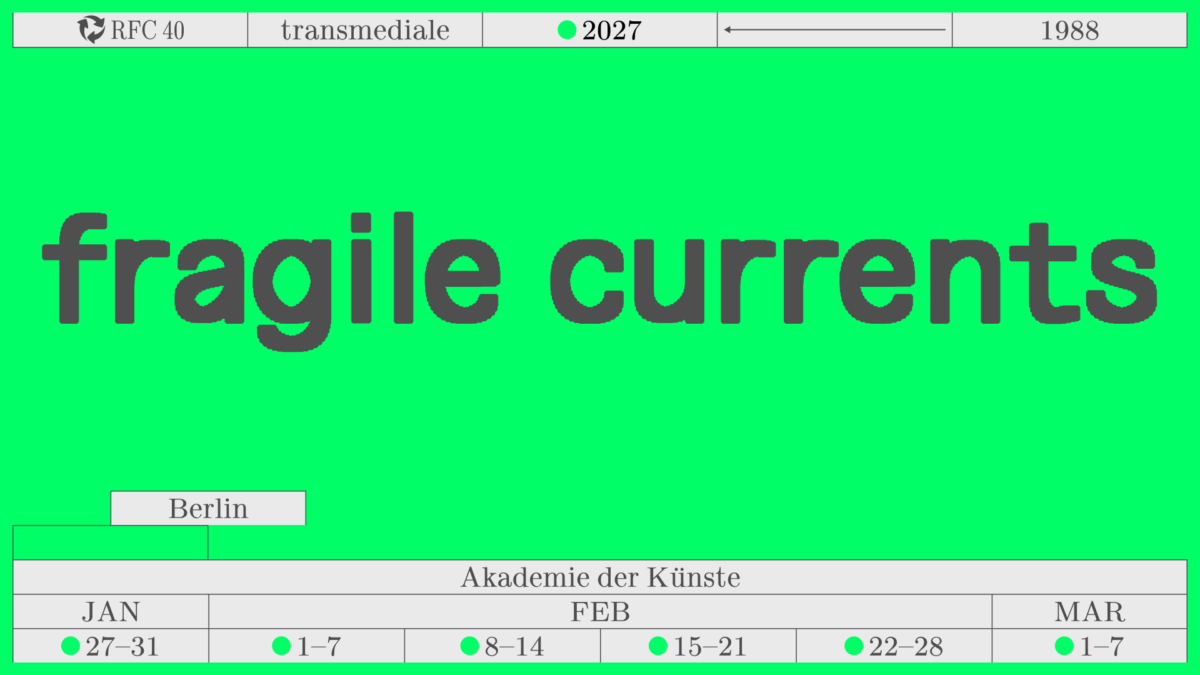
fragile currents Exhibition
27 January – 7 March 2027
Akademie der Künste (Hanseatenweg)
Press Tour: 26 January, 11:00
RSVP to rsvp[at]transmediale.de
27 January Exhibition Opening
28 January Ruined Assembly Gathering
26 – 27 February Closing Programme
Marking its 40th anniversary, transmediale RFC 40 presents an expansive exhibition in parallel to the festival at Akademie der Künste. fragile currents brings together 13 artworks by artists from regions shaped by technological asymmetries, exploitation, and extractive practices. At the centre of the exhibition, the installation Ruined Assembly hosts the public programme and features research on technological infrastructures of power alongside a collective mapping of counter-infrastructures by seven invited cultural initiatives. Throughout the exhibition, the Archival Stations draw on transmediale’s history, reactivating the archive as a political resource for the present. The exhibition is curated by Antonina Stebur.
fragile currents unfolds around the idea of fragility, which permeates our present moment: unstable infrastructures, technological asymmetries, unequal dependencies, and vulnerable bodies. Accepting fragility as a condition of interdependency opens the possibility to build counter-infrastructures. At the centre of the exhibition lies the idea of holding tension: between exploitation and resistance, asymmetry and cooperation. Much like an electric current, where a difference in potential generates a flow, fragile currents emerges from differences that remain unresolved.
Marking 40 years of transmediale, the exhibition curated by Antonina Stebur reflects on transmediale’s history. However, fragile currents asks not what transmediale remembers, but what transmediale can do. The exhibition reactivates transmediale as a counter-infrastructure for the present and future. Here, counter-infrastructures are imagined as fragile and provisional arrangements through which other social and political relations can be assembled under conditions of exploitation, militarisation, and ecological breakdown.
The exhibition brings together three layers. Thirteen artworks are spread across the three exhibition halls of Akademie der Künste, including films, large-scale installations, sculptures, and playable games, as well as more contemplative approaches towards the materiality of our everyday technologies. Archival Stations connect the works to wider sets of practices and ideas assembled from transmediale’s history. At the centre of the exhibition, the installation Ruined Assembly hosts the public programme and features research on technological infrastructures of power alongside mappings of counter-infrastructures developed collectively by researchers and cultural institutions.
A gathering of seven cultural initiatives will be held in Ruined Assembly at the beginning of the exhibition (28 January). In a mapping process facilitated by the artist collective METASITU, they will share their institutional approaches through a collective tapestry, which will remain part of Ruined Assembly until the end of the exhibition. Towards the end of the exhibition period (26 and 27 February), a two-day programme co-curated with MOST Magazine and supported by Adam-Mickiewicz- Institut will take place in the space.
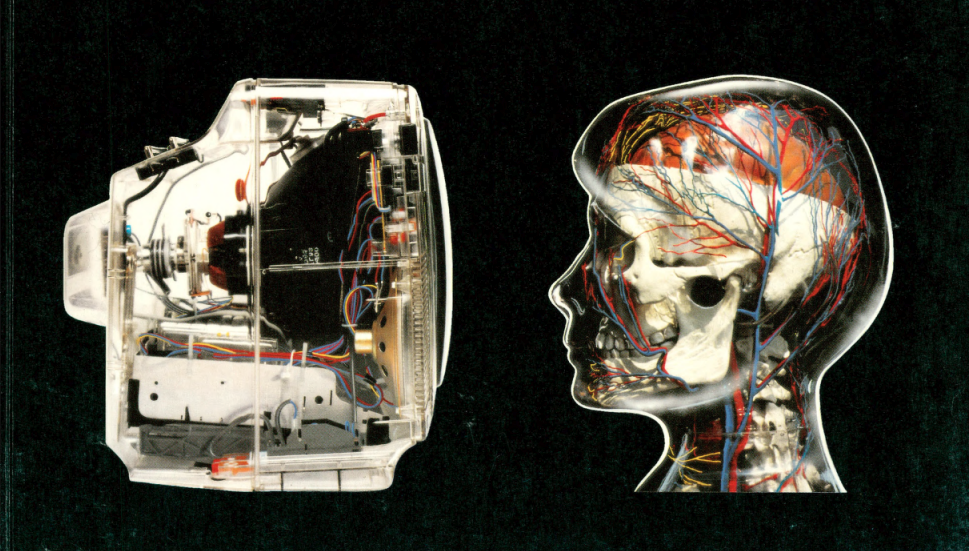
The archival method used to develop the exhibition returns to earlier practices, asking how they could be rethought, adapted, and developed under current socio-political and technological conditions. The artworks featured expose how infrastructures redistribute power and dependency across bodies, territories, and institutions, tracing forms of political imagination and emerging counter-practices. They are linked through five Archival Stations, where visitors can read and browse a selection of documents and historical materials from the archival research. The stations enable a non-linear navigation of the exhibition, through constellations of ideas that were developed, practised, abandoned, partially forgotten, or failed.
All That’s Solid Melts into Air (2024 – 2027)
Open Place (Yulia Kostereva and Yuriy Kruchak)
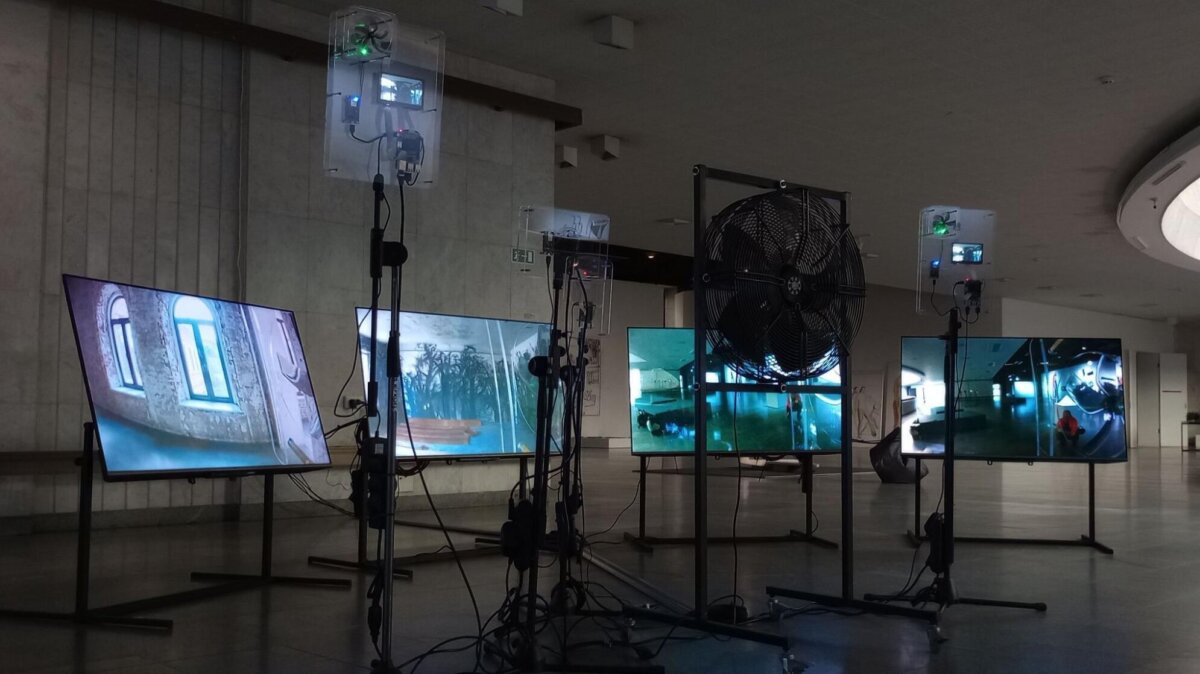
Positioned at the entrance to the exhibition, All That’s Solid Melts into Air serves as a prelude, or epigraph, to fragile currents. Its central installation in Berlin consists of screens and a ventilator linked to devices in cultural institutions across Ukraine: the screens relay video from cameras in these institutions, while the ventilator turns whenever someone in Ukraine breathes into a small fan. Because winters in Ukraine are marked by attacks on infrastructure, including interruptions to electricity and heating, bombardment, and missile strikes, the ventilator in Berlin waits for signs of life, in a connection that must be actively maintained through internet and electricity as well as through human presence and bodily effort.
Fake World [Жалған дүние] (2027)
Medina Bazarğali
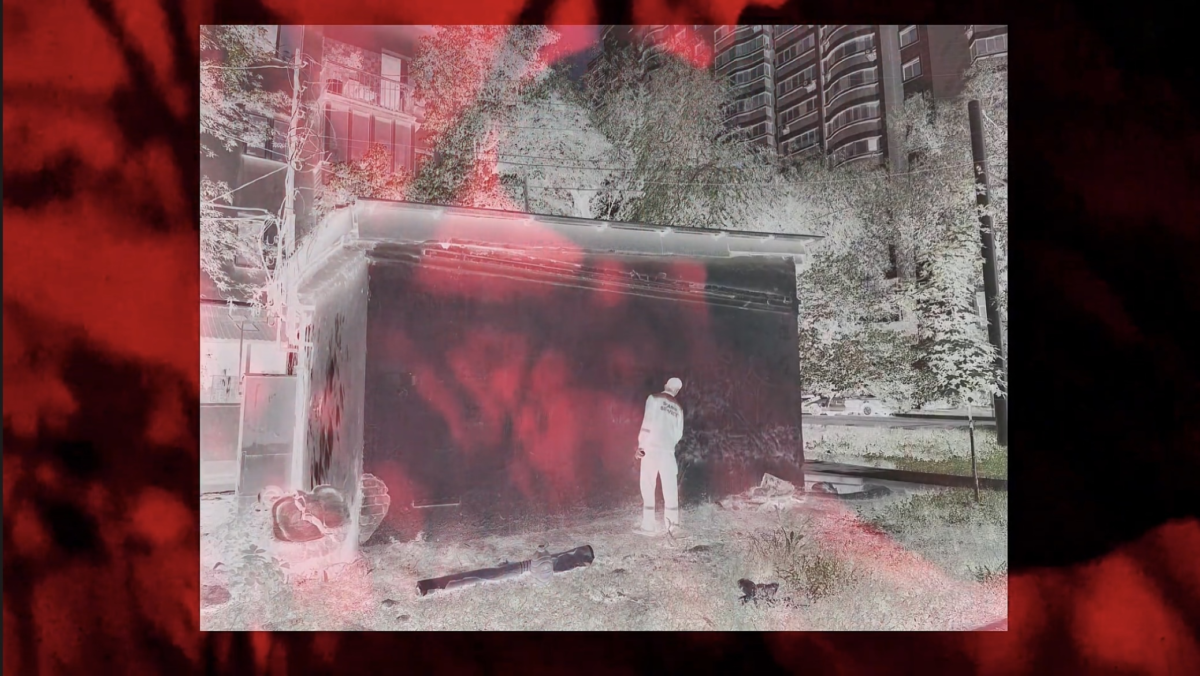
Fake World [Жалған дүние] is a four channel video installation composed of interconnected narratives, following the children of Kazakhstan’s elite as they experience recurring dreams of infrastructural collapse and state violence. Seen through CCTV and private security systems, spaces of privilege mirror national regimes of control, while the children begin to leak evidence of corruption within their own families. The dreams and surveillance are revealed as the work of an anonymous hacker, who infiltrates both the subconscious and security networks, weaponising digital intimacy as a form of political awakening and redistributed witnessing.
Lithium Lake and Island of Polyphony II (2023)
Liu Chuang
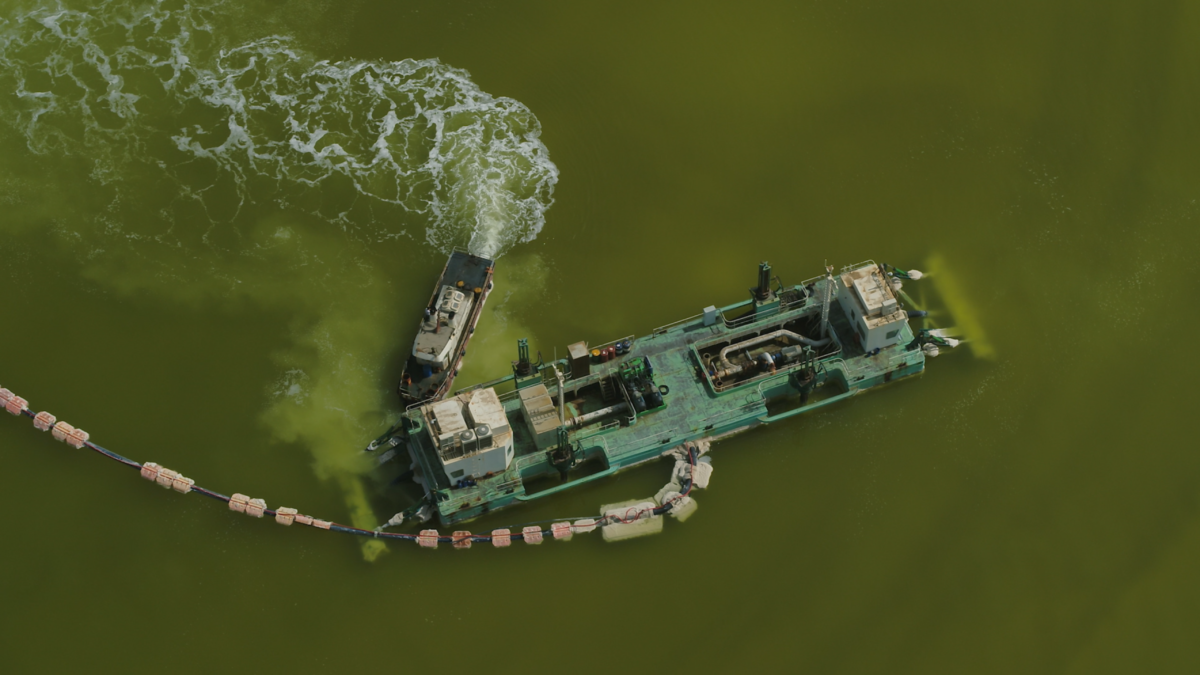
Borrowing the figure of Sophon from Liu Cixin’s sci-fi trilogy The Three-Body Problem, the artist envisions an alien anthropologist’s journey to Earth, tracing five hundred years of silver and lithium transfers from the Andes to East Asia as crucial links in globalisation that reveal the planetary scale of human intervention in geological evolution. The three-channel video work draws on found archives and an analysis of the routes’ sonic topography. Its script weaves a speculative “anti-origin story” of entangled human and non-human evolution, embedded in East Asian histories, cultures, and religions, emphasising the permeability and porosity of the region’s culture. Chuang turns to the ancient wisdom of polyphonic singing as a model for escaping our dependence on extractive technologies.
Oracle Index (2026)
latency.club (Nestor Siré and Steffen Köhn)
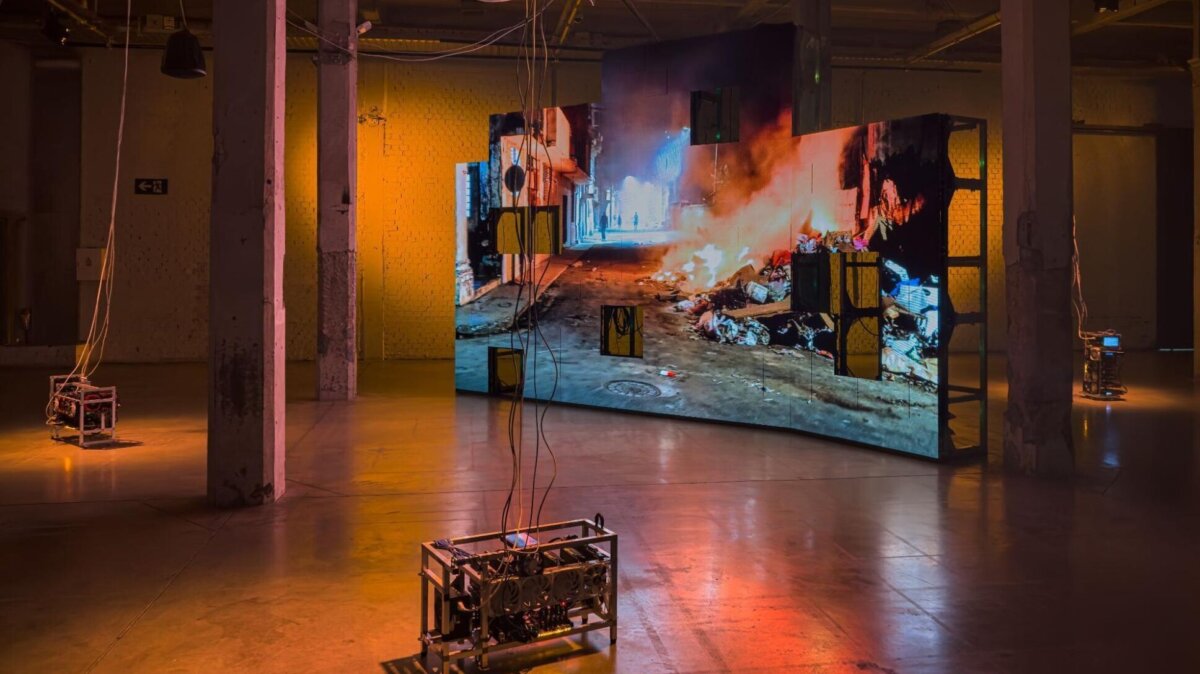
Oracle Index is a generative cinema installation that imagines a future Cuba in which cryptocurrency, prediction markets, artificial intelligence, underground gambling, and divination become intertwined as systems for navigating economic uncertainty. Set in the aftermath of a total embargo known on the island as La Opción Cero, the Communist government turns to the inventions of the Extropian milieu of the Silicon Valley, including systems of market governance such as Futarchy, to draw in hard currency and foreign capital. The work takes the form of an imaginary ethnography, a fragmented archive exploring the repercussions of the transplantation of market-based mechanisms into the centrally planned economy of a socialist state under siege.
So Close You Can Almost Touch It (2025)
Variable Name / Назва змінна
(Valerie Karpan and Maryna Marynychenko)
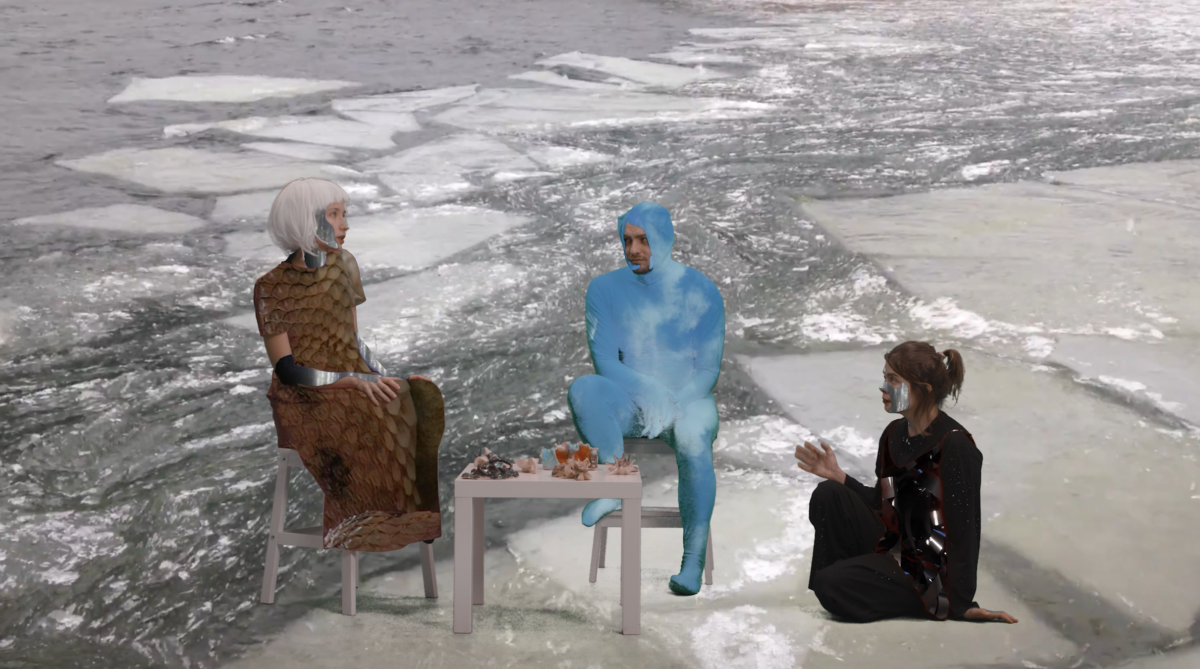
So Close You Can Almost Touch It is an artistic research project that grew out of a series of participatory encounters in which people were invited to reflect on experiences of loss and displacement. The Dnipro’s reservoirs and the 2023 destruction of the Kakhovka Dam during Russia’s full-scale invasion emerged among the recurring images of what happens when the environments that shape our sense of belonging are altered, displaced or made inaccessible. Clay objects produced during these encounters become part of an interactive installation in the form of a cave-like structure whose surfaces can be touched and activated. A companion film shows documentary footage of landscapes undergoing transformation projected onto the performers’ bodies, creating an imaginary archive of gestures and desires to navigate uncertainty.
Ruined Assembly is the installation that hosts the exhibition’s public programme, offering visitors a space to rest, meet, and spend time. It is assembled from electrical cables and archival remnants inherited from transmediale’s own material archive – objects, materials, and residue accumulated through previous editions. Throughout the exhibition it behaves as constructional infrastructure that is continuously extended through the practices of artists, researchers, and cultural institutions.
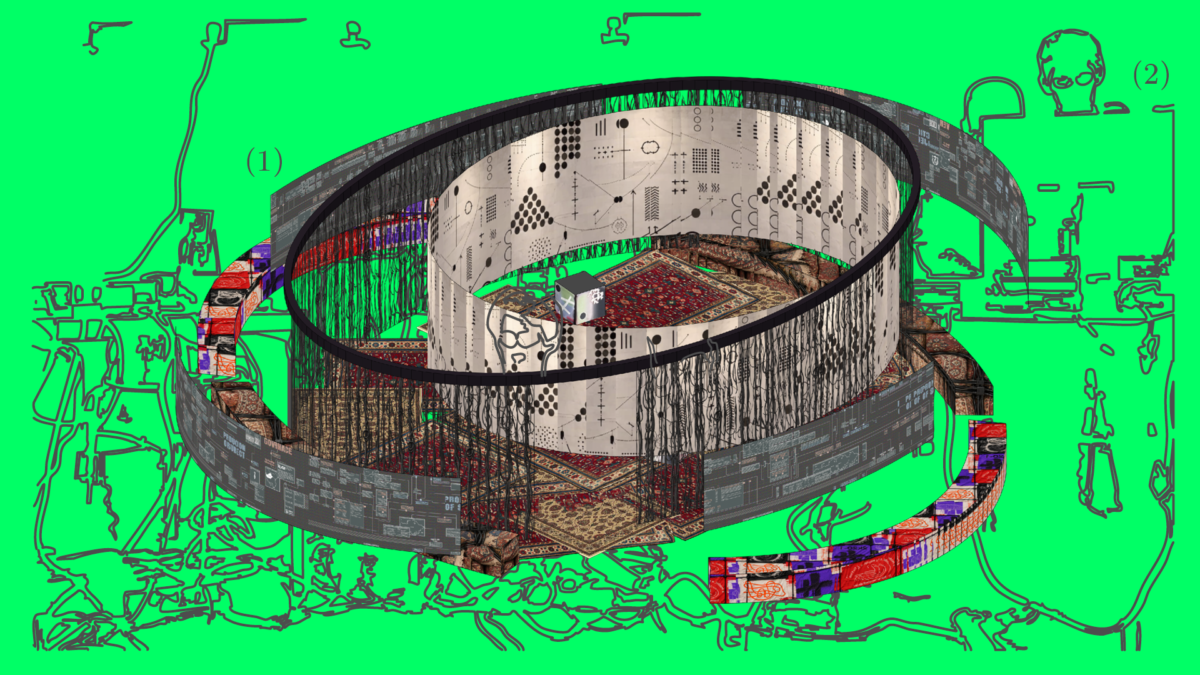
The installation includes two forms of mapping. Dark Net, formed as the result of research by Oleksii Minko, Fernando Morales de la Peña, and Antonina Stebur, is a map of how technology hardens into an infrastructure of power, tracing the exploitation, asymmetry, and repression that unfold around information technologies. Its title should be read literally: a dark, partially invisible map of technological exploitation and dependency, visible only in flickers. Dark Net refuses to be a monument to powerlessness and instead asks what weakens our political imagination and how the belief that this world is natural and unchangeable is produced and sustained.
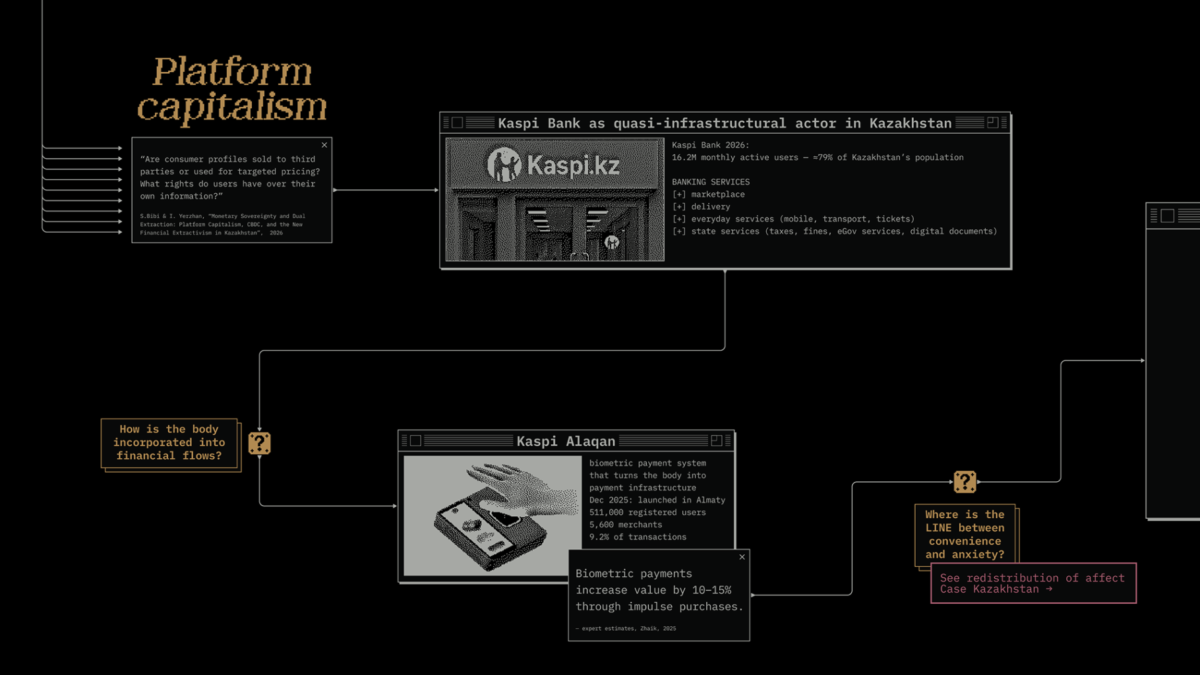
The second map is produced through the Ruined Assembly Gathering, which brings together institutions from the seven geographies where the cases of Dark Net are centred as well: Greece, Chile, Iran, Kazakhstan, the Democratic Republic of Congo, Pakistan, and Ukraine. Drawing on the collective work of these institutions, which have operated for decades within unstable political and economic contexts, the map charts counter-practices developed precisely in response to these constraints.
The exhibition is part of transmediale RFC 40 together with the festival, which under the title groundstates presents a discursive and performance programme exploring a range of approaches towards alternative technological futures. groundstates takes place in silent green Kulturquartier 28 – 31 of January.
RFC 40 is a document from the early history of the internet. Request for Comments (RFC) is an unofficial note series on the development of ARPANET. It circulated among a small group of researchers, and gathered documents with internet specifications, protocols and events that later configured the workings of our today’s internet. The name RFC was chosen to avoid being deterministic: Request for Comments made no claim to finality. It acknowledged that no single voice had the complete picture, and that any protocol would only stabilise through collective response and revision. These were, by design, open drafts that invited disagreement as a condition of progress. Published in March 1970, and inspiring transmediale at its 40th anniversary, RFC 40 was titled more comments on the forthcoming protocol.
The paper’s subject was error: how a network speaks about what fails, and remains open and functional nonetheless. Error here is understood as a communicative event, something the network must be able to name and transmit in order to keep functioning. What vocabulary do connected systems share for failure? How does a network stay legible to itself while things are breaking down? These are the questions RFC 40 was working through, questions that, in a way, remain unsolved and relevant today.
about transmediale
transmediale is a festival and space for critical reflection on art and technology. It brings together transdisciplinary communities and diverse audiences with an interest in digital cultures to develop new perspectives on our technomediated times. The festival takes place annually at the end of January and forms the core of the organisation’s programming. Beyond the yearly event, transmediale is a transversal, dynamic platform with a vibrant community and a strong network that enables year-round activities, including publications, studio events, and a residency programme.
a note on press
For press inquiries, we provide a press kit with downloadable text and image materials, a dedicated press email for requests and interview coordination, and press tours ahead of the exhibition and festival openings. Budget cuts resulting from the discontinued support of two longstanding funders of the festival (MBB, BpB) have affected several areas of transmediale’s work, including press and public relations. As a result, we cannot conduct extensive press outreach and may not always be able to respond to new press requests promptly. That said, we remain committed to supporting coverage of the festival as best we can, and we warmly encourage you to reach out to us.
contact: press[at]transmediale.de
Funded by the German Federal Cultural Foundation. The exhibition is funded additionally by Lotto Stiftung Berlin. Our partner venue is Akademie der Künste (Hanseatenweg).
