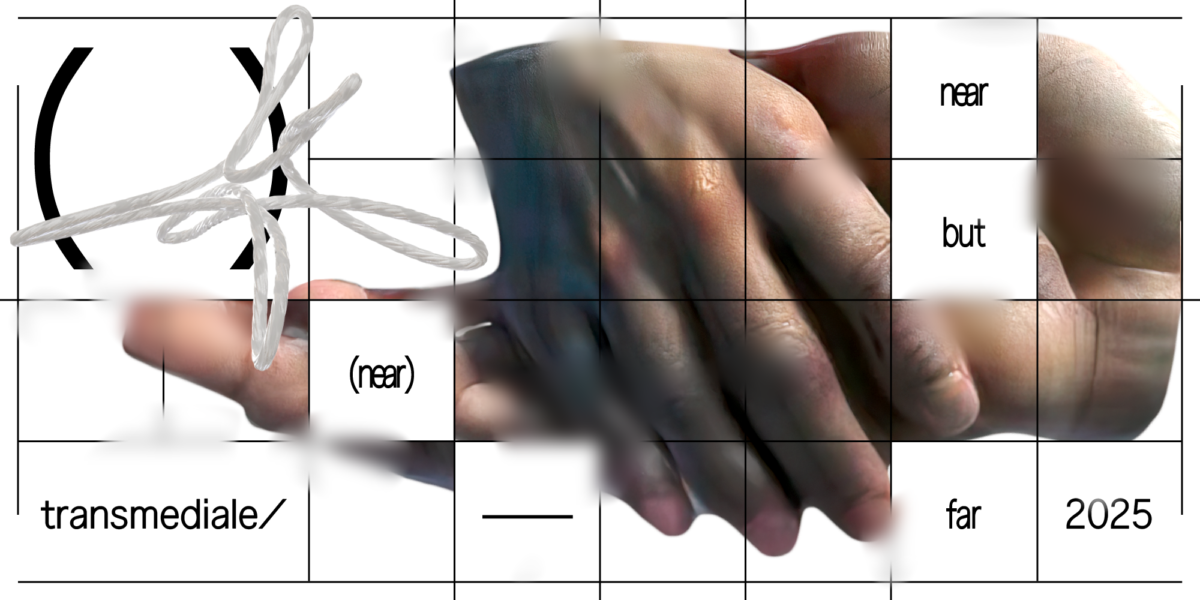
transmediale 2025: (near) near but — far
Jan 29 – Feb 2, 2025
silent green Kulturquartier and Haus der Kulturen der Welt
transmediale’s 38th edition (near) near but — far will take place from January 29 to February 2, 2025, in Berlin. The festival’s core programme takes place across three days at transmediale’s long-standing host venue, Haus der Kulturen der Welt (HKW), presenting an extensive schedule across diverse formats, including conversations, lectures, performances, installations, film screenings, and off-site events. As a prologue to the festival weekend, two days of workshops will take place at silent green Kulturquartier, transmediale’s Berlin home, which will also host the public opening of the festival on the evening of January 30. The annual Marshall McLuhan Lecture will be held at the Embassy of Canada on January 29.
transmediale 2025 follows a renewed curatorial approach, shaping both the festival’s theme and programming methodology. Two curators, Ben Evans James and Elise Misao Hunchuck, lead the thematic focus and curatorial research. Additionally, they have invited a group of programmers – artist and performer Nina Davies, editor-researcher Eugene Yiu Nam Cheung, and trans*disciplinary artist-designer Ren Loren Britton – to contribute to the festival. transmediale is further expanding collaborations with its long-standing partners: Winchester School of Art at the University of Southampton, Digital Aesthetics Research Centre (DARC) at Aarhus University, Weibel Institute for Digital Cultures at the University of Applied Arts Vienna, and the Media Studies (EMW) at University of Potsdam & University of Applied Sciences Potsdam.
theme
Digital systems address us in ways that engender a ‘performance of proximity’: a choreographed algo-rhythm that shapes our politics, our labour, and our relations to one another through the smoothed interfaces of our devices. From ASMR battles with whispered trash talk to children who speak to their parents like Alexa, and from e-girls selling their bathwater to skin-riding robots serving your drinks, algorithms (re)form our human need for connection by advancing new proximities as a replacement for the closeness we yearn for in the times we live in. (near) near but — far will form an understanding of how algorithms place us in weird proximities and new intimacies with one another and the qualities of closeness we lose by way of their machine-driven actions. By attending to the affects of proximity and closeness, the festival will reach beyond constructing a dichotomy of the two terms to ask: how can the capacities of technologies foster relations better adapted to responding to the complexities of our individual and collective discontents?
31 Jan – 2 Feb, 2025
The festival unfolds across the weekend by destabilising the relationship between proximity and closeness in a series of lectures, performances, and unmediated conversations, a format that digresses from the formality of the familiar panel or a moderated Q&A. While lectures will construct an understanding of how algorithms shape and reform our human need for connection, conversations will expand on these themes, helping us to collectively form an understanding of the affects of closeness – ambiguity, ambivalence, opacity, hesitation, and translation – we lose by way of algorithms and their machine-driven actions. The discourse programme will ask how distance is sometimes employed as a tool to reduce us from all of our complexities to an ideal idea of you. Conversations will introduce us to the proposal that the digital collective – like its counterpart, the individual digital subject – is but a shell of its former self: instead of shared ideas, values, and commonalities through which relations are built, the technical collective is a collection of data designed to feed contemporary technologies such as machine learning. Together, we survey the trend of large language models (LLMs) being used to model human perspectives by way of machinic proxies. And we ask, what does it look like when we are confronted by that which makes us most human, negotiating agency and representation, when people, like those seeking aid or asylum, find themselves in the impossible position of needing to offer evidence of their own humanity.
From rehearsals of trans*crip technoscientific technologies that will expand our definitions of technologies to what it means to learn and share the skills needed to document police abuse at protests with image and video analysis and other open-source research methods: strands and threads from the festival’s prologue of workshops are woven throughout the programme, emerging most clearly in discussion connecting participants – who have led workshops, delivered lectures, screened films, or headlined performances across the festival sites of silent green and HKW – as they meet in unmediated conversations.
Contributions by artists, activists, and thinkers including Olga Goriunova, Laura Kurgan, Nelly Y. Pinkrah, Federico Campagna, Shaka McGlotten, Ranjodh Singh Dhaliwal, Mercedes Bunz, DeForrest Brown Jr., Cait McKinney, Alex Martinis Roe, Lindsey A. Freeman, David Isaac Hecht, Anna Engelhardt, Thomas Keenan, and Ren Loren Britton.
installations
Artists whose work materialises the destabilisation of proximity and closeness have been invited to occupy the public spaces of HKW. These installations will be periodically activated through performances, presentations, conversations, and film.
Influenced by the difficulties autonomous vehicles face in detecting the flashing lights of emergency vehicles, Felicity Hammond’s Dark Adaptation probes the limits of how autonomous vehicles ‘see’. Set in a crash-test centre of the future, Hammond’s installation and accompanying performance depict an evolutionary regression of the autonomous vehicle: one in which its sensors are hacked to collide with the fleshy rhythms of data that emerge from the human body.
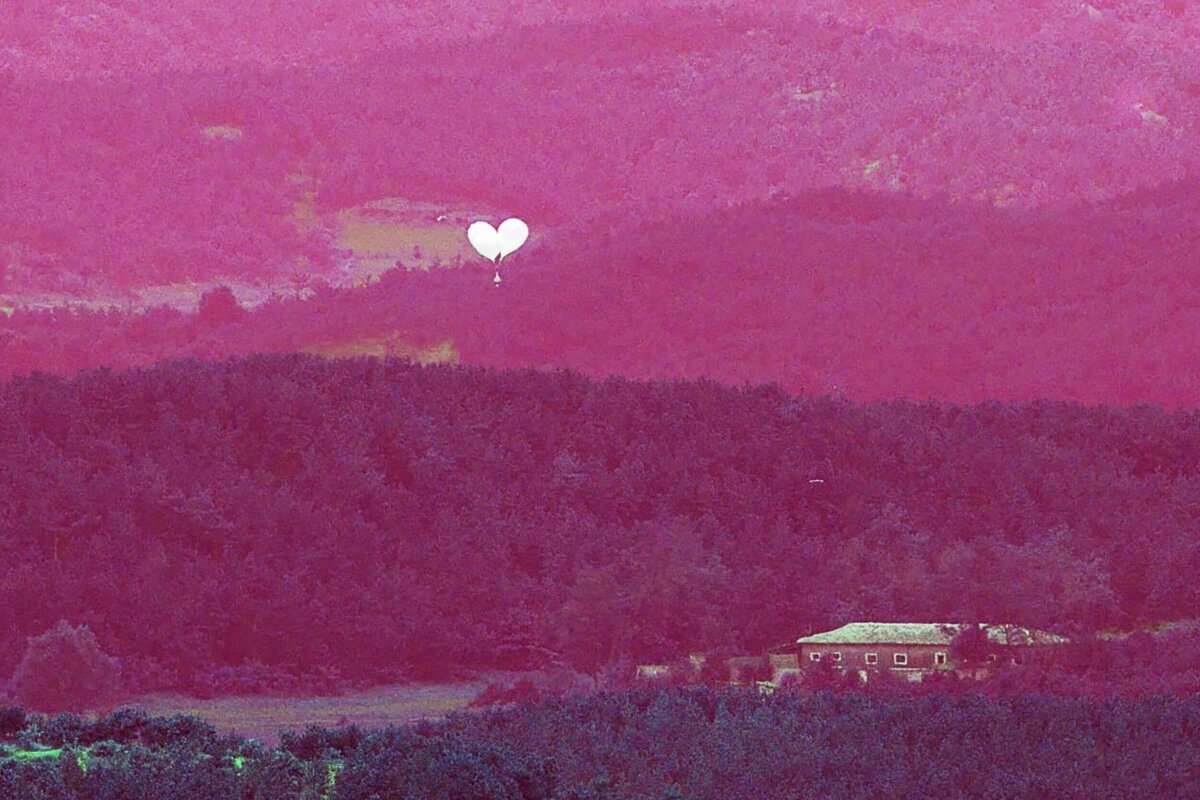
Since May 2024, North Korea has sent thousands of balloons carrying parcels of waste – including Hello Kitty merchandise, e-waste, cigarette butts, and soil with traces of human faeces – over the border to the Republic of Korea. While politicians in Seoul declare the balloons an act of war, Hana Yoo’s installation uses the playful form of the primary object in question, the balloon, to explore the ambiguity of the medium and its message. Yoo’s installation will be activated by short lecture performances that will open and close the festival.
performances and actions
A reading-stretching-running club will weave through Berlin, drawing a line from the McLuhan Lecture to the closing hours of the weekend. Guided by Lindsey A. Freeman, the transmediale running club makes space for being a body and feeling a way through the city through acts of love, queerness, and running.
Samra Mayanja presents DEAD DAD DEATH CULT, a solo performance that explores the tension between involuntary forms of institutional holding (such as prison) and our desire to place ourselves within institutions that hold us (such as a university). Drawing on Mayanja’s experience as a call centre operator for the National Health Service in the UK, the work speaks to the continuous labour of empathy of being in a (dis)located position of proximity at the end of a helpline.
UNTITLED (iii) is a performance by Bhenji Ra, Tati au Miel, and SUUTOO, exploring trickstery as a fugitive practice and a catalyst for embodied emancipation. Through myth-making rituals drawing on the artists’ shared cultural connections to spirit and folklore, together they play with themes of visibility, shadows, and voyeurism, guiding audiences into states of altered realities and darkness.
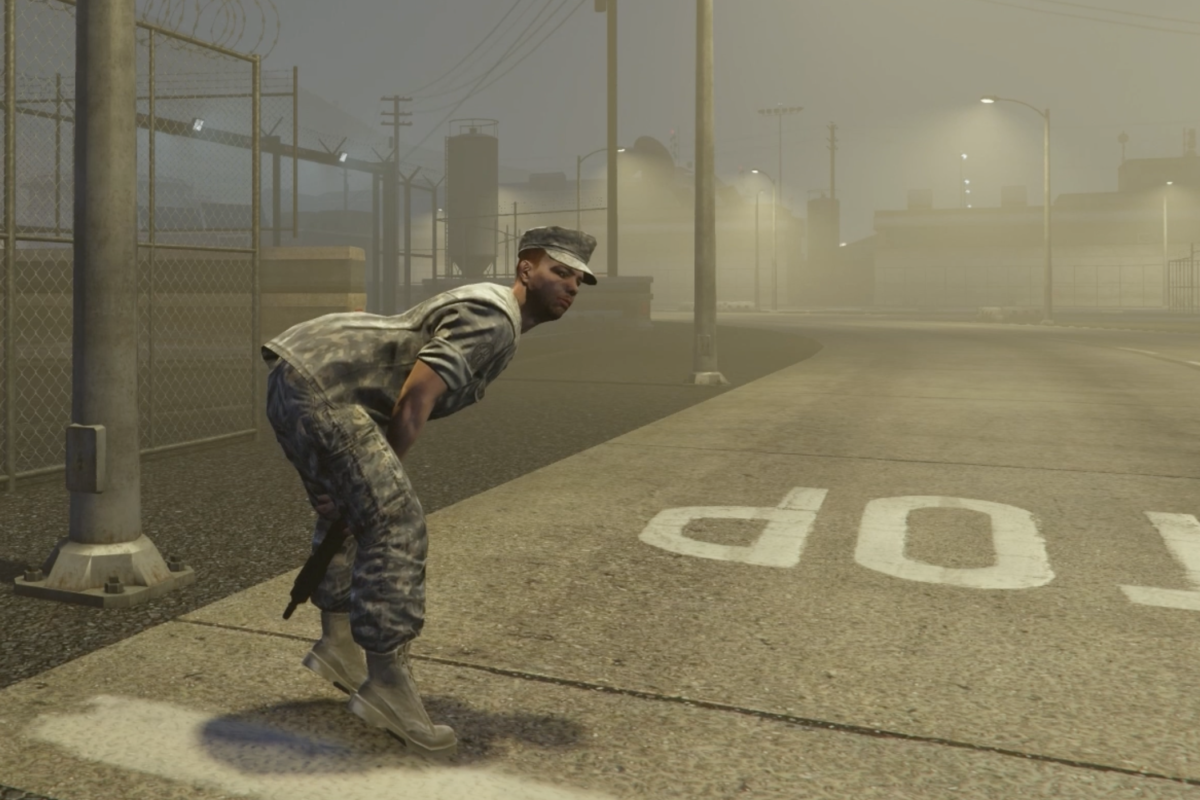
Performer Nina Davies and the artist duo 2girls1comp collaborate on a new performance work that draws from the contagion of NPC dance trends on TikTok and inserts those trends back into the gaming environment of GTA V. 2girls1comp is a modding duo founded in 2023 by Marco De Mutiis and Alexandra Pfammatter. Their work changes the logic of video games as an act of creative counter-play, revealing the social and economic fabric in which we are immersed.
film programme
Each programme addresses a singular thematic through a curated series of short films by different artists. One programme defamiliarises us with the term ‘distance’ and commonly held understandings of it as a form of removal or disengagement. Instead, the films in this strand ask us to think of distance as the space between points of view across which we navigate to learn from one another: an understanding that, perhaps curiously, makes distance a quality of closeness. In another programme we are asked to consider how the intimacies of human movement within dance have become commodified through digital platforms. These films explore how the technology of the moving body can hack, bend, and refuse algorithmic modes of control.
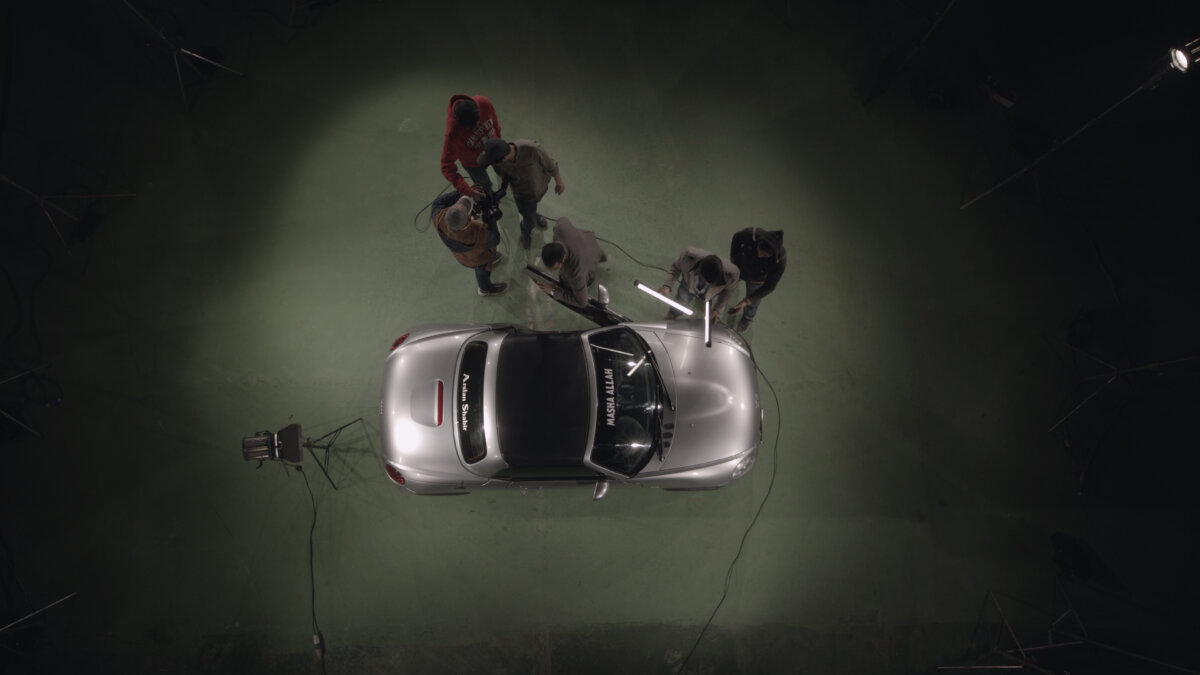
Alongside curated screening programmes, a series of live film events engage with filmmakers on-site through formats including lectures, conversations, and performance. This includes a lecture-performance by Lého Galibert-Laîné, and talks by 2girls1comp, Alice Lenay, and Maud Craigie. Further, Basir Mahmood is engaged in conversation about his film moon-sighting. The work probes how bonds shared by Mirpuri communities in Pakistan and Britain can unravel through processes of ‘othering’, as whats deemed to be Mirpuri in Britain can be defined as British in Mirpur. Originally released in 2019, Mahmood’s film unleashed a social media storm as Mipuri communities on both sides engaged in trash-talking animated through the language of car culture. Filipina-Australian filmmaker Bhenji Ra screens Biraddali Dancing on the Horizon and talks about her ongoing work exploring methods of performance that decentre hegemonic Western dance conventions and which engage critically with expressions of gender and sexual difference. Brought together in conversation, Bhenji Ra, Tati au Miel and Susan Gibb will explore how film might stand in the place of histories that have been erased by processes of colonisation, and through reference to Biraddali Dancing on the Horizon, how a language of movement can be developed that connects vocabularies of gender with past and present colonial realities in the Asia-Pacific region.
The film programme includes works by 2girls1comp, Alex Martinis Roe and Alexandra Juhasz, Aaron Ratajczyk, Basir Mahmood, Bhenji Ra, Johannes Binotto, Charlotte Zhang, 업체eobchae, Hana Yoo, Lého Galibert-Laîné, Maud Craigie, Nina Davies, Simon Ripoll-Hurier.
transmediale x CTM evening programme
Sister festivals transmediale and CTM come together this year for two shared performance programmes at the Miriam Makeba Auditorium of HKW. Incorporating the latest developments in generative AI, A/V storytelling, and data sonification to explore a conflictual past, present, and future, the works offer personal, critical, and speculative reflections on how AI is facilitating new understanding and intimacies with our histories, with the world around us, and with one another?
The programme on Friday and Saturday evenings will include performances with sound and visuals by Portrait XO, Rick Farin & Actual Objects, and Hulubalang feat. Brandon Tay, with more to be announced.
29 – 30 Jan, 2025
As a prologue to the festival weekend, two days of workshops and working sessions will take place, including open source investigations that cover topics such as designing somatic experiences, learning how to monitor protest action from afar, and understanding more about how images become evidence. All of these will take place at Betonhalle at silent green, though some will move out and into the city. This part of the programme will require separate registration. At transmediale studio, an interactive installation by Ali Akbar Mehta will be on view during the festival. Purgatory EDIT is a techno-mediated cyberperformance and installation based on the artist-assembled media archive containing 40,000+ entries representing forms of violence, conflict, and trauma.
Workshop contributors include Ren Loren Britton, Anna Engelhardt and Marc Cinkevich, Hazel Meyer, eeefff, BARD Berlin and Amnesty International, DeForrest Brown Jr., David Isaac Hecht, and the annual PhD/Research Workshop.
The two days of workshop programming will conclude with the public opening of the festival on Thursday, 30 January 2025, at the Betonhalle of silent green. Like years before, the opening event is an opportunity for connection, exchange, and celebration with the festival community and the Berlin audience. The programme will highlight performances by DeForrest Brown Jr., Tati au Miel, and more.
About transmediale
After four extraordinary years, Nóra O’ Murchú concluded her tenure as artistic director this summer. For the upcoming 2025 edition, Elise Misao Hunchuck and Ben Evans James are leading the festival’s research and curation. Both curators bring valuable experience from their previous collaborations with transmediale and familiarity with the festival and its team.transmediale’s advisory board brings together long-standing collaborators and new allies from the transdisciplinary fields of art and digital culture. Current members include Nora Al-Badri, Asia Bazdyrieva, Gabriele Horn, and Jussi Parikka. In close collaboration with the new board, the transmediale team, led by managing director Filippo Gianetta, is developing a sustainable model for a continually evolving and perpetually transforming festival. This moment of change is seen as an opportunity to rethink the functionality, requirements, and aspirations of a cultural organisation today, as well as its leadership models.

Funded by

Partner Venues