transmediale 2027 invites applications for the Lattice Labs, a series of experimental working groups dedicated to rethinking and testing alternatives to technological monocultures of extraction and surveillance. Building towards the festival, the Lattice Labs introduce a process-based approach to collective learning and knowledge dissemination.
Each Lab is formed by about five participants and guided by an experienced artist or technologist. Together, participants develop a project that is presented and activated through public events during the festival week in Berlin.
Application deadline is June 7, 2026 (23:59 CEST).
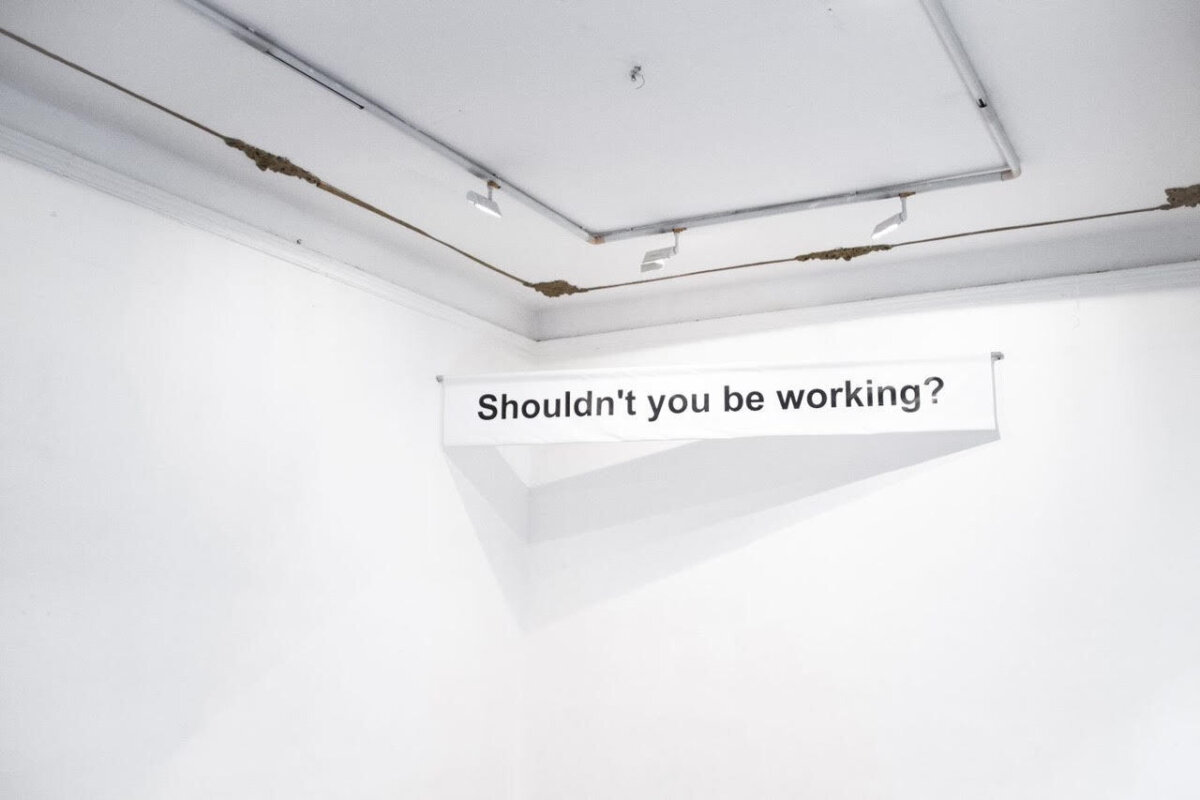
Can we imagine and organise an art world that is economically sustainable for the people working in it?
The art economy makes some people filthy rich but leaves most people making art in poverty. Many digital innovations and disruptions of the past decade have promised to improve the economic position of cultural workers, but somehow, they only seem to grow more precarious. How is that possible? And, more importantly, how can it be changed? The urgency is clear, but in the day-to-day grind of the cultural economy, we often have little time or headspace to think about these questions. With the Solidarity Economies Lab, we create a space to think through and try out radical alternatives.
This lab aims to develop its own collaborative economic model tailored to the specific needs of its cohort: a group of practicing art workers. To do so, in the lab, the participants will review existing models of value creation and redistribution. Think of platform cooperatives, rotating funds, cultural publishing ventures, NFTs, DAOs, community currencies, basic income experiments, fair payment guidelines, and trade and social unions. Participants will select one model to develop further together, based on shared interests and urgencies.
In October 2026, the group will gather in Berlin for a three-day design sprint. The aim is not only to refine or better understand the chosen model, but also to prepare it seriously for long-term implementation. The resulting proposal will be launched at the transmediale festival in January 2027 and carried forward collectively from that point onward.
Goals
▫️ to develop a shared, in-depth understanding of the cultural economy in the digital age, and the specific forms of exploitation it relies on.
▫️ to build a common vocabulary on solidarity economies in the arts; concretely, a common-pool repository featuring historical and contemporary initiatives that have somehow changed the social and economic rules of the cultural economy.
▫️ to develop a concrete, actionable proposal for the long-term implementation of an alternative income model for art workers.
Candidates
We welcome people with backgrounds in art and culture (any role), design, tech, writing, publishing, academia, law, labor organising, or any other relevant discipline. We value curiosity and critical reflection, as well as past experiences in self-organising, economic experiments, social & system design, and political engagement. We will select some people with technical expertise, some people with organising backgrounds, and some people with a good understanding of the cultural economy, creating a group with a transdisciplinary collective skill set.
For logistical reasons, only people based in and around the EU can apply to this lab.
Technologies involved
The exact technologies used will depend on the participants’ expertise and interests. These may include:
▫️ Books.
▫️ Any technology geared toward creating speculative blueprints and proofs-of-concept, such as writing, speech, and design (graphic, process, information).
▫️ Any technology geared toward community governance, such as communication environments and voting systems.
▫️ Blockchain/Web3. Geert and Sepp have no technical skills, but they can draw on lessons from a decade of experiments with art and crypto in the MoneyLab network.
▫️ Publishing and printing technologies, in case there is interest in the dissemination of the collected or generated materials.
What to expect
Block 1 – Collective Vocabulary Sessions (online) We explore alternative models art workers already practice: co-ops, DAOs, community currencies, fair pay guidelines, trade unions, and more. Through case studies, theory, and shared reflection, we build a collective vocabulary for everyone working in the arts. At the end of this block, the group selects one model to develop further.
Block 2 – October 2026: Design Sprint (Berlin) We meet in Berlin for a 3-day sprint to prototype a future scenario for cultural work in the age of platform brutality. Outcomes might include a speculative business model, a community currency whitepaper, a hack of the ticketing system, or the seeds of a credit cooperative. We work with real urgencies, toward real change.
Block 3 – November/December 2026: Implementation + Festival Prep (online) We regroup online to coordinate follow-up from the sprint, including first steps toward implementing our prototype. We also develop our presentation for the festival: a workshop and a panel discussion.
Block 4 – January 2027: Presentation at transmediale (Berlin) We present our work through a workshop, a panel conversation, and potentially an alternative format that reflects the economic model we propose.
Block 5 – Indefinite: The Long Haul The Solidarity Economies Lab is designed to lay the groundwork for long-term organising, beyond any single event or outcome.
Lab location
The meetings will take place online.
However, this Lab requires participation twice in Berlin (both covered by transmediale).
▫️ Design Sprint (First weekend of October)
▫️ Festival tm27 (January 27 – February 3)
Support & Participation Conditions
▫️ transmediale covers travel costs for each participant to attend the festival and the design sprint in Berlin. Train travel is prioritised where possible; otherwise, round-trip economy flights will be provided.
▫️ Accommodation is provided for the duration of the festival and design sprint.
▫️ Travel and accommodation arrangements are coordinated by transmediale.
▫️ transmediale supports visa applications by providing letters of invitation.
Participant Responsibilities
▫️ Participate in all meetings.
▫️ Commit to develop a collective project.
▫️ Availability to travel to Berlin during the design sprint (October 2–3) and the festival (26–31 January 2027).
Leads
Sepp Eckenhaussen is an artwriter, researcher, and organiser based in Amsterdam. He works at the Institute of Network Cultures and Caradt. From 2020 to 2023, Sepp co-directed the Dutch art workers’ association Platform BK. He is the author of Goodbye Poverty Jetset: How Art Workers Make Solidarity Economies (HumDrumPress, 2026).
Geert Lovink is a media theorist and the founding director of the Institute of Network Cultures since 2004 He is the author of many books, including Sad by Design (Pluto Press, 2019), Stuck on the Platform (Valiz, 2022), and, most recently, Platform Brutality (Valiz, 2025).
▫️ May 18: Open Call announcement
▫️ June 7: Open Call deadline
▫️ June 29: Participants announcement
▫️ Block 1 — Collective Vocabulary Sessions (online)
▫️ Block 2 — October 2026: Design Sprint (Berlin)
▫️ Block 3 — November/December 2026: Implementation + Festival Prep (online)
▫️ Block 4 — January 2027: Presentation at transmediale (Berlin)
Application deadline: 7 June, 2026 (23:59 CEST)
▫️Applications are only accepted via transmediale’s submission form. The applicants’ information will be stored only on our own servers in Berlin.
▫️Only one application per candidate across all labs will be accepted.
▫️No collective applications.
▫️Authenticity matters more than perfection, please use your own voice.
▫️Results will be announced in June.
▫️For further questions, please contact: submit[at]transmediale.de