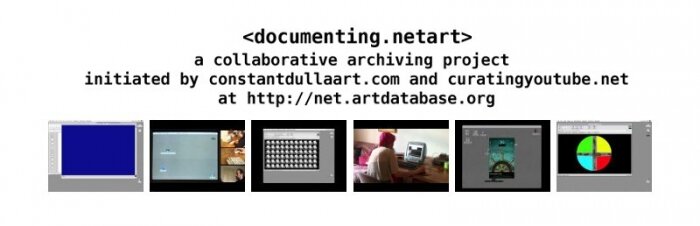
Understood as a digital repository system, YouTube is used in the
The archiving process as a whole involves three steps: first, the works are specified in their original, historical hardware and software contexts, with the performance context – understood as the mode of reception – being filmically documented. This video documentation is then uploaded onto the YouTube portal, where it is, in the third and final step, “meta-dated”.
The subjective perspectives of the video documentation and the various individual, often highly specialised, modes of reception are deliberate features of the project. Ultimately the filming of the context, i.e. the mode of reception, the atmosphere created by the historical hardware – the humming of power supplies, the chattering of hard disks, the cracking of monitors, the groans of irritated impatience often heard during waiting times, the fetching of coffee etc. – are just as important to the project as the archiving of source codes and the creation of meta-data.
Initiated by constantdullaart.com & curatingyoutube.net
The installation and workshop at transmediale 2012 is realised with the support of Google.
…
Initiated by constantdullaart.com & curatingyoutube.net
Im Projekt
Der gesamte Archivierungsprozess umfasst drei Schritte: zuerst werden die Arbeiten in ihrem historischen, originalen Hard- und Softwarekontext aufgeführt, wobei die Aufführungssituation, als Rezeptionssituation verstanden, filmisch dokumentiert wird; dann wird diese Video-Dokumentationen auf das YouTubePortal geladen und dort in einem dritten und letzten Schritt „meta-datiert“.
Die subjektiven Perspektiven der Videodokumentationen und die unterschiedlichen, oft sehr speziellen individuellen Rezeptionssituationen, sind gewollter Bestandteil des Projektes. Denn das Filmen des Kontextes, d.h. der Rezeptionssituation, der Atmosphäre mit der historischen Hardware: das Brummen der Netzteile, das Rattern der Festplatten, das Knistern des Bildschirms, das oft irritierte Aufstöhnen, die Ungeduld während der Wartezeiten, das Kaffee holen etc., halten wir dabei für genauso wichtig archiviert zu werden, wie das Archivieren des Quellcodes und das Anlegen der Metadaten."